Gardening with vinegar has many uses and benefits and best of all, it is safe to use, doesn't harm the environment, is freely available and it is cheap! It really is, therefore your organic and eco-friendly pesticide, insecticide, and herbicide.
Here you will learn about these benefits and pick up a few tips along the way. It can also be used full-strength or diluted depending on the job at hand. It can also be used quite readily in the kitchen, bathroom and other areas of the house, but today, we are going to just concentrate on the outside areas. One word of warning, however, remember that when it is all said and done, you are working with acid, so make sure you protect your eyes. So what exactly can vinegar do for you?
First of all, for those of you who are plagued by pests and little critters in the garden, fret no more. It will keep cats at bay if you spray in areas you want to deter them, particularly that sand-pit you may have in the garden for the children but those cats will insist on using as their own private toilet! Heavily spray full-strength vinegar around the edges of the sandpit and remember to re-apply after it rains.
Are those rabbits eating your vegetables, particularly your beans and peas? Soak corncobs in full strength vinegar for a couple of hours until they are thoroughly soaked. You may even soak them over-night if you wish. Then place the cobs strategically around your veggie patch. They will keep rabbits away for as long as you re-soak your corncobs every two weeks.
Do you have an ant problem? Again you can apply this full-strength to the ants and they will not come anywhere near the stuff. This is very useful if you find a trail of them making a way into your house. Just spray the thresholds and reapply every couple of days to ensure that they stay away.
Slugs are real pests, because they eat both vegetables, especially lettuces and plants, especially hostas. In this case, vinegar acts as a poison to the slugs because, if you spray slugs with it directly, they will die. You can treat snails in exactly the same way. However, because vinegar is also a herbicide, be careful where you spray your vinegar. Salvias for example will die, if they are sprayed as a casualty.
Are your fruit trees being invaded by fruit flies? Try this fruit fly bait, which is deadly and effective. Take 1 cup of water, a half a cup of cider vinegar, a quarter of a cup of sugar and 1 tablespoon of molasses. Mix it all together. Take old tin cans without their lids and make two holes in opposite ends for wire handles. Attach the handles and add an inch of the mixture to each can. Hang 2 - 3 tins in each tree. Check on the traps on a regular basis to refill and clean when necessary.
After you have been digging in the garden with your gardening tools, soak them in a bucket of half-strength vinegar. This will act as a fungicide and kill off anything that may be lurking unsuspectingly so that there is no possibility of cross-contamination when you use them next.
Are your garden plants struggling and your roses suffering from black spot or other fungal diseases? Take 2 tablespoons of white vinegar and mix it with 4 litres of compost tea. Now spray your garden plants with this mixture and see the difference. For roses, the method is slightly different. Take 3 tablespoons of cider vinegar, and mix it with 4 litres of water to control those fungal diseases. Of course, don't forget the compost tea either on your roses to get the best results. For powdery mildew take 2-3 tablespoons of cider vinegar and mix with 4 litres of water and spray your plants. This will help control the problem.
What about your acid-living plants like azaleas, gardenias and rhododendrons? Are they flowering as well as they could be? If not, increase the soil's acidity. In hard water areas, add 1 cup of vinegar to 4 litres of tap water. It will also release iron into the soil for the plants to use. And if you have too much lime in your garden, add vinegar to neutralize it.
Do you have weeds coming up in between your paving slabs on our driveway or pathway that you cannot remove by hand? Don't use a herbicide that is know to damage the environment. Use an eco-friendly alternative instead. Take 1 litre of boiled water, 2 tablespoons of salt and 5 tablespoons of vinegar. Mix altogether, and whilst still hot, pour onto the offending plants.
Did you know that you can improve your germination success rate of seeds by using vinegar? This is especially useful for those seeds that are more difficult to germinate such as asparagus and okra, morning glories and moonflowers. Rub the seeds gently first between two pieces of coarse sandpaper. Then soak the seeds overnight in 500 ml of warm water, 125 ml of vinegar and a squirt of washing-up liquid. Plant the next day as normal. You can use the same method, but without the sandpaper for nasturtiums, parsley, beetroot, and parsnips.
And finally, are your chickens pecking each other? Add a tablespoon of cider vinegar to their drinking water, and they will stop!
Written by Kathryn Bax, owner and web site developer of Country Living and Farm Lifestyles: A Worldwide Farmers' Market for Farm Food, Farm Accommodation, Game Farms, Wine Farms, Farming Jobs, Farm Swaps, Rural Services, Country Living and much, much more. Buy local and support your local farmers.
http://www.countryfarm-lifestyles.com/
Showing posts with label lawn grass. Show all posts
Showing posts with label lawn grass. Show all posts
Saturday, November 29, 2008


Thursday, September 06, 2007
Ornamental Grasses- Care and Maintenance!
I am often asked questions about care of Ornamental Grass in the garden. I came across this excellent Article by the University of Illinois at http://www.urbanext.uiuc.edu/grasses/understanding.html
which sheds light on the whole subject and which I recommend to all gardeners.
"With the popularity of ornamental grasses and their use in the landscape, it is a good idea to understand how these plants grow. This understanding will lead to better use of these plants and often avoid disappointment or frustration.
Grasses respond and start to grow based upon temperature. Some grasses will start to grow in early spring when temperatures are still cool and others will wait until the soil is warm and temperatures are more stable.
Cool Season Grasses
Cool season grass will start to grow early in the spring and may even remain semi-evergreen over the winter. Cool season grasses also seem to do better and have better foliage quality when temperatures are cool or if they are given sufficient water during drought periods. If they are not watered during drought, they tend to go dormant resulting in brown foliage.
These grasses may require more frequent division to keep them healthy looking and vigorous. If not, they tend to die out in the center. For the ones that remain semi-evergreen, you should only cut off the brown or winter injured foliage in the spring. Some of the more popular cool season grasses include, Fescues, Blue Oat Grass (Helictotrichon), Tufted Hair Grass (Deschampsia), and Autumn Moor Grass (Sesleria).
Warm Season Grasses
Warm season grasses will do better during warmer times of the year and remain good looking even when temperatures are high and moisture is limited. Warm season grasses do not begin to show growth until the weather becomes stable and the soils warm. The previous seasons growth usually browns out in the fall requiring the cutting back of plants to about 4-6 inches in the spring.
Warm season grasses usually do not require as much regular division as cool season grasses. Some warm season grasses include Northern Sea Oats (Chasmanthium), Japanese Silver Grass (Miscanthus sp.), Hardy Pampas Grass (Erianthus), Perennial Fountain Grass (Pennisetum), Switch Grass (Panicum) and Prairie Cord Grass (Spartina).
Growth Habits
Before planting you should also understand the growth habit of the grass. Grasses can be either clump forming or rhizome forming. The latter is often called "running" grass. The clump forming grasses will grow in very nice, neat mounds or clumps. They tend to mix very well with other perennials and will not become invasive. They will increase in girth slowly over time.
The rhizome forming grasses spread by underground stems and can become very aggressive and invasive. These grasses have their place but it may not be in a well-tended perennial border since they can soon take over an entire area. Before selecting a grass, be sure to understand how it grows so you won’t be planting a future problem. Some attractive but aggressive grasses include Blue Lymegrass, Cordgrass, and Ribbongrass.
Fertilizer
As with any other perennial, success depends greatly on soil preparation before planting and having good drainage. Ideally, the planting areas should be prepared in the fall, beginning with deep tilling of the soil. Fall tillage facilitates freezing and thawing action during the winter, and improves soil tilth and workability. If this is not possible, spring tillage is also satisfactory.
Incorporate ample organic matter during the tillage process. Ornamental grasses do not require high amounts of fertilizer. Adding about one pound of a general-purpose fertilizer (like 10-10-10) during soil preparation per 100 sq. ft. of planting bed should be sufficient.
Ornamental grasses can be planted in the spring or the fall. The advantage of spring planting is to give the plants adequate time to develop a good root system before winter. Fall planting is often not as reliable without some additional precautions, particularly in years with early or severe winters. You should try to complete fall planting during August and September.
Then provide a light cover of straw or hay during the first winter for best results. Apply the mulch after several hard frosts. Plants should be planted no deeper than their previous growing depths and should be well watered after planting. Maintaining uniform soil moisture around the plant hastens establishment. Plants planted too deep tend to develop root diseases or simply rot in the ground.
Ornamental grasses require relatively low levels of fertility. By keeping the level of nitrogen low, lodging or flopping over can be kept to a minimum. Leaf color and vigour are good guides to nitrogen requirements. Application of one-half to one pound of 10-10-10 fertilizer per 100 sq. ft. of garden area or about one-quarter cup per plant is sufficient. Apply fertilizer just as growth resumes in the spring. An application of a slow release fertilizer in the spring is enough to take care of the plant's needs throughout the summer. Fertilizer should be watered in thoroughly.
Water
Plants should be well watered the first season after planting so they can develop a good root system. Established plants do not need regular watering, but may need supplemental watering during drought periods. The amount of water will depend on the grass species, the site, and on the quality, size and growth rate desired.
Weed Control
Cultivate around grass plants to control weeds. Application of mulch will greatly reduce the need for cultivation as well as watering. It also tends to keep grasses in check that have a tendency to be heavy reseeding types.
Winter Protection and Spring Clean up
Grasses do not need to be cut down before winter. In fact, they are attractive when left standing and the foliage helps to insulate the crown of the plant. Cut back the foliage to about 4-6 inches in the spring before growth resumes. When foliage is removed, spring growth will begin earlier. Old foliage left on the plant can delay the crown’s warming and subsequent growth by as much as 3 weeks.
Division
Division depends on the spacing and visual appearance of the plants as well as the overall health. Plants suffering from die-out in the center should be divided to improve appearances. Division is done in the spring before growth resumes or in the late summer or fall after the growing season. Plants that bloom late could be divided in the spring."
which sheds light on the whole subject and which I recommend to all gardeners.
"With the popularity of ornamental grasses and their use in the landscape, it is a good idea to understand how these plants grow. This understanding will lead to better use of these plants and often avoid disappointment or frustration.
Grasses respond and start to grow based upon temperature. Some grasses will start to grow in early spring when temperatures are still cool and others will wait until the soil is warm and temperatures are more stable.
Cool Season Grasses
Cool season grass will start to grow early in the spring and may even remain semi-evergreen over the winter. Cool season grasses also seem to do better and have better foliage quality when temperatures are cool or if they are given sufficient water during drought periods. If they are not watered during drought, they tend to go dormant resulting in brown foliage.
These grasses may require more frequent division to keep them healthy looking and vigorous. If not, they tend to die out in the center. For the ones that remain semi-evergreen, you should only cut off the brown or winter injured foliage in the spring. Some of the more popular cool season grasses include, Fescues, Blue Oat Grass (Helictotrichon), Tufted Hair Grass (Deschampsia), and Autumn Moor Grass (Sesleria).
Warm Season Grasses
Warm season grasses will do better during warmer times of the year and remain good looking even when temperatures are high and moisture is limited. Warm season grasses do not begin to show growth until the weather becomes stable and the soils warm. The previous seasons growth usually browns out in the fall requiring the cutting back of plants to about 4-6 inches in the spring.
Warm season grasses usually do not require as much regular division as cool season grasses. Some warm season grasses include Northern Sea Oats (Chasmanthium), Japanese Silver Grass (Miscanthus sp.), Hardy Pampas Grass (Erianthus), Perennial Fountain Grass (Pennisetum), Switch Grass (Panicum) and Prairie Cord Grass (Spartina).
Growth Habits
Before planting you should also understand the growth habit of the grass. Grasses can be either clump forming or rhizome forming. The latter is often called "running" grass. The clump forming grasses will grow in very nice, neat mounds or clumps. They tend to mix very well with other perennials and will not become invasive. They will increase in girth slowly over time.
The rhizome forming grasses spread by underground stems and can become very aggressive and invasive. These grasses have their place but it may not be in a well-tended perennial border since they can soon take over an entire area. Before selecting a grass, be sure to understand how it grows so you won’t be planting a future problem. Some attractive but aggressive grasses include Blue Lymegrass, Cordgrass, and Ribbongrass.
Fertilizer
As with any other perennial, success depends greatly on soil preparation before planting and having good drainage. Ideally, the planting areas should be prepared in the fall, beginning with deep tilling of the soil. Fall tillage facilitates freezing and thawing action during the winter, and improves soil tilth and workability. If this is not possible, spring tillage is also satisfactory.
Incorporate ample organic matter during the tillage process. Ornamental grasses do not require high amounts of fertilizer. Adding about one pound of a general-purpose fertilizer (like 10-10-10) during soil preparation per 100 sq. ft. of planting bed should be sufficient.
Ornamental grasses can be planted in the spring or the fall. The advantage of spring planting is to give the plants adequate time to develop a good root system before winter. Fall planting is often not as reliable without some additional precautions, particularly in years with early or severe winters. You should try to complete fall planting during August and September.
Then provide a light cover of straw or hay during the first winter for best results. Apply the mulch after several hard frosts. Plants should be planted no deeper than their previous growing depths and should be well watered after planting. Maintaining uniform soil moisture around the plant hastens establishment. Plants planted too deep tend to develop root diseases or simply rot in the ground.
Ornamental grasses require relatively low levels of fertility. By keeping the level of nitrogen low, lodging or flopping over can be kept to a minimum. Leaf color and vigour are good guides to nitrogen requirements. Application of one-half to one pound of 10-10-10 fertilizer per 100 sq. ft. of garden area or about one-quarter cup per plant is sufficient. Apply fertilizer just as growth resumes in the spring. An application of a slow release fertilizer in the spring is enough to take care of the plant's needs throughout the summer. Fertilizer should be watered in thoroughly.
Water
Plants should be well watered the first season after planting so they can develop a good root system. Established plants do not need regular watering, but may need supplemental watering during drought periods. The amount of water will depend on the grass species, the site, and on the quality, size and growth rate desired.
Weed Control
Cultivate around grass plants to control weeds. Application of mulch will greatly reduce the need for cultivation as well as watering. It also tends to keep grasses in check that have a tendency to be heavy reseeding types.
Winter Protection and Spring Clean up
Grasses do not need to be cut down before winter. In fact, they are attractive when left standing and the foliage helps to insulate the crown of the plant. Cut back the foliage to about 4-6 inches in the spring before growth resumes. When foliage is removed, spring growth will begin earlier. Old foliage left on the plant can delay the crown’s warming and subsequent growth by as much as 3 weeks.
Division
Division depends on the spacing and visual appearance of the plants as well as the overall health. Plants suffering from die-out in the center should be divided to improve appearances. Division is done in the spring before growth resumes or in the late summer or fall after the growing season. Plants that bloom late could be divided in the spring."
Wednesday, January 31, 2007
Lawn Care - A Professional Site!
Lawn care
Hi everyone, I came across a great new Gardening Website today and it really impressed me. It is very professionally presented and has a wide range of resources, product information and gardening solutions. You can even join their FREE Newsletter to receive gardening tips and special offers. I strongly recommend you pay an early visit to http://www.greatbigplants.com/ where you will receive a warm welcome from a truly professional bunch of nice people.
As a bonus, visit their Blog at http://greatbigplantsblog.com/ for a series of Articles on general gardening issues, a comments section and a variety of links to other gardening sources. Highly recommended.
I have placed a link in the right hand margin of this Blog to make access easier for you all!
Enjoy
Terry
lawn care
Hi everyone, I came across a great new Gardening Website today and it really impressed me. It is very professionally presented and has a wide range of resources, product information and gardening solutions. You can even join their FREE Newsletter to receive gardening tips and special offers. I strongly recommend you pay an early visit to http://www.greatbigplants.com/ where you will receive a warm welcome from a truly professional bunch of nice people.
As a bonus, visit their Blog at http://greatbigplantsblog.com/ for a series of Articles on general gardening issues, a comments section and a variety of links to other gardening sources. Highly recommended.
I have placed a link in the right hand margin of this Blog to make access easier for you all!
Enjoy
Terry
lawn care
Tuesday, January 16, 2007
Your Lawn - Time and Labour Issues!
Lawn care.
Time
The time you will be able to devote to your lawn should determine the types of plants and flowers you fill it with. Some plants require pruning, watering, added nutrients than other plants. If you do not have the time to take care of these plants, then you should buy plants and flowers that can basically take care of themselves such as shade plants, perennials, and moss plants.
As you can see, this lawn thing is a lot complex than hauling out the hose on Sunday mornings or during the evening. Plants and flowers need your constant care in order to grow and survive year after year. Since there are many plants and flowers to choose from, you should be able to find the ones that will suit your lifestyle.
TIME AND LABOR
At this time, you have two choices: do a lot of this lawn stuff yourself, or hire a landscaper. While there are pros and cons of each, you should hire a landscaper if you plan building a drain, or want to add a patio or gazebo. As mentioned before, do not dig too deeply in your lawn, because you never know what could be under there.
You should first determine how much your new lawn is going to cost you, labor aside. Include the following in your calculations:
Materials and equipment
Plants and flowers
Soil testing
Grass
Ornaments
Pest control
Drainage
Then you should calculate the labor. Call a few landscapers to see what they charge. You should consider using a landscaper for the following:
Removing heavy thatch
Drainage
Rock placement
Tree placement
Tilling the soil
Aeration
Even though there are other lawn care tasks that have to be done, you could easily accomplish them.
The bottom line is how much time you will have to spend on your lawn. If you hire a landscaper to do all of the groundwork, plant trees and flowers, fertilize, and other tasks, you will still have to mow the lawn, aerate if needed, remove thatch, and reseed if necessary. Of course you could have a landscaper complete these tasks also, but then you wouldn’t be reading this book then, would you?
Hire a landscaper only if you need one. If, after a few seasons, you find you no longer have the time or the patience to work on your lawn, then consider hiring a landscaper or a mowing service that will mow your lawn every few weeks.
While certain landscaping projects can be expensive, in the long run it is more important to get the job done right instead of having to redo or start a project over again.
Placement of Plants
The placement of your plants should also be a concern. Many times, certain plants will invade the personal space of other plants. Be sure to leave enough room between plants and do not place vine plants next to other plants and flowers.
Region where you live
The region where you live is another concern you should be thinking about. If you live in an area that sees a lot of rainfall, then purchase plants that enjoy a lot of water. Moss plants love the water and will probably thrive better in it. If you live in an area that is plagued with drought for months at a time, then drought-tolerant perennials are your best bet.
Other decorative ornaments
This is another space issue. If you are planning on using rocks, sculpture, and other items to decorate your lawn, you should include less plants and flowers. Vine plants work well with rocks and can give your lawn that old-world feel.
lawn care
Terry Blackburn. Internet Marketing Consultant, living in South Shields in the North-East of England. Author and Producer of blog http://www.lawnsurgeon.blogspot.com Author of "Your Perfect Lawn," a 90 Page eBook devoted to Lawn Preparation, Lawn Care and Maintenance. Find it at http://www.lawnsurgeon.com
I would be very interested to have your comments on this Article.
Article Source: http://EzineArticles.com/?expert=Terry_Blackburn
Terry Blackburn - EzineArticles Expert Author
lawn care
Time
The time you will be able to devote to your lawn should determine the types of plants and flowers you fill it with. Some plants require pruning, watering, added nutrients than other plants. If you do not have the time to take care of these plants, then you should buy plants and flowers that can basically take care of themselves such as shade plants, perennials, and moss plants.
As you can see, this lawn thing is a lot complex than hauling out the hose on Sunday mornings or during the evening. Plants and flowers need your constant care in order to grow and survive year after year. Since there are many plants and flowers to choose from, you should be able to find the ones that will suit your lifestyle.
TIME AND LABOR
At this time, you have two choices: do a lot of this lawn stuff yourself, or hire a landscaper. While there are pros and cons of each, you should hire a landscaper if you plan building a drain, or want to add a patio or gazebo. As mentioned before, do not dig too deeply in your lawn, because you never know what could be under there.
You should first determine how much your new lawn is going to cost you, labor aside. Include the following in your calculations:
Materials and equipment
Plants and flowers
Soil testing
Grass
Ornaments
Pest control
Drainage
Then you should calculate the labor. Call a few landscapers to see what they charge. You should consider using a landscaper for the following:
Removing heavy thatch
Drainage
Rock placement
Tree placement
Tilling the soil
Aeration
Even though there are other lawn care tasks that have to be done, you could easily accomplish them.
The bottom line is how much time you will have to spend on your lawn. If you hire a landscaper to do all of the groundwork, plant trees and flowers, fertilize, and other tasks, you will still have to mow the lawn, aerate if needed, remove thatch, and reseed if necessary. Of course you could have a landscaper complete these tasks also, but then you wouldn’t be reading this book then, would you?
Hire a landscaper only if you need one. If, after a few seasons, you find you no longer have the time or the patience to work on your lawn, then consider hiring a landscaper or a mowing service that will mow your lawn every few weeks.
While certain landscaping projects can be expensive, in the long run it is more important to get the job done right instead of having to redo or start a project over again.
Placement of Plants
The placement of your plants should also be a concern. Many times, certain plants will invade the personal space of other plants. Be sure to leave enough room between plants and do not place vine plants next to other plants and flowers.
Region where you live
The region where you live is another concern you should be thinking about. If you live in an area that sees a lot of rainfall, then purchase plants that enjoy a lot of water. Moss plants love the water and will probably thrive better in it. If you live in an area that is plagued with drought for months at a time, then drought-tolerant perennials are your best bet.
Other decorative ornaments
This is another space issue. If you are planning on using rocks, sculpture, and other items to decorate your lawn, you should include less plants and flowers. Vine plants work well with rocks and can give your lawn that old-world feel.
lawn care
Terry Blackburn. Internet Marketing Consultant, living in South Shields in the North-East of England. Author and Producer of blog http://www.lawnsurgeon.blogspot.com Author of "Your Perfect Lawn," a 90 Page eBook devoted to Lawn Preparation, Lawn Care and Maintenance. Find it at http://www.lawnsurgeon.com
I would be very interested to have your comments on this Article.
Article Source: http://EzineArticles.com/?expert=Terry_Blackburn
Terry Blackburn - EzineArticles Expert Author
lawn care
Monday, January 15, 2007
Lawn Design - Choosing Plants and Flowers!
lawn care
CHOOSING PLANTS AND FLOWERS
This part of lawn design can be lots of fun, unless you are allergic to flowers and plants. Assuming you are not, it is time to visit the gardening center to pick out your new plants, flowers, shrubs, and more. While you can do this at any time during the year, you should plant the majority of your lawn plants during the late winter and early spring months so that they will have time to grow a little and settle into their new home.
The first time around, you should talk to the experts at the gardening center. Armed with your soil analysis report, your own personal preferences, and money, you should be able to get some straight answers quickly without having to read the backs of all the plants.
When choosing your plants and flowers, you should be concerned with color, height, and durability. Common plant and flower types include:
Shade plants
Perennial and Annual flowers
Moss plants
Climbing plants
Fruit trees
Herbs
Mum plants
Be sure to find plants and flowers that will survive in your lawn’s soil. This is very important. If you do not want to spend hours trying to adjust the pH of your soil, buy plants that will adapt to it. This will also save you money. Many hearty plants such as mums and shade plants can survive in different soil types.
You should also consider the following:
Size of the lawn
Placement of plants
Region where you live
Other decorative ornaments Time
Size of the Lawn
The size of your lawn can determine much. You do not want to overcrowd your lawn with stuff. This is unattractive and will suffocate everyone who visits your home, not to mention the plants and flowers.
Terry Blackburn. Internet Marketing Consultant, living in South Shields in the North-East of England. Author and Producer of blog http://www.lawnsurgeon.blogspot.com. Author of "Your Perfect Lawn," a 90 Page eBook devoted to Lawn Preparation, Lawn Care and Maintenance. Find it at http://www.lawnsurgeon.com
I would be very interested to have your comments on this Article.
Article Source: http://EzineArticles.com/?expert=Terry_Blackburn
lawn care
CHOOSING PLANTS AND FLOWERS
This part of lawn design can be lots of fun, unless you are allergic to flowers and plants. Assuming you are not, it is time to visit the gardening center to pick out your new plants, flowers, shrubs, and more. While you can do this at any time during the year, you should plant the majority of your lawn plants during the late winter and early spring months so that they will have time to grow a little and settle into their new home.
The first time around, you should talk to the experts at the gardening center. Armed with your soil analysis report, your own personal preferences, and money, you should be able to get some straight answers quickly without having to read the backs of all the plants.
When choosing your plants and flowers, you should be concerned with color, height, and durability. Common plant and flower types include:
Shade plants
Perennial and Annual flowers
Moss plants
Climbing plants
Fruit trees
Herbs
Mum plants
Be sure to find plants and flowers that will survive in your lawn’s soil. This is very important. If you do not want to spend hours trying to adjust the pH of your soil, buy plants that will adapt to it. This will also save you money. Many hearty plants such as mums and shade plants can survive in different soil types.
You should also consider the following:
Size of the lawn
Placement of plants
Region where you live
Other decorative ornaments Time
Size of the Lawn
The size of your lawn can determine much. You do not want to overcrowd your lawn with stuff. This is unattractive and will suffocate everyone who visits your home, not to mention the plants and flowers.
Terry Blackburn. Internet Marketing Consultant, living in South Shields in the North-East of England. Author and Producer of blog http://www.lawnsurgeon.blogspot.com. Author of "Your Perfect Lawn," a 90 Page eBook devoted to Lawn Preparation, Lawn Care and Maintenance. Find it at http://www.lawnsurgeon.com
I would be very interested to have your comments on this Article.
Article Source: http://EzineArticles.com/?expert=Terry_Blackburn
lawn care
Sunday, January 14, 2007
Lawn Care - Dividing Your Lawn Up!
lawn care
Before you begin decorating your lawn, seeding, and adding plants and flowers, you should take a look at how your lawn is divided in relation to your home. Do you have a large front yard? Large back yard? And how about a side yard? This is all potential space for you to use in various ways.
For example, your front yard could include:
A small garden
Shrubs and flowers in front of the home
A small walkway to the front door
Trees
Your back yard could include:
Gardens
Places for children to play
Pool
Shed
Pond
Trees
Your side yard could include:
Garden
Shed
Serve as a walkway to the back of the home
Trees
These are some things you should consider before you go out and buy decorative items for your lawn. Deciding how your lawn will be used will depend mostly on your lifestyle and the amount of maintenance you want to do to make your lawn the best it can be. Many people have a nice, lush front yard, and use their backyard for children or for gardening purposes. Other people will put gravel and a driveway in their front yard.
When deciding what to do with your lawn, you should:
Determine how much time you can spend on upkeep
How much you enjoy being outdoors
Your family’s needs
Your budget
The length of time you will be in the home
Other obligations
Sometimes people take on more than they can do in a day. Be sensible and realize if you are really a lazy person by nature or an industrious go-getter. Then design a lawn that will fit your needs as well as your personality. You and your lawn will appreciate you better for it.
Terry Blackburn. Internet Marketing Consultant, living in South Shields in the North-East of England. Author and Producer of blog http://www.lawnsurgeon.blogspot.com Author of "Your Perfect Lawn," a 90 Page eBook devoted to Lawn Preparation, Lawn Care and Maintenance. Find it at http://www.lawnsurgeon.com
I would be very interested to have your comments on this Article.
Article Source: http://EzineArticles.com/?expert=Terry_Blackburn
Terry Blackburn - EzineArticles Expert Author
lawn care
Before you begin decorating your lawn, seeding, and adding plants and flowers, you should take a look at how your lawn is divided in relation to your home. Do you have a large front yard? Large back yard? And how about a side yard? This is all potential space for you to use in various ways.
For example, your front yard could include:
A small garden
Shrubs and flowers in front of the home
A small walkway to the front door
Trees
Your back yard could include:
Gardens
Places for children to play
Pool
Shed
Pond
Trees
Your side yard could include:
Garden
Shed
Serve as a walkway to the back of the home
Trees
These are some things you should consider before you go out and buy decorative items for your lawn. Deciding how your lawn will be used will depend mostly on your lifestyle and the amount of maintenance you want to do to make your lawn the best it can be. Many people have a nice, lush front yard, and use their backyard for children or for gardening purposes. Other people will put gravel and a driveway in their front yard.
When deciding what to do with your lawn, you should:
Determine how much time you can spend on upkeep
How much you enjoy being outdoors
Your family’s needs
Your budget
The length of time you will be in the home
Other obligations
Sometimes people take on more than they can do in a day. Be sensible and realize if you are really a lazy person by nature or an industrious go-getter. Then design a lawn that will fit your needs as well as your personality. You and your lawn will appreciate you better for it.
Terry Blackburn. Internet Marketing Consultant, living in South Shields in the North-East of England. Author and Producer of blog http://www.lawnsurgeon.blogspot.com Author of "Your Perfect Lawn," a 90 Page eBook devoted to Lawn Preparation, Lawn Care and Maintenance. Find it at http://www.lawnsurgeon.com
I would be very interested to have your comments on this Article.
Article Source: http://EzineArticles.com/?expert=Terry_Blackburn
Terry Blackburn - EzineArticles Expert Author
lawn care
Saturday, January 13, 2007
Lawn Care - Caring for Your Soil!
lawn care
SOIL
So, you have tested your soil and now know the pH level and the type of soil you have. Good for you. Now you may be asking yourself how do I care for this soil so that the grass and the plants, the flowers, and the trees will grow? You have come to the right place.
Since good, healthy soil is the foundation of a beautiful yard, you will need to start with the basics.
Watering
If you have sandy soil, then you will have to pay particular attention to this section. If you have loam soil, then you can read this with a smile - but remember that even loam soil needs water or it will quickly turn to sand. If you have silt or clay soil, the next section on drainage will also be useful to you.
The first rule of watering is that it must be done often, especially during the warmer months when there is less rain fall. You should water your lawn each day in order to make sure that the soil is receiving enough moisture.
Many people invest in watering systems which are underground sprinklers that are set on timers that will water the lawn each day. While these systems can be expensive, if you are the forgetful type, this is an option. If not, buy a hose that is long enough to reach the lawn or buy a sprinkler that can be moved around.
It is important to water your lawn enough, but not overeater it. You have watered your lawn too much when puddles begin to form. This is why you should move around your lawn and try to get an even amount of water on the entire lawn.
Fertilizing
Fertilizing your lawn is the best way to provide nutrients and help keep the weed population under control in order to create a healthy lawn. When fertilizing your lawn, you keep in mind the following:
Types of grass that are on the lawn
pH level of soil
Type of soil
Types of weeds
There are different types of fertilizers for different types of grass. Also, there are fertilizers that should be used at different times each year. If you have recently planted seed grass, then you should already know the types that are on your lawn, but if you have moved into a home that was previously occupied, you may not know exactly which types of grass are on your lawn. You should ask your neighbors about their grass since the same grasses are typically used in an area.
Read the instructions on the bag of fertilizer before using it. This will tell you when to use the fertilizer, how to apply it, and also suggest other fertilizers that should be used during the year. Each season, you should be using a fertilizer.
In order to spread the fertilizer evenly, you should buy or rent a spreader. This will evenly distribute the fertilizer. They are very easy to use. Simply put the fertilizer into the hopper and push the spreader in even lines across the lawn.
Liming
If your soil is acidic, you will need to put lime down in order to bring the soil to a more neutral state. If you decide to send a soil sample to be tested, you will receive advice on how much lime to use and when to use it on your lawn.
Lime can be found at most home and garden centers and can be used the same way as fertilizer.
Once you have placed lime on your lawn, DO NOT repeat the process. If you put too much lime on your lawn, you will cause the soil to turn alkaline, which is not good for most plants and flowers.
Mulching and Composting
What better way to combine helping the environment and using fancy lawn equipment than by mulching and composting! This is a fun activity for the entire family.
In order to create mulch, you will need to buy or rent a mulching machine. These little machines will grind up leaves, small branches, and bark. The material that shoots out the back of the mulching machine can be used to decorate your lawn or be used as fertilizer. Since mulch is made from organic materials, it is full of nutrients that will help plants and flowers grow. It will also replenish nutrients in the soil.
You will have the opportunity to mulch each fall as this is a great way to get rid of all of those leaves.
Composting is a little different from mulching in that you will be recycling not only dead leaves and other organic matter, but also your trash. Yes, your trash. Instead of throwing away left over food, you can create a compost pile outside where food will decompose with other matter to create a nutrient rich mix that you can add to your soil. For many people the idea of composting sounds disgusting, and in many ways, it is. You will need to turn the pile every few days to make sure that all of the materials are decomposing at the same rate. This will also reduce the odor. When you have a large enough pile, you can use it on your lawn. This is an inexpensive way to fertilize your lawn by using materials from the environment.
Many people would rather use compost than chemicals on your lawn. The choice is up to you.
lawn care
Terry Blackburn. Internet Marketing Consultant, living in South Shields in the North-East of England. Author and Producer of blog http://www.lawnsurgeon.blogspot.com Author of "Your Perfect Lawn," a 90 Page eBook devoted to Lawn Preparation, Lawn Care and Maintenance. Find it at http://www.lawnsurgeon.com
I would be very interested to have your comments on this Article.
Article Source: http://EzineArticles.com/?expert=Terry_Blackburn
lawn care
SOIL
So, you have tested your soil and now know the pH level and the type of soil you have. Good for you. Now you may be asking yourself how do I care for this soil so that the grass and the plants, the flowers, and the trees will grow? You have come to the right place.
Since good, healthy soil is the foundation of a beautiful yard, you will need to start with the basics.
Watering
If you have sandy soil, then you will have to pay particular attention to this section. If you have loam soil, then you can read this with a smile - but remember that even loam soil needs water or it will quickly turn to sand. If you have silt or clay soil, the next section on drainage will also be useful to you.
The first rule of watering is that it must be done often, especially during the warmer months when there is less rain fall. You should water your lawn each day in order to make sure that the soil is receiving enough moisture.
Many people invest in watering systems which are underground sprinklers that are set on timers that will water the lawn each day. While these systems can be expensive, if you are the forgetful type, this is an option. If not, buy a hose that is long enough to reach the lawn or buy a sprinkler that can be moved around.
It is important to water your lawn enough, but not overeater it. You have watered your lawn too much when puddles begin to form. This is why you should move around your lawn and try to get an even amount of water on the entire lawn.
Fertilizing
Fertilizing your lawn is the best way to provide nutrients and help keep the weed population under control in order to create a healthy lawn. When fertilizing your lawn, you keep in mind the following:
Types of grass that are on the lawn
pH level of soil
Type of soil
Types of weeds
There are different types of fertilizers for different types of grass. Also, there are fertilizers that should be used at different times each year. If you have recently planted seed grass, then you should already know the types that are on your lawn, but if you have moved into a home that was previously occupied, you may not know exactly which types of grass are on your lawn. You should ask your neighbors about their grass since the same grasses are typically used in an area.
Read the instructions on the bag of fertilizer before using it. This will tell you when to use the fertilizer, how to apply it, and also suggest other fertilizers that should be used during the year. Each season, you should be using a fertilizer.
In order to spread the fertilizer evenly, you should buy or rent a spreader. This will evenly distribute the fertilizer. They are very easy to use. Simply put the fertilizer into the hopper and push the spreader in even lines across the lawn.
Liming
If your soil is acidic, you will need to put lime down in order to bring the soil to a more neutral state. If you decide to send a soil sample to be tested, you will receive advice on how much lime to use and when to use it on your lawn.
Lime can be found at most home and garden centers and can be used the same way as fertilizer.
Once you have placed lime on your lawn, DO NOT repeat the process. If you put too much lime on your lawn, you will cause the soil to turn alkaline, which is not good for most plants and flowers.
Mulching and Composting
What better way to combine helping the environment and using fancy lawn equipment than by mulching and composting! This is a fun activity for the entire family.
In order to create mulch, you will need to buy or rent a mulching machine. These little machines will grind up leaves, small branches, and bark. The material that shoots out the back of the mulching machine can be used to decorate your lawn or be used as fertilizer. Since mulch is made from organic materials, it is full of nutrients that will help plants and flowers grow. It will also replenish nutrients in the soil.
You will have the opportunity to mulch each fall as this is a great way to get rid of all of those leaves.
Composting is a little different from mulching in that you will be recycling not only dead leaves and other organic matter, but also your trash. Yes, your trash. Instead of throwing away left over food, you can create a compost pile outside where food will decompose with other matter to create a nutrient rich mix that you can add to your soil. For many people the idea of composting sounds disgusting, and in many ways, it is. You will need to turn the pile every few days to make sure that all of the materials are decomposing at the same rate. This will also reduce the odor. When you have a large enough pile, you can use it on your lawn. This is an inexpensive way to fertilize your lawn by using materials from the environment.
Many people would rather use compost than chemicals on your lawn. The choice is up to you.
lawn care
Terry Blackburn. Internet Marketing Consultant, living in South Shields in the North-East of England. Author and Producer of blog http://www.lawnsurgeon.blogspot.com Author of "Your Perfect Lawn," a 90 Page eBook devoted to Lawn Preparation, Lawn Care and Maintenance. Find it at http://www.lawnsurgeon.com
I would be very interested to have your comments on this Article.
Article Source: http://EzineArticles.com/?expert=Terry_Blackburn
lawn care
Friday, January 12, 2007
Lawn Care - Testing the Soil!
lawn care
Finding out as much as you can about your soil will help you make informed decisions about what the soil will need in order to provide a nutrient rich environment for grass, plants, and shrubs. Knowing about your soil will also prevent you from buying flowers and plants that will not survive in the type of soil you have.
When testing the soil, you should keep the following in mind:
Soil type pH of soil
These are the two components, you as the future lawn care expert, should be concerned with. Other components such as rocky soil you will need to worry about down the road.
Soil Type
You can very easily test your soil type. Gather a few small handfuls of soil and place it into a mason jar or other glass container that has a lid. Add a cup of water and shake. (Put the lid on first). After you are done shaking the jar, let it sit overnight.
There are four basic soil types:
clay
silt
sand
loam
Both clay and silt soil types are the sign of poor drainage techniques. Sandy soil is the result of the soil not getting enough water. Loam soil is the ideal combination of the other three types of soil. This is a lawn care person’s dream come true because most flowers and plants will thrive in this soil.
After letting your sample sit overnight, you will notice that the soil has separated into different levels that look a lot like parfait. Sand will be at the bottom, silt is next, and clay is at the top. If all of your layers seem the same size, get down on your knees and thank the lawn gods, because you have LOAM!
If one layer appears larger than the other layers, then you have that type of soil.
pH of Soil
There are three levels on the pH scale that your soil can fall under regardless of the type of soil it is:
acidic below 7
alkaline (base) above 7
neutral 6.2-7.0
These numbers represent the pH levels on a scale of 1-14.
You should know the pH of your soil for several reasons. These can include:
knowing the right types of plants and flowers to purchase
so you can save existing plants and flowers
you will know which chemicals to use and how often
if there are any harmful chemicals in your soil
what you can do to help you soil
Since different plants can grow in different pH levels, you will want your soil to be as close to neutral as possible. This way, you will have more variety in terms of the kinds of plants and flowers to use in your yard. This will save you money and effort when looking for plants.
But how can you test the pH level of your soil?
Well, there are three ways to find out your soils pH level:
home test purchased at garden supply store
use an old-fashioned mixtures of soil and vinegar and soil and baking soda
send a soil sample to a lab
Depending on your time, interest, and willingness to play in the soil, so to speak, you should choose the option that is best for you.
Home test purchased at garden supply store – While these tests can yield results in a few minutes, these tests can be expensive. If you are fascinated with your soil and would to really like to experiment, then this is the option for you.
If you work all week and the last thing you want to do is gather soil samples, then you should check out some other option.
Old-fashioned mixtures – This soil test is for the truly adventurous. But it is also the least expensive and will give you a rough estimate of the pH level of your soil.
Gather two samples of soil and place them in separate glass jars. You should fill the jars about 1/3 full of soil. Next add water to both to create mud, like you did when you were determining the type of soil in your yard. Next, add a tablespoon of baking soda to one jar and a tablespoon of vinegar to the other. If the jar with the vinegar begins to fizz, then you have acidic soil. If the jar with the baking soda begins to fizz, then you have alkaline soil. If neither jar begins to fizz, then you have neutral soil.
This is a good activity to do with the kids or to make the kids do on their own.
Send a soil sample to a lab – Many universities and county land offices will analyze your soil and send you a detailed report within a few weeks. If you are opting to go this route, be sure to plan in advance because you may miss the planting season.
Sending samples is usually not too costly and you will learn everything you didn’t care to know about your soil and them some. These reports are as detailed as they come.
Retesting the soil
If you receive news that your soil is too acidic or alkaline, you will have to take measures that including liming and adding nutrients in order to get the soil as close to neutral as possible.
Each year, you should have your soil tested in order to make the necessary adjustments.
Terry Blackburn. Internet Marketing Consultant, living in South Shields in the North-East of England. Author and Producer of blog www.lawnsurgeon.blogspot.com. Author of "Your Perfect Lawn," a 90 Page eBook devoted to Lawn Preparation, Lawn Care and Maintenance. Find it at www.lawnsurgeon.com
I would be very interested to have your comments on this Article.
Article Source: http://EzineArticles.com/?expert=Terry_Blackburn
Terry Blackburn - EzineArticles Expert Author
lawn care
Finding out as much as you can about your soil will help you make informed decisions about what the soil will need in order to provide a nutrient rich environment for grass, plants, and shrubs. Knowing about your soil will also prevent you from buying flowers and plants that will not survive in the type of soil you have.
When testing the soil, you should keep the following in mind:
Soil type pH of soil
These are the two components, you as the future lawn care expert, should be concerned with. Other components such as rocky soil you will need to worry about down the road.
Soil Type
You can very easily test your soil type. Gather a few small handfuls of soil and place it into a mason jar or other glass container that has a lid. Add a cup of water and shake. (Put the lid on first). After you are done shaking the jar, let it sit overnight.
There are four basic soil types:
clay
silt
sand
loam
Both clay and silt soil types are the sign of poor drainage techniques. Sandy soil is the result of the soil not getting enough water. Loam soil is the ideal combination of the other three types of soil. This is a lawn care person’s dream come true because most flowers and plants will thrive in this soil.
After letting your sample sit overnight, you will notice that the soil has separated into different levels that look a lot like parfait. Sand will be at the bottom, silt is next, and clay is at the top. If all of your layers seem the same size, get down on your knees and thank the lawn gods, because you have LOAM!
If one layer appears larger than the other layers, then you have that type of soil.
pH of Soil
There are three levels on the pH scale that your soil can fall under regardless of the type of soil it is:
acidic below 7
alkaline (base) above 7
neutral 6.2-7.0
These numbers represent the pH levels on a scale of 1-14.
You should know the pH of your soil for several reasons. These can include:
knowing the right types of plants and flowers to purchase
so you can save existing plants and flowers
you will know which chemicals to use and how often
if there are any harmful chemicals in your soil
what you can do to help you soil
Since different plants can grow in different pH levels, you will want your soil to be as close to neutral as possible. This way, you will have more variety in terms of the kinds of plants and flowers to use in your yard. This will save you money and effort when looking for plants.
But how can you test the pH level of your soil?
Well, there are three ways to find out your soils pH level:
home test purchased at garden supply store
use an old-fashioned mixtures of soil and vinegar and soil and baking soda
send a soil sample to a lab
Depending on your time, interest, and willingness to play in the soil, so to speak, you should choose the option that is best for you.
Home test purchased at garden supply store – While these tests can yield results in a few minutes, these tests can be expensive. If you are fascinated with your soil and would to really like to experiment, then this is the option for you.
If you work all week and the last thing you want to do is gather soil samples, then you should check out some other option.
Old-fashioned mixtures – This soil test is for the truly adventurous. But it is also the least expensive and will give you a rough estimate of the pH level of your soil.
Gather two samples of soil and place them in separate glass jars. You should fill the jars about 1/3 full of soil. Next add water to both to create mud, like you did when you were determining the type of soil in your yard. Next, add a tablespoon of baking soda to one jar and a tablespoon of vinegar to the other. If the jar with the vinegar begins to fizz, then you have acidic soil. If the jar with the baking soda begins to fizz, then you have alkaline soil. If neither jar begins to fizz, then you have neutral soil.
This is a good activity to do with the kids or to make the kids do on their own.
Send a soil sample to a lab – Many universities and county land offices will analyze your soil and send you a detailed report within a few weeks. If you are opting to go this route, be sure to plan in advance because you may miss the planting season.
Sending samples is usually not too costly and you will learn everything you didn’t care to know about your soil and them some. These reports are as detailed as they come.
Retesting the soil
If you receive news that your soil is too acidic or alkaline, you will have to take measures that including liming and adding nutrients in order to get the soil as close to neutral as possible.
Each year, you should have your soil tested in order to make the necessary adjustments.
Terry Blackburn. Internet Marketing Consultant, living in South Shields in the North-East of England. Author and Producer of blog www.lawnsurgeon.blogspot.com. Author of "Your Perfect Lawn," a 90 Page eBook devoted to Lawn Preparation, Lawn Care and Maintenance. Find it at www.lawnsurgeon.com
I would be very interested to have your comments on this Article.
Article Source: http://EzineArticles.com/?expert=Terry_Blackburn
Terry Blackburn - EzineArticles Expert Author
lawn care
Thursday, January 11, 2007
Lawn Care - Lawn Drainage Issues!
lawn care
You should always be considering proper drainage when designing your lawn. If the area you live in experiences a lot of rain throughout the year, then you will have to create a drainage system that will safely remove excess water.
Building small canals on the sides of your lawn may be enough to create proper water flow in case of flooding. This will depend on how your lawn is angled and if it slopes in any one direction. Many times puddling can be a problem. This can occur when too much rain falls and is concentrated in one area. You will realize you have puddling issues when you look outside your window and see your moat, but then realize you didn’t build a moat.
You may have to cover these areas with gravel or create small channels that will take the water away. Make sure your roof has gutters that can also take away excess water. You can buy extensions for the gutter system that will safely remove water from your yard. If not, you will have mini moats at the base of the gutters. This is not attractive.
Sewage and other underground plumbing
Breaking an underground water main could get you arrested in some areas, so it is wise that you do not break ground until you know what is under there. All too often people have an idea for a gazebo or underground bomb shelter, and while there is nothing wrong with these ideas, you will still have to be careful before digging too far into the ground.
If you break a water line or sewage line, you will have another moat situation on your hands. An expensive moat situation. You will have to call someone to come in and repair the pipes and get the excess water and other stuff from your lawn. It’s an embarrassing situation that you don’t want to have to discuss at the next neighborhood picnic.
Find the plumbing plans at your county clerk’s office or planning commission. These will give you a good idea of what is under the ground and the potential dangers you could face.
Terry Blackburn. Internet Marketing Consultant, living in South Shields in the North-East of England. Author and Producer of blog http://www.lawnsurgeon.blogspot.com Author of "Your Perfect Lawn," a 90 Page eBook devoted to Lawn Preparation, Lawn Care and Maintenance. Find it at http://www.lawnsurgeon.com
I would be very interested to have your comments on this Article.
Article Source: http://EzineArticles.com/?expert=Terry_Blackburn
lawn care
You should always be considering proper drainage when designing your lawn. If the area you live in experiences a lot of rain throughout the year, then you will have to create a drainage system that will safely remove excess water.
Building small canals on the sides of your lawn may be enough to create proper water flow in case of flooding. This will depend on how your lawn is angled and if it slopes in any one direction. Many times puddling can be a problem. This can occur when too much rain falls and is concentrated in one area. You will realize you have puddling issues when you look outside your window and see your moat, but then realize you didn’t build a moat.
You may have to cover these areas with gravel or create small channels that will take the water away. Make sure your roof has gutters that can also take away excess water. You can buy extensions for the gutter system that will safely remove water from your yard. If not, you will have mini moats at the base of the gutters. This is not attractive.
Sewage and other underground plumbing
Breaking an underground water main could get you arrested in some areas, so it is wise that you do not break ground until you know what is under there. All too often people have an idea for a gazebo or underground bomb shelter, and while there is nothing wrong with these ideas, you will still have to be careful before digging too far into the ground.
If you break a water line or sewage line, you will have another moat situation on your hands. An expensive moat situation. You will have to call someone to come in and repair the pipes and get the excess water and other stuff from your lawn. It’s an embarrassing situation that you don’t want to have to discuss at the next neighborhood picnic.
Find the plumbing plans at your county clerk’s office or planning commission. These will give you a good idea of what is under the ground and the potential dangers you could face.
Terry Blackburn. Internet Marketing Consultant, living in South Shields in the North-East of England. Author and Producer of blog http://www.lawnsurgeon.blogspot.com Author of "Your Perfect Lawn," a 90 Page eBook devoted to Lawn Preparation, Lawn Care and Maintenance. Find it at http://www.lawnsurgeon.com
I would be very interested to have your comments on this Article.
Article Source: http://EzineArticles.com/?expert=Terry_Blackburn
lawn care
Wednesday, January 10, 2007
Lawn Care in November and December
lawn care
November
With the leaves almost gone, you will not have to rake as much. November is the time when your lawn care will begin to slow down. You will not have as much to do and you will be able to relax and enjoy what you have created.
In November, you should:
Clean up any clutter on your lawn
Secure all lawn equipment for the wintertime in a shed or garage
If you still need to repair any lawn equipment, you should do so now
Check on smaller shrubs to see if they will need reinforcement
Dig up bulbs and other seeds to plant for the springtime
Lay down mulch if necessary
This is a short list, but the items on it are important. You should complete them because they will help during the rest of the year.
December
During December, you may not want to have to much do with your lawn. This is understandable. But you should go outside and check on plants that are small and may need your help to make it to the springtime.
In December, you should:
Assess all remaining plants, trees, shrubs, and flowers
Reinforce any plants that are falling over
Make sure that plants are safe against the snow
Check on tree branches
Take a good look at the grass
Drainage
Since water and ice can cause cracking in your lawn structures, you should keep an eye on those as well. The winter may look peaceful, but in reality, your lawn still needs your care.
Terry Blackburn. Internet Marketing Consultant, living in South Shields in the North-East of England. Author and Producer of blog http://www.lawnsurgeon.blogspot.com. Author of "Your Perfect Lawn," a 90 Page eBook devoted to Lawn Preparation, Lawn Care and Maintenance. Find it at http://www.lawnsurgeon.com
I would be very interested to have your comments on this Article.
Article Source: http://EzineArticles.com/?expert=Terry_Blackburn
lawn care
November
With the leaves almost gone, you will not have to rake as much. November is the time when your lawn care will begin to slow down. You will not have as much to do and you will be able to relax and enjoy what you have created.
In November, you should:
Clean up any clutter on your lawn
Secure all lawn equipment for the wintertime in a shed or garage
If you still need to repair any lawn equipment, you should do so now
Check on smaller shrubs to see if they will need reinforcement
Dig up bulbs and other seeds to plant for the springtime
Lay down mulch if necessary
This is a short list, but the items on it are important. You should complete them because they will help during the rest of the year.
December
During December, you may not want to have to much do with your lawn. This is understandable. But you should go outside and check on plants that are small and may need your help to make it to the springtime.
In December, you should:
Assess all remaining plants, trees, shrubs, and flowers
Reinforce any plants that are falling over
Make sure that plants are safe against the snow
Check on tree branches
Take a good look at the grass
Drainage
Since water and ice can cause cracking in your lawn structures, you should keep an eye on those as well. The winter may look peaceful, but in reality, your lawn still needs your care.
Terry Blackburn. Internet Marketing Consultant, living in South Shields in the North-East of England. Author and Producer of blog http://www.lawnsurgeon.blogspot.com. Author of "Your Perfect Lawn," a 90 Page eBook devoted to Lawn Preparation, Lawn Care and Maintenance. Find it at http://www.lawnsurgeon.com
I would be very interested to have your comments on this Article.
Article Source: http://EzineArticles.com/?expert=Terry_Blackburn
lawn care
Tuesday, January 09, 2007
Lawn Care - Taking Care of Lawn Equipment!
lawn care
During the year, you will be using many different pieces of lawn equipment. While you may rent the majority of it, you will also need to buy a few pieces that you can use year after year. One of the most important pieces of lawn equipment you can buy is a lawn mower.
You will use this often and regularly throughout the year, but before you put away your lawn mower for the season, you should take a look at several items on it that might need your attention. Replacing parts in the fall will make life easier for you during the spring.
When inspecting your lawn mower, you should:
Inspect the mower from top to bottom
Change spark plugs and belts if necessary
Clean the engine
Make sure grips are not worn
Lube chassis and drive
Fill with gasoline
Change oil
Check tires
Cover when not using the mower
In addition to the lawn mower, you should also make sure that any other equipment you have is also working properly.
Once you have checked the lawn equipment, you should:
Wrap up all hoses and store indoors
Make sure all outside spickets are turned off
Any equipment that could rust is placed indoors – rakes, trowels, back hoes, etc.
Make sure all chemicals are stored safely
Lawn decorations are properly covered
Having a well stocked shed or garage with tools and materials you will need is another key component to a healthy lawn. You need to have all of the following:
Rakes
Shovels
Trowels
Fertilizers
Mulch
String
Stakes
Lawn mower
Watering hoses
Gloves
Terry Blackburn. Internet Marketing Consultant, living in South Shields in the North-East of England. Author and Producer of blog http://www.lawnsurgeon.blogspot.com. Author of "Your Perfect Lawn," a 90 Page eBook devoted to Lawn Preparation, Lawn Care and Maintenance. Find it at http://www.lawnsurgeon.com
I would be very interested to have your comments on this Article.
Article Source: http://EzineArticles.com/?expert=Terry_Blackburn
lawn care
During the year, you will be using many different pieces of lawn equipment. While you may rent the majority of it, you will also need to buy a few pieces that you can use year after year. One of the most important pieces of lawn equipment you can buy is a lawn mower.
You will use this often and regularly throughout the year, but before you put away your lawn mower for the season, you should take a look at several items on it that might need your attention. Replacing parts in the fall will make life easier for you during the spring.
When inspecting your lawn mower, you should:
Inspect the mower from top to bottom
Change spark plugs and belts if necessary
Clean the engine
Make sure grips are not worn
Lube chassis and drive
Fill with gasoline
Change oil
Check tires
Cover when not using the mower
In addition to the lawn mower, you should also make sure that any other equipment you have is also working properly.
Once you have checked the lawn equipment, you should:
Wrap up all hoses and store indoors
Make sure all outside spickets are turned off
Any equipment that could rust is placed indoors – rakes, trowels, back hoes, etc.
Make sure all chemicals are stored safely
Lawn decorations are properly covered
Having a well stocked shed or garage with tools and materials you will need is another key component to a healthy lawn. You need to have all of the following:
Rakes
Shovels
Trowels
Fertilizers
Mulch
String
Stakes
Lawn mower
Watering hoses
Gloves
Terry Blackburn. Internet Marketing Consultant, living in South Shields in the North-East of England. Author and Producer of blog http://www.lawnsurgeon.blogspot.com. Author of "Your Perfect Lawn," a 90 Page eBook devoted to Lawn Preparation, Lawn Care and Maintenance. Find it at http://www.lawnsurgeon.com
I would be very interested to have your comments on this Article.
Article Source: http://EzineArticles.com/?expert=Terry_Blackburn
lawn care
Monday, January 08, 2007
Lawn Care - Lawn Soil Content and Types of Grass in Your Lawn!
lawn care
Soil content
This refers to the color, smell, and feel of the soil. Since soil can vary greatly from home to home, you will need to do your research to find out how your lawn’s soil measures up.
You should have your soil analyzed in order to determine the pH level, nutrient level, and chemical properties. If you are not a gardener or a chemist, you can call your local gardening service who can take a sample. You may have to wait a few weeks for the results, however.
The soil content is a very important part of cultivating a good-looking lawn. Once you know more about the soil content, you will be able to choose flowers and plants that will survive, learn about ways to enhance existing soil, and also find ways to add nutrients to the soil so that the grass will be able to grow.
Many times adding fresh soil to existing soil will help bring your lawn back to life. This will require you to make sure your lawn is watered and that you don’t mow the grass too often when trying to get the grass to grow. Over time, the soil content will improve. Throughout this book, you will learn ways to take care of your soil.
Types of Grass
This is another issue that will require your immediate attention. While you have no control over the types of grass that has grown in the lawn, now that it is your lawn, you will be able to get rid of certain types of grass and start all over. There is a nasty type of grass that will suffocate flowers, plants, and other types of grass just for the fun of it. This type of grass is called Crab grass. It resembles straw and can quickly invade a lawn and take it over.
Depending on how overrun your lawn is with unattractive grass, you may have to remove the grass and begin again. Crab grass is very difficult to remove and may require the use of chemicals. After removing this grass, you can reseed or use sod in order to make your lawn grow faster.
Other types of grass include:
Bermudagrass
Bluegrass
Ryegrass
If you want a lush green lawn, you will have to spend the majority of your time removing and replanting in order to achieve this type of lawn. But if you are after a more garden style type lawn or a lawn that has almost no grass at all, you may be able to leave certain types of grass alone. This will save some and money.
Terry Blackburn. Internet Marketing Consultant, living in South Shields in the North-East of England. Author and Producer of blog http://www.lawnsurgeon.blogspot.com. Author of "Your Perfect Lawn," a 90 Page eBook devoted to Lawn Preparation, Lawn Care and Maintenance. Find it at http://www.lawnsurgeon.com.
I would be very interested to have your comments on this Article.
Article Source: http://EzineArticles.com/?expert=Terry_Blackburn
lawn care
Soil content
This refers to the color, smell, and feel of the soil. Since soil can vary greatly from home to home, you will need to do your research to find out how your lawn’s soil measures up.
You should have your soil analyzed in order to determine the pH level, nutrient level, and chemical properties. If you are not a gardener or a chemist, you can call your local gardening service who can take a sample. You may have to wait a few weeks for the results, however.
The soil content is a very important part of cultivating a good-looking lawn. Once you know more about the soil content, you will be able to choose flowers and plants that will survive, learn about ways to enhance existing soil, and also find ways to add nutrients to the soil so that the grass will be able to grow.
Many times adding fresh soil to existing soil will help bring your lawn back to life. This will require you to make sure your lawn is watered and that you don’t mow the grass too often when trying to get the grass to grow. Over time, the soil content will improve. Throughout this book, you will learn ways to take care of your soil.
Types of Grass
This is another issue that will require your immediate attention. While you have no control over the types of grass that has grown in the lawn, now that it is your lawn, you will be able to get rid of certain types of grass and start all over. There is a nasty type of grass that will suffocate flowers, plants, and other types of grass just for the fun of it. This type of grass is called Crab grass. It resembles straw and can quickly invade a lawn and take it over.
Depending on how overrun your lawn is with unattractive grass, you may have to remove the grass and begin again. Crab grass is very difficult to remove and may require the use of chemicals. After removing this grass, you can reseed or use sod in order to make your lawn grow faster.
Other types of grass include:
Bermudagrass
Bluegrass
Ryegrass
If you want a lush green lawn, you will have to spend the majority of your time removing and replanting in order to achieve this type of lawn. But if you are after a more garden style type lawn or a lawn that has almost no grass at all, you may be able to leave certain types of grass alone. This will save some and money.
Terry Blackburn. Internet Marketing Consultant, living in South Shields in the North-East of England. Author and Producer of blog http://www.lawnsurgeon.blogspot.com. Author of "Your Perfect Lawn," a 90 Page eBook devoted to Lawn Preparation, Lawn Care and Maintenance. Find it at http://www.lawnsurgeon.com.
I would be very interested to have your comments on this Article.
Article Source: http://EzineArticles.com/?expert=Terry_Blackburn
lawn care
Subscribe to:
Posts (Atom)
My Ficus Ginseng Plant!
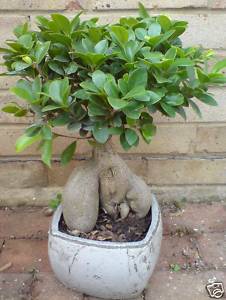
Cool or What?