Showing posts with label organic farming. Show all posts

Sunday, March 14, 2010

Carnations and Mothers Day!


Well my friends, today is Mothering Sunday in the UK - Mother's Day. Sadly I lost my Mother some years ago - in 1969 to be precise - and still miss her dearly. Funny isn't it how you always regret the things you shouldn't have said or done and remember the things you should have said and done when they were with us.

Sadly that's the human condition I think - we never know when the Grim Reaper will appear over the horizon. Think about it, we are all of us merely one heartbeat away from meeting our God - (whatever or whoever that is for any individual). Concentrates the mind doesn't it. In this modern world we are so mollycoddled through our addiction to Consumerism that we seem to have forgotten that we are after all human and our time on this Earth is finite.

In earlier years, an acceptance of death was part of our daily living experience. We in the West didn't have the wonders of modern Science to protect us - modern drugs and medical advances have wiped out so many of the diseases that claimed lives so cheaply in earlier centuries, certainly in Western Society. I think we have forgotten that man, like plants is subject at the end of it all to the demands and strictures of Nature. We all have an allotted time and when it is up, we have to go!

Anyway, I simply wanted to say that I took some flowers to my Mother's grave this morning and chose to take a bouquet of Carnations. And that prompted me to put some notes together about that flower, which is extremely popular in the UK.

If sowing from seeds you should sow Carnation in cutting boxes round about now, in March. Set out the ensuing young plants as early as possible and nip off the centre of the plants so that they can branch out without restraint.

Carnations will also grow well from cuttings which are best taken round about Autumn time. Cuttings taken from the plant base are usually best and you should pot them and maintain them in a cool environment, about 45 to 50 Degrees F. Nip off the tops while growing in the pot, and keep them secure until it comes time to plant them out , usually early in April. Keep them moist while potted.

When you do start to plant out, plant into loose soil, which should be well manured and water in well. The plant does better in partly shaded conditions,
and you must keep pinching off the tops regularly, when they will bloom throughout the Summer months.

Flowers are usually taken up by September, when you can unearth them carefully, and pot them securely until root growth has begun. You will need to water well and moisturize the flower foliage regularly. You will add to the size of the main flowers by nipping off the side buds. All in all a plant well worth cultivating.

Hope you liked this Article. I would love to hear your comments!

Tuesday, March 02, 2010

Planting out Roses!


When planting roses, you must take care to avoid exposing the roots to the
drying effect of sun and air. If you have bought dormant field-grown plants
make sure that all broken and bruised roots are cut off smoothly
and squarely. The tops also will need to be cut back. The cut should
always be made just above a bud, preferably on the outer side of the
cane.

Strong-growing varieties may be cut back about one-fourth or one-half,
depending on whether they have good or bad roots. Weaker-growing kinds, as most
of the everblooming roses, should be cut back-most severely. In both
cases it is well to remove the weak growth first. Plants set out from
pots will usually not need cutting back.


Hardy roses, especially the strong field-grown plants, should be set in
the early Autumn. It is better to get them out just as
soon as they have shed their foliage. If not in Autumn, they may be planted
in the early Spring. At that season it is advisable to plant them as
early as the ground is dry enough, and before the buds have started to
grow.

Dormant pot-plants may also be set out early, but they should be
perfectly inactive. Setting them out early in this condition is
preferable to waiting till they are in foliage and full bloom.
Growing pot-plants may be planted any time in Spring after danger of frost is past, or even during the summer, if they are watered and shaded for a few days.

Open-ground plants should be set about as deep as they stood
previously, other than budded or grafted plants, which should be set so
that the union of the stock and graft is 2 to 4 inches below the
surface of the ground.


Plants from pots may also be set an inch deeper than they stood in the pots.
The soil should be in a friable condition. Roses should have the soil
compacted immediately about their roots. As a general rule the
dryer the soil the more firmly it may be pressed.

Generally, roses on their own roots will prove more satisfactory than budded
stock. On own-rooted stock, the suckers or shoots from below the surface
of the soil will be of the same kind, whereas with budded roses there is
danger of the stock (usually Manetti or dog rose) starting into growth
and, not being discovered, outgrowing the bud, taking possession, and
finally killing out the weaker growth.

Still, if the plants are set deep enough to prevent buds of the stock from
starting at all, this can be avoided.

Sunday, January 03, 2010

how to Create Healthy Organic Soil!

I came across this great Article from Whitney Segura, a writing colleague of mine at ezine articles. I highly recommend this to all gardeners.

How to Build Healthy Organic Soil

By ezinearticles.com expert Whitney Segura
Organic Soil Gardening How To Guide:


Those new to organic gardening sometimes think that growing one's own vegetables is all that is needed to be an organic gardener. But unless those vegetables are grown in healthy soil, the results may be less than ideal. Not only that, but some soil may contain unhealthy levels of lead or be on property which had contaminants. So it is important to be sure to start with good to excellent soil.


It is really not hard to make sure that soil meets the requirements.
First, consider the land. If it is in your backyard, think about the history of your home and land. Did you buy an older home which may have contained lead? Was reconstruction or remodeling done after purchase? If so, consider having your soil tested. This can be done professionally or with the help of home soil tests. Of course, you'll want to take steps to remove lead from soil.If lead exists in the soil, you may need to grow herbs and vegetables in containers located in an area of the yard that doesn't have high lead levels.

Another option?
A community garden. These allow gardeners to have individual plots or take home a portion of all vegetables grown, depending on the policies. They also help gardeners to network with others, make friends and have fun while participating in growing organic vegetables in the community. How do you make sure your soil is rich in nutrients and likely to promote healthy vegetables?

First, consider the types of herbs and vegetables you want to grow.

Some are very heavy feeders while others are not. Make sure you know not only your growing zone but what type of soil exists where you want to put your plants. Even in areas of the country where the soil tends to be very healthy, there can be patches of clay, sandy or other soil.
The nutrient content of the soil can also vary widely, with some areas of the same yard having rich, woodland soil while other areas have very little soil and many rocks (difficult to plow). There are testing kits to determine soil content, either done professionally or with home testing. Of course, you can "test" an area by seeing which plants do well but it is better to start with some knowledge of the soil itself.Start with a visual test.

Also, don't be afraid to start feeling the soil.
As odd as this may seem, good soil will have a certain feel. If there are plenty of earthworms, that is an excellent sign. Dark, loose soil and plenty of earthworms can be a sign of healthy, organic soil (assuming you've already tested for harmful substances). Adding compost to your soil will help add the nutrition. Of course, you'll want to avoid pesticides and substances that are high in dangerous chemicals. You are aiming for soil that is very loose and porous.Next, make sure you know the PH level in your soil.

Depending on test results, you'll want to make sure your soil is neither too acid or alkaline.
With luck, the PH will be ideal. Now it is time to move on to digging through the dirt. Is the soil compacted, with little space for plants to get air and water. If so, you may need to use a tiller or other equipment to break up the soil. The final step is to consider adding amendments, or extra fertilizers or nutrients to the soil. Garden centers often carry the specific types needed for certain areas but be sure to use organically friendly products. These beginning steps will help to build organic soil. Using rain barrels to collect water for the garden can also help to keep chemicals from the soil (depending on the chemical levels in drinking water).

Whitney Segura is the owner of http://www.bestgardengifts.com/ - Best Garden Gifts is a company that sells home hydroponics equipment,compost bins,greenhouses,plant containers and other green products.

Article Source: http://EzineArticles.com/?How-to-Build-Healthy-Organic-Soil&id=3469103 How to Build Healthy Organic Soil

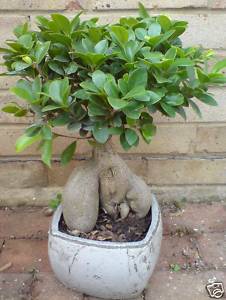
My Ficus Ginseng Plant!

My Ficus Ginseng Plant!
Cool or What?

Get Rid of Lawn Clover Video!

How to Create Good Growing Soil!