Showing posts with label organic food. Show all posts

Sunday, March 28, 2010

Grow Crocus Flowers - Welcome to Spring.


I was strolling through our local park today basking in the Sunshine. The clocks went forward at midnight last night and there was a real feel of Spring in the air. A cold gusting wind was blowing, but nevertheless, the sight of the Sun in a blue, almost cloudless sky, raised my spirits enormously. It has been a long, dark, cold winter, (whatever happened to global warming!) and we in the North of England desperately need some warm weather to cheer us up.
Trudging along, my eye was attracted to a splash of colour dotted about on the grass and on further inspection, this turned out to be a carpet of Crocuses, in a profusion of yellow, purple and white colours. God must have been having a good day when he created the Crocus. There is nothing more guaranteed to raise the spirits than the sight of a profusion of Crocuses spreadeagled across the grass. I just love the seemingly undisciplined way they grow - no straight lines, just a myriad of colours waving at me in the wind. It is as though someone has taken a paintbox of colours and sprinkled them haphazardly in a carpet across the grass.
The Crocus, or Saffron is one of the Lily family, and is a hardy perennial plant which is believed to have originated in the Mediterranean area where it was first harvested, so legend has it, on the Island of Crete! As one of the first flowers to bloom in spring, crocuses are of course immensely popular. The plants grow from corms and their cup-shaped, solitary, "salverform" flowers taper off into a narrow tube. Their flowers and leaves are protected from Winter snow and frosty conditions by a waxy cuticle and it is a wonderful sight to see them pushing their way up through a sprinkling of snow.
Cultivation of the plant is no trouble at all, as they can be left very much to themselves to develop, although they do need regular cutting back as they seed abundantly. They thrive in light, sandy, gritty, well drained loam, flowering usually at the beginning of March in the UK. They should be planted in a sunny position, although some species do prefer shadier sites. The corms should be planted about an inch and a half to two inches deep.
So if you want to create a brilliant and uplifting display in your garden for next early Spring, take my advice and plant Crocus flowers, you won't be sorry!

I hope you like this rather whimsical article. If you do, then why not share your thoughts with me... always interested to receive your thoughts, especially if they are positive ones.

Sunday, January 03, 2010

how to Create Healthy Organic Soil!

I came across this great Article from Whitney Segura, a writing colleague of mine at ezine articles. I highly recommend this to all gardeners.

How to Build Healthy Organic Soil

By ezinearticles.com expert Whitney Segura
Organic Soil Gardening How To Guide:


Those new to organic gardening sometimes think that growing one's own vegetables is all that is needed to be an organic gardener. But unless those vegetables are grown in healthy soil, the results may be less than ideal. Not only that, but some soil may contain unhealthy levels of lead or be on property which had contaminants. So it is important to be sure to start with good to excellent soil.


It is really not hard to make sure that soil meets the requirements.
First, consider the land. If it is in your backyard, think about the history of your home and land. Did you buy an older home which may have contained lead? Was reconstruction or remodeling done after purchase? If so, consider having your soil tested. This can be done professionally or with the help of home soil tests. Of course, you'll want to take steps to remove lead from soil.If lead exists in the soil, you may need to grow herbs and vegetables in containers located in an area of the yard that doesn't have high lead levels.

Another option?
A community garden. These allow gardeners to have individual plots or take home a portion of all vegetables grown, depending on the policies. They also help gardeners to network with others, make friends and have fun while participating in growing organic vegetables in the community. How do you make sure your soil is rich in nutrients and likely to promote healthy vegetables?

First, consider the types of herbs and vegetables you want to grow.

Some are very heavy feeders while others are not. Make sure you know not only your growing zone but what type of soil exists where you want to put your plants. Even in areas of the country where the soil tends to be very healthy, there can be patches of clay, sandy or other soil.
The nutrient content of the soil can also vary widely, with some areas of the same yard having rich, woodland soil while other areas have very little soil and many rocks (difficult to plow). There are testing kits to determine soil content, either done professionally or with home testing. Of course, you can "test" an area by seeing which plants do well but it is better to start with some knowledge of the soil itself.Start with a visual test.

Also, don't be afraid to start feeling the soil.
As odd as this may seem, good soil will have a certain feel. If there are plenty of earthworms, that is an excellent sign. Dark, loose soil and plenty of earthworms can be a sign of healthy, organic soil (assuming you've already tested for harmful substances). Adding compost to your soil will help add the nutrition. Of course, you'll want to avoid pesticides and substances that are high in dangerous chemicals. You are aiming for soil that is very loose and porous.Next, make sure you know the PH level in your soil.

Depending on test results, you'll want to make sure your soil is neither too acid or alkaline.
With luck, the PH will be ideal. Now it is time to move on to digging through the dirt. Is the soil compacted, with little space for plants to get air and water. If so, you may need to use a tiller or other equipment to break up the soil. The final step is to consider adding amendments, or extra fertilizers or nutrients to the soil. Garden centers often carry the specific types needed for certain areas but be sure to use organically friendly products. These beginning steps will help to build organic soil. Using rain barrels to collect water for the garden can also help to keep chemicals from the soil (depending on the chemical levels in drinking water).

Whitney Segura is the owner of http://www.bestgardengifts.com/ - Best Garden Gifts is a company that sells home hydroponics equipment,compost bins,greenhouses,plant containers and other green products.

Article Source: http://EzineArticles.com/?How-to-Build-Healthy-Organic-Soil&id=3469103 How to Build Healthy Organic Soil

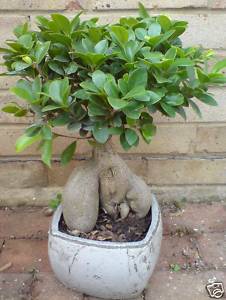
My Ficus Ginseng Plant!

My Ficus Ginseng Plant!
Cool or What?

Get Rid of Lawn Clover Video!

How to Create Good Growing Soil!