Lawn care
Hi everyone, I came across a great new Gardening Website today and it really impressed me. It is very professionally presented and has a wide range of resources, product information and gardening solutions. You can even join their FREE Newsletter to receive gardening tips and special offers. I strongly recommend you pay an early visit to http://www.greatbigplants.com/ where you will receive a warm welcome from a truly professional bunch of nice people.
As a bonus, visit their Blog at http://greatbigplantsblog.com/ for a series of Articles on general gardening issues, a comments section and a variety of links to other gardening sources. Highly recommended.
I have placed a link in the right hand margin of this Blog to make access easier for you all!
Enjoy
Terry
lawn care
Wednesday, January 31, 2007


Maintaining Your Lawn - Quality Lawn Care!
lawn care
MAINTAINING YOUR LAWN-Quality Lawn Care
The importance of quality, regular Lawn Care cannot be over-estimated.
Whether you have used sod or seed, you will have to remember some important points about the proper maintenance of your Lawn.
Watering your lawn is very important. Be sure to do this a few times a day. If you do not have the time, you should consider buying an automatic watering system.
Weed your lawn at least twice a week. This will help your lawn stay healthy and will also protect the grass. If you notice that your grass is discolored in some areas, it could be because your grass is not getting the nutrients it needs because of the weeds.
Mow your lawn only when it needs it. If you mow your lawn too soon, you may notice bald spots and other problems. You have to give the grass time to grow.
Fertilize your lawn at different times during the year. This will help you lawn stay lush and green.
Check you lawn for thatch, compaction, and other problems. These are usually a sign of oxygen and nutrient deficient soil. Aerate your lawn during the fall and again during the spring.
Use weed killers that will not harm the grass.
Replace patches of sod if they have been removed due to heavy rain or flooding.
Use compost or mulch when fertilizing your lawn.
Rake up leaves during the fall instead of just leaving them. Insects and other animals may build nests if you do not pick up the leaves. Use the leaves to create mulch.
Terry Blackburn. Internet Marketing Consultant, living in South Shields in the North-East of England. Author and Producer of blog http://www.lawnsurgeon.blogspot.com. Author of "Your Perfect Lawn," a 90 Page eBook devoted to Lawn Preparation, Lawn Care and Maintenance. Find it at http://www.lawnsurgeon.com
I would be very interested to have your comments on this Article.
Article Source: http://EzineArticles.com/?expert=Terry_Blackburn
Terry Blackburn - EzineArticles Expert Author
lawn care
MAINTAINING YOUR LAWN-Quality Lawn Care
The importance of quality, regular Lawn Care cannot be over-estimated.
Whether you have used sod or seed, you will have to remember some important points about the proper maintenance of your Lawn.
Watering your lawn is very important. Be sure to do this a few times a day. If you do not have the time, you should consider buying an automatic watering system.
Weed your lawn at least twice a week. This will help your lawn stay healthy and will also protect the grass. If you notice that your grass is discolored in some areas, it could be because your grass is not getting the nutrients it needs because of the weeds.
Mow your lawn only when it needs it. If you mow your lawn too soon, you may notice bald spots and other problems. You have to give the grass time to grow.
Fertilize your lawn at different times during the year. This will help you lawn stay lush and green.
Check you lawn for thatch, compaction, and other problems. These are usually a sign of oxygen and nutrient deficient soil. Aerate your lawn during the fall and again during the spring.
Use weed killers that will not harm the grass.
Replace patches of sod if they have been removed due to heavy rain or flooding.
Use compost or mulch when fertilizing your lawn.
Rake up leaves during the fall instead of just leaving them. Insects and other animals may build nests if you do not pick up the leaves. Use the leaves to create mulch.
Terry Blackburn. Internet Marketing Consultant, living in South Shields in the North-East of England. Author and Producer of blog http://www.lawnsurgeon.blogspot.com. Author of "Your Perfect Lawn," a 90 Page eBook devoted to Lawn Preparation, Lawn Care and Maintenance. Find it at http://www.lawnsurgeon.com
I would be very interested to have your comments on this Article.
Article Source: http://EzineArticles.com/?expert=Terry_Blackburn
Terry Blackburn - EzineArticles Expert Author
lawn care
Monday, January 29, 2007
Lawn Care - How to Make the Grass Grow - Sodding!
lawn care
SODDING THE LAWN
One alternative to seeding your lawn is to use sod. Sod is grass that has already been cultivated. Sections of sod are cut and then placed on the lawn. This will cut down on growing time and is a good idea if you live in windy areas or areas that receive a lot of rain.
While this can be more expensive than seeding your lawn, you should look into it, especially if your soil quality is poor.
The tools and materials you will need when laying sod include:
Rake
Knife
Rototiller
Shovel
Lawn roller
Sod
Fertilizer
Compost
The following are the steps you should take when placing sod on your lawn:
Clear your lawn of existing grass and weeds completely before beginning this project. You should test your soil at this point to make sure it is as close to neutral as possible.
After clearing the soil, you should repair dry soil by watering it, and breaking up any compaction with a rototiller. This will help you maintain healthy soil later on.
Apply fertilizer that contains phosphorous. If you have compost, add it to the soil. This will enrich the nutrients that are in the soil.
Use the tiller and combine the fertilizer, compost, and soil together. Then rake over the soil in order to smooth it out and expose rocks and other debris. Remove this from the soil. Use the lawn roller to make the ground smooth. Since you will be laying sod, you will want to make the ground as smooth as possible.
Begin laying your sod. You should begin at one end of your lawn and work your way to the middle. Unroll the sod one roll at a time. If the rolls of sod are not long enough for your lawn, you will have to start another roll. Make sure the two rolls do not overlap.
You will have to stagger the rolls of sod when laying them side by side. If you do not do this then you will have lines on your lawn. As the grass grows, this will become more noticeable.
Use the roller when you are done to smooth the sod and push it against the soil underneath. If you notice that some pieces of sod are lower than others, you can use soil to raise them a little. Pack soil underneath and then roll it out.
Water your new lawn everyday until the grass grows. This will ensure a healthy lawn.
Sodding and seeding are not that much different. The only major difference is the amount of time it will take for the lawn to grow. You will have to weigh your options and decide which way is the best for you.
Terry Blackburn. Internet Marketing Consultant, living in South Shields in the North-East of England. Author and Producer of blog http://www.lawnsurgeon.blogspot.com Author of "Your Perfect Lawn," a 90 Page eBook devoted to Lawn Preparation, Lawn Care and Maintenance. Find it at http://www.lawnsurgeon.com
I would be very interested to have your comments on this Article.
Article Source: http://EzineArticles.com/?expert=Terry_Blackburn
lawn care
SODDING THE LAWN
One alternative to seeding your lawn is to use sod. Sod is grass that has already been cultivated. Sections of sod are cut and then placed on the lawn. This will cut down on growing time and is a good idea if you live in windy areas or areas that receive a lot of rain.
While this can be more expensive than seeding your lawn, you should look into it, especially if your soil quality is poor.
The tools and materials you will need when laying sod include:
Rake
Knife
Rototiller
Shovel
Lawn roller
Sod
Fertilizer
Compost
The following are the steps you should take when placing sod on your lawn:
Clear your lawn of existing grass and weeds completely before beginning this project. You should test your soil at this point to make sure it is as close to neutral as possible.
After clearing the soil, you should repair dry soil by watering it, and breaking up any compaction with a rototiller. This will help you maintain healthy soil later on.
Apply fertilizer that contains phosphorous. If you have compost, add it to the soil. This will enrich the nutrients that are in the soil.
Use the tiller and combine the fertilizer, compost, and soil together. Then rake over the soil in order to smooth it out and expose rocks and other debris. Remove this from the soil. Use the lawn roller to make the ground smooth. Since you will be laying sod, you will want to make the ground as smooth as possible.
Begin laying your sod. You should begin at one end of your lawn and work your way to the middle. Unroll the sod one roll at a time. If the rolls of sod are not long enough for your lawn, you will have to start another roll. Make sure the two rolls do not overlap.
You will have to stagger the rolls of sod when laying them side by side. If you do not do this then you will have lines on your lawn. As the grass grows, this will become more noticeable.
Use the roller when you are done to smooth the sod and push it against the soil underneath. If you notice that some pieces of sod are lower than others, you can use soil to raise them a little. Pack soil underneath and then roll it out.
Water your new lawn everyday until the grass grows. This will ensure a healthy lawn.
Sodding and seeding are not that much different. The only major difference is the amount of time it will take for the lawn to grow. You will have to weigh your options and decide which way is the best for you.
Terry Blackburn. Internet Marketing Consultant, living in South Shields in the North-East of England. Author and Producer of blog http://www.lawnsurgeon.blogspot.com Author of "Your Perfect Lawn," a 90 Page eBook devoted to Lawn Preparation, Lawn Care and Maintenance. Find it at http://www.lawnsurgeon.com
I would be very interested to have your comments on this Article.
Article Source: http://EzineArticles.com/?expert=Terry_Blackburn
lawn care
Sunday, January 28, 2007
Lawn Care - How to Make the Grass Grow - Seeding!
lawn care
IT’S LIKE WATCHING THE GRASS GROW
All right, now you are ready to make the grass on your lawn grow. The best part about a lawn is its green grass. As you have learned in previous chapters, there are many types of grass seed that you can use depending on your location and what is available. Most people use mixed grass in order to have a nice green lawn all year long. While this may be your best option, you should look into other seeding possibilities as well.
SEEDING THE LAWN
Seeding your lawn is a very simple process that should be done in the fall or in the spring depending on the type of grass you are using. Obliviously, cooler grasses should be planted in cooler weather, while warmer grasses should be planted in warmer weather. But in reality, you should choose a time that is neither hot nor cold because you will avoid crabgrass, burning the seeds in the hot sun, and dry soil.
The tools and materials you will need when you are seeding your lawn include:
Rake
Shovel
Rototiller
Seeder
Lawn roller
Grass seed
Fertilizer that contains phosphorus
Herbicide
You may not need the herbicide depending on your existing weed problems.
The following are the step you should take when preparing the soil:
If you want to seed over an existing lawn, you will have to remove all of the existing grass. This can be exhausting work, but it has to be done so that the new grass will have room to grow.
If you are starting with bare soil, you should still rake the soil to dig up any weeds that might be hiding underneath. If you are ambitious enough, try Soil Solarization over the entire area. This will give you a clean slate when it comes to weeds.
After you have cleared the area, you should aerate, add water in case you are seeing signs of compaction, and rent a rototiller that will help you break up compacted soil. You should also have your soil tested at this point. Grass will grow at pH levels of 6.5-7.0. Do not proceed until your soil is at these levels.
Your next step will be to apply fertilizer to the soil. This will lay the foundation for strong growth. Apply compost if you have any on hand. This will provide nutrients for the soil which will in turn feed the grass seeds.
You should turn the soil again using a rake or a tiller. This will allow for even distribution of nutrients and fertilizer.
At this point, you should consider your drainage situation since it is easier to create one now then when you have a lawn full of grass. If possible create your trenches at this point. Also, remove rocks from the soil.
The next step is the make the soil level to the ground. Use a lawn roller for this step.
You are now ready to plant your grass seed. Using a seeder spread the seeds over the soil avoiding the area where you built the trench. You can go back later and distribute seeds by hand.
Rake the soil to cover the seeds. Use the roller for more soil coverage.
Once you have planted your lawn, you will have to make sure that it receives enough water each day. Try to keep the soil moist, but do not use too much water.
When you start seeing grass, you will need to continue to water the lawn a few times a day. Many people buy an automatic irrigation system to make sure the lawn is watered on a regular basis.
In a few weeks, your lawn will start to come in. This is a critical time for your lawn. If you planted in the fall, you may have to deal with wind and rain. Laying hay may help keep the seed in place.
If you planted grass in the spring, you may also have to deal with rain. If you notice bald areas, you will have to overseed in order to create a lush, even lawn.
Seeding your lawn may have its challenges, but in the end, the lawn should look good after it grows in. Monitor the soil, watch for flooding and weeds. Maintain you new lawn by creating a drainage system that works, and by weeding at least twice a week. This will help reduce the spreading of weeds and will help your lawn look its best.
Terry Blackburn. Internet Marketing Consultant, living in South Shields in the North-East of England. Author and Producer of blog http://www.lawnsurgeon.blogspot.com Author of "Your Perfect Lawn," a 90 Page eBook devoted to Lawn Preparation, Lawn Care and Maintenance. Find it at http://www.lawnsurgeon.com
I would be very interested to have your comments on this Article.
Article Source: http://EzineArticles.com/?expert=Terry_Blackburn
Terry Blackburn - EzineArticles Expert Author
lawn care
IT’S LIKE WATCHING THE GRASS GROW
All right, now you are ready to make the grass on your lawn grow. The best part about a lawn is its green grass. As you have learned in previous chapters, there are many types of grass seed that you can use depending on your location and what is available. Most people use mixed grass in order to have a nice green lawn all year long. While this may be your best option, you should look into other seeding possibilities as well.
SEEDING THE LAWN
Seeding your lawn is a very simple process that should be done in the fall or in the spring depending on the type of grass you are using. Obliviously, cooler grasses should be planted in cooler weather, while warmer grasses should be planted in warmer weather. But in reality, you should choose a time that is neither hot nor cold because you will avoid crabgrass, burning the seeds in the hot sun, and dry soil.
The tools and materials you will need when you are seeding your lawn include:
Rake
Shovel
Rototiller
Seeder
Lawn roller
Grass seed
Fertilizer that contains phosphorus
Herbicide
You may not need the herbicide depending on your existing weed problems.
The following are the step you should take when preparing the soil:
If you want to seed over an existing lawn, you will have to remove all of the existing grass. This can be exhausting work, but it has to be done so that the new grass will have room to grow.
If you are starting with bare soil, you should still rake the soil to dig up any weeds that might be hiding underneath. If you are ambitious enough, try Soil Solarization over the entire area. This will give you a clean slate when it comes to weeds.
After you have cleared the area, you should aerate, add water in case you are seeing signs of compaction, and rent a rototiller that will help you break up compacted soil. You should also have your soil tested at this point. Grass will grow at pH levels of 6.5-7.0. Do not proceed until your soil is at these levels.
Your next step will be to apply fertilizer to the soil. This will lay the foundation for strong growth. Apply compost if you have any on hand. This will provide nutrients for the soil which will in turn feed the grass seeds.
You should turn the soil again using a rake or a tiller. This will allow for even distribution of nutrients and fertilizer.
At this point, you should consider your drainage situation since it is easier to create one now then when you have a lawn full of grass. If possible create your trenches at this point. Also, remove rocks from the soil.
The next step is the make the soil level to the ground. Use a lawn roller for this step.
You are now ready to plant your grass seed. Using a seeder spread the seeds over the soil avoiding the area where you built the trench. You can go back later and distribute seeds by hand.
Rake the soil to cover the seeds. Use the roller for more soil coverage.
Once you have planted your lawn, you will have to make sure that it receives enough water each day. Try to keep the soil moist, but do not use too much water.
When you start seeing grass, you will need to continue to water the lawn a few times a day. Many people buy an automatic irrigation system to make sure the lawn is watered on a regular basis.
In a few weeks, your lawn will start to come in. This is a critical time for your lawn. If you planted in the fall, you may have to deal with wind and rain. Laying hay may help keep the seed in place.
If you planted grass in the spring, you may also have to deal with rain. If you notice bald areas, you will have to overseed in order to create a lush, even lawn.
Seeding your lawn may have its challenges, but in the end, the lawn should look good after it grows in. Monitor the soil, watch for flooding and weeds. Maintain you new lawn by creating a drainage system that works, and by weeding at least twice a week. This will help reduce the spreading of weeds and will help your lawn look its best.
Terry Blackburn. Internet Marketing Consultant, living in South Shields in the North-East of England. Author and Producer of blog http://www.lawnsurgeon.blogspot.com Author of "Your Perfect Lawn," a 90 Page eBook devoted to Lawn Preparation, Lawn Care and Maintenance. Find it at http://www.lawnsurgeon.com
I would be very interested to have your comments on this Article.
Article Source: http://EzineArticles.com/?expert=Terry_Blackburn
Terry Blackburn - EzineArticles Expert Author
lawn care
Saturday, January 27, 2007
Lawn Care - What to Do with Small and Large Rocks!
lawn care
All yards have rocks. But some yards have many, many rocks. Depending on the region in which you live, instead of removing all the rocks, which could take the better part of your lifetime, you could use these boulders to your advantage and create decorative ornaments. Some popular uses for large rocks include:
Rock gardens
Rock fences
Randomly placed rocks on property
Rocks used as planter shelves
Rocks used with other lawn ornaments.
Be creative! Use your imagination! This is your chance to take an annoying problem and turn it into something wonderful. Many homeowners are forced to use their lawn’s natural landscape in order to create a functional lawn that looks great. If you have large boulders that cannot be moved, plant vines and flowers around them. If you have drainage issues, use medium and large rocks to line your dry creek bed or French drain.
Many times, these rocks will help reduce the amount of erosion that could harm the grass and other plants. Erosion occurs when too much rain saturates the lawn and then quickly moves down a natural slope and off of your lawn. While this is great for drainage purposes, you may be left with soil that is nutrient poor. Having rocks will keep some of the water on your lawn.
Now that you know how to deal with very large rocks, let’s talk about smaller rocks. If you have rocky soil, you may have difficulty keeping some plants alive due to the fact that their roots cannot reach as far down in the ground as they need to. This soil can be tricky to deal with. These tips will help you prep and plant in rocky soil:
For this type of soil, it is important that you till it first before planting in order to remove some of the larger rocks. Remove as many rocks as you can. You will find this to be an impossible mission after a while, but at least try to remove those larger ones.
If you are concerned with weeds, you should then prep you soil with landscape fabric and mulch.
You can prep the soil by watering or adding fertilizer if you feel the soil needs it. Rocky soil has a tendency to be dry.
Choose plants that are more vine-like and have smaller roots that can weave in and out around rocks in the soil. These plants seem to last longer than others. Common vine plants include:
o English Ivy
o Morning Glory
o Trumpet Vine
o Passion flower
o Dogwood
You can buy these plants as seedlings or plant seeds into the ground. If you starting out later in the growing season, you should buy seedlings as they are easy to transplant and should take to your soil right away.
Planting your new plants is easy even if you already put down landscape fabric and mulch. Simply move the mulch aside and cut a small ‘x’ shape into the fabric. Plant your seedlings and then pack the mulch around them.
These vines grow pretty quickly and should flower for most of the season.
If you want to plant trees, you should complete the same soil preparation procedures. Trees that can survive in rocky soil include:
o Evergreen
o Pine
o Spruce
o Juniper
Rocks do not have to ruin your lawn as long as you try to accommodate them and make them part of the landscape.
Terry Blackburn. Internet Marketing Consultant, living in South Shields in the North-East of England. Author and Producer of blog http://www.lawnsurgeon.blogspot.com Author of "Your Perfect Lawn," a 90 Page eBook devoted to Lawn Preparation, Lawn Care and Maintenance. Find it at http://www.lawnsurgeon.com
I would be very interested to have your comments on this Article.
Article Source: http://EzineArticles.com/?expert=Terry_Blackburn
Terry Blackburn - EzineArticles Expert Author
lawn care
All yards have rocks. But some yards have many, many rocks. Depending on the region in which you live, instead of removing all the rocks, which could take the better part of your lifetime, you could use these boulders to your advantage and create decorative ornaments. Some popular uses for large rocks include:
Rock gardens
Rock fences
Randomly placed rocks on property
Rocks used as planter shelves
Rocks used with other lawn ornaments.
Be creative! Use your imagination! This is your chance to take an annoying problem and turn it into something wonderful. Many homeowners are forced to use their lawn’s natural landscape in order to create a functional lawn that looks great. If you have large boulders that cannot be moved, plant vines and flowers around them. If you have drainage issues, use medium and large rocks to line your dry creek bed or French drain.
Many times, these rocks will help reduce the amount of erosion that could harm the grass and other plants. Erosion occurs when too much rain saturates the lawn and then quickly moves down a natural slope and off of your lawn. While this is great for drainage purposes, you may be left with soil that is nutrient poor. Having rocks will keep some of the water on your lawn.
Now that you know how to deal with very large rocks, let’s talk about smaller rocks. If you have rocky soil, you may have difficulty keeping some plants alive due to the fact that their roots cannot reach as far down in the ground as they need to. This soil can be tricky to deal with. These tips will help you prep and plant in rocky soil:
For this type of soil, it is important that you till it first before planting in order to remove some of the larger rocks. Remove as many rocks as you can. You will find this to be an impossible mission after a while, but at least try to remove those larger ones.
If you are concerned with weeds, you should then prep you soil with landscape fabric and mulch.
You can prep the soil by watering or adding fertilizer if you feel the soil needs it. Rocky soil has a tendency to be dry.
Choose plants that are more vine-like and have smaller roots that can weave in and out around rocks in the soil. These plants seem to last longer than others. Common vine plants include:
o English Ivy
o Morning Glory
o Trumpet Vine
o Passion flower
o Dogwood
You can buy these plants as seedlings or plant seeds into the ground. If you starting out later in the growing season, you should buy seedlings as they are easy to transplant and should take to your soil right away.
Planting your new plants is easy even if you already put down landscape fabric and mulch. Simply move the mulch aside and cut a small ‘x’ shape into the fabric. Plant your seedlings and then pack the mulch around them.
These vines grow pretty quickly and should flower for most of the season.
If you want to plant trees, you should complete the same soil preparation procedures. Trees that can survive in rocky soil include:
o Evergreen
o Pine
o Spruce
o Juniper
Rocks do not have to ruin your lawn as long as you try to accommodate them and make them part of the landscape.
Terry Blackburn. Internet Marketing Consultant, living in South Shields in the North-East of England. Author and Producer of blog http://www.lawnsurgeon.blogspot.com Author of "Your Perfect Lawn," a 90 Page eBook devoted to Lawn Preparation, Lawn Care and Maintenance. Find it at http://www.lawnsurgeon.com
I would be very interested to have your comments on this Article.
Article Source: http://EzineArticles.com/?expert=Terry_Blackburn
Terry Blackburn - EzineArticles Expert Author
lawn care
Friday, January 26, 2007
Lawn Care - Removing Nutgrass!
lawn care
Nutgrass
Unlike thatch, these grass-like weeds will spread all over your lawn. They may even invade your driveway, walkway, and sidewalks. Removing these weeds is a little trickier since they are heartier than other kinds of weeds. Pulling them out at the roots can be a lot harder than it would seem. With a network of underground roots, these weeds can cling to the ground for a long time.
This weed also thrives in areas where drainage is poor. If you are seeing nutgrass in your yard, you should look into creating a drainage system that will remove excess water from the soil. Nutgrass can be identified by yellow or red flowers which will be small in size. While this weed looks like a harmless flower, it is not. It can spread very quickly and take over your lawn. The problem with nutgrass is that when you pull it out, tiny nutlets will be deposited which will begin to grow. You will see new nutgrass within days of weeding.
The only way to deal with this problem is to use a weed killer. You will have to spray the weed killer on existing plants at least six times before they will die. Repeat this process until the weed is gone.
When nutgrass is present, you should not:
Aerate or till the soil as this will cause seeds to disperse Pull out the weed Cut off the top of the weed
Removing nutgrass will take time and patience. You will have to use the weed killer for a few weeks in order to see results. If you have to mow the lawn, try to avoid the areas where the nutgrass is growing, as mowing over them may spread the seeds to other parts of the lawn.
Terry Blackburn. Internet Marketing Consultant, living in South Shields in the North-East of England. Author and Producer of blog http://www.lawnsurgeon.blogspot.com Author of "Your Perfect Lawn," a 90 Page eBook devoted to Lawn Preparation, Lawn Care and Maintenance. Find it at http://www.lawnsurgeon.com
I would be very interested to have your comments on this Article.
Article Source: http://EzineArticles.com/?expert=Terry_Blackburn
lawn care
Nutgrass
Unlike thatch, these grass-like weeds will spread all over your lawn. They may even invade your driveway, walkway, and sidewalks. Removing these weeds is a little trickier since they are heartier than other kinds of weeds. Pulling them out at the roots can be a lot harder than it would seem. With a network of underground roots, these weeds can cling to the ground for a long time.
This weed also thrives in areas where drainage is poor. If you are seeing nutgrass in your yard, you should look into creating a drainage system that will remove excess water from the soil. Nutgrass can be identified by yellow or red flowers which will be small in size. While this weed looks like a harmless flower, it is not. It can spread very quickly and take over your lawn. The problem with nutgrass is that when you pull it out, tiny nutlets will be deposited which will begin to grow. You will see new nutgrass within days of weeding.
The only way to deal with this problem is to use a weed killer. You will have to spray the weed killer on existing plants at least six times before they will die. Repeat this process until the weed is gone.
When nutgrass is present, you should not:
Aerate or till the soil as this will cause seeds to disperse Pull out the weed Cut off the top of the weed
Removing nutgrass will take time and patience. You will have to use the weed killer for a few weeks in order to see results. If you have to mow the lawn, try to avoid the areas where the nutgrass is growing, as mowing over them may spread the seeds to other parts of the lawn.
Terry Blackburn. Internet Marketing Consultant, living in South Shields in the North-East of England. Author and Producer of blog http://www.lawnsurgeon.blogspot.com Author of "Your Perfect Lawn," a 90 Page eBook devoted to Lawn Preparation, Lawn Care and Maintenance. Find it at http://www.lawnsurgeon.com
I would be very interested to have your comments on this Article.
Article Source: http://EzineArticles.com/?expert=Terry_Blackburn
lawn care
Thursday, January 25, 2007
Lawn Care - Removing Johnson Grass!
lawn care
Johnson Grass
Johnson grass is a tall weed that thrives in places where there is a lot of water present. Mostly, this weed grows alongside river and stream banks, but could grow on your lawn if you have puddling or other drainage issues or you live near a body of water.
This weed will grow very tall and is oftentimes mistaken for other plants. If you suspect you have Johnson grass growing in your yard, you should research its characteristics or ask someone who knows about plants before trying to remove it.
Some tips about removing Johnson grass from your lawn:
Pulling these weeds after they have grown for a while is almost impossible. If you cut the weed down, you will only succeed in prohibiting its growth for a short time. The weed will regenerate if the root is not removed as well. But if you remove as much of the weed as you can repeatedly, you will kill it. This method can take a long time, however.
Tilling the soil and aerating before each growing season will help you remove weeds before they have a chance to grow. This will work for all weeds in your lawn.
Weeding a few days a week will help you catch Johnson grass before it grows tall enough. Watering the soil will make removal much easier.
Most weed killers will not work on hearty weeds like Johnson grass. But you can give it a try if all else fails. Try to spray the weed killer on the base of the weed without spraying other plants that are around it.
Terry Blackburn. Internet Marketing Consultant, living in South Shields in the North-East of England. Author and Producer of blog http://www.lawnsurgeon.blogspot.com Author of "Your Perfect Lawn," a 90 Page eBook devoted to Lawn Preparation, Lawn Care and Maintenance. Find it at http://www.lawnsurgeon.com
I would be very interested to have your comments on this Article.
Article Source: http://EzineArticles.com/?expert=Terry_Blackburn
lawn care
Johnson Grass
Johnson grass is a tall weed that thrives in places where there is a lot of water present. Mostly, this weed grows alongside river and stream banks, but could grow on your lawn if you have puddling or other drainage issues or you live near a body of water.
This weed will grow very tall and is oftentimes mistaken for other plants. If you suspect you have Johnson grass growing in your yard, you should research its characteristics or ask someone who knows about plants before trying to remove it.
Some tips about removing Johnson grass from your lawn:
Pulling these weeds after they have grown for a while is almost impossible. If you cut the weed down, you will only succeed in prohibiting its growth for a short time. The weed will regenerate if the root is not removed as well. But if you remove as much of the weed as you can repeatedly, you will kill it. This method can take a long time, however.
Tilling the soil and aerating before each growing season will help you remove weeds before they have a chance to grow. This will work for all weeds in your lawn.
Weeding a few days a week will help you catch Johnson grass before it grows tall enough. Watering the soil will make removal much easier.
Most weed killers will not work on hearty weeds like Johnson grass. But you can give it a try if all else fails. Try to spray the weed killer on the base of the weed without spraying other plants that are around it.
Terry Blackburn. Internet Marketing Consultant, living in South Shields in the North-East of England. Author and Producer of blog http://www.lawnsurgeon.blogspot.com Author of "Your Perfect Lawn," a 90 Page eBook devoted to Lawn Preparation, Lawn Care and Maintenance. Find it at http://www.lawnsurgeon.com
I would be very interested to have your comments on this Article.
Article Source: http://EzineArticles.com/?expert=Terry_Blackburn
lawn care
Tuesday, January 23, 2007
Lawn Care - Removing Crabgrass!
lawn care
REMOVING CRABGRASS
Unlike thatch, these grass-like weeds will spread all over your lawn. They may even invade your driveway, walkway, and sidewalks. Removing these weeds is a little trickier since they are heartier than other kinds of weeds. Pulling them out at the roots can be a lot harder than it would seem. With a network of underground roots, these weeds can cling to the ground for a long time.
Removing them may require the use of chemicals, such as herbicides, in order to remove all of them.
Crabgrass
Crabgrass is yellow or pale green in color and resembles a crab because it grows in an outward direction. There are two ways to kill crabgrass; destroying the seeds, or destroying the plant. Knowing a little bit about their growing season will help you determine the best time to kill them.
If you want to destroy the seeds before they have time to germinate, then you will have to use a preemergent herbicide during the late summer or early fall. This will help protect your lawn for the next season.
The following are some tips when dealing with the removal of crabgrass:
If you decide to use this herbicide on your lawn, you should not aerate until the spring as this will allow seeds to grow inside the holes you have punctured in the soil.
It is fine to irrigate your lawn after applying the herbicide and should be done in order to make sure the soil remains healthy. The water will also activate the preemergent herbicide.
You should also reapply the herbicide per the instructions as seeds will germinate at different times.
You should not dethatch your lawn at this time. Wait until spring.
If you are in the process of dethatching and aerating your lawn, you many want to use a postemergent herbicide that you can apply to the crabgrass plant directly. Corn gluten is an organic substance that you can find at your home gardening store that will remove crabgrass as well as fertilize your lawn.
Weeding existing crabgrass will also help reduce the number of seeds that grow on your lawn.
Terry Blackburn. Internet Marketing Consultant, living in South Shields in the North-East of England. Author and Producer of blog http://www.lawnsurgeon.blogspot.com Author of "Your Perfect Lawn," a 90 Page eBook devoted to Lawn Preparation, Lawn Care and Maintenance. Find it at http://www.lawnsurgeon.com
I would be very interested to have your comments on this Article.
Article Source: http://EzineArticles.com/?expert=Terry_Blackburn
lawn care
REMOVING CRABGRASS
Unlike thatch, these grass-like weeds will spread all over your lawn. They may even invade your driveway, walkway, and sidewalks. Removing these weeds is a little trickier since they are heartier than other kinds of weeds. Pulling them out at the roots can be a lot harder than it would seem. With a network of underground roots, these weeds can cling to the ground for a long time.
Removing them may require the use of chemicals, such as herbicides, in order to remove all of them.
Crabgrass
Crabgrass is yellow or pale green in color and resembles a crab because it grows in an outward direction. There are two ways to kill crabgrass; destroying the seeds, or destroying the plant. Knowing a little bit about their growing season will help you determine the best time to kill them.
If you want to destroy the seeds before they have time to germinate, then you will have to use a preemergent herbicide during the late summer or early fall. This will help protect your lawn for the next season.
The following are some tips when dealing with the removal of crabgrass:
If you decide to use this herbicide on your lawn, you should not aerate until the spring as this will allow seeds to grow inside the holes you have punctured in the soil.
It is fine to irrigate your lawn after applying the herbicide and should be done in order to make sure the soil remains healthy. The water will also activate the preemergent herbicide.
You should also reapply the herbicide per the instructions as seeds will germinate at different times.
You should not dethatch your lawn at this time. Wait until spring.
If you are in the process of dethatching and aerating your lawn, you many want to use a postemergent herbicide that you can apply to the crabgrass plant directly. Corn gluten is an organic substance that you can find at your home gardening store that will remove crabgrass as well as fertilize your lawn.
Weeding existing crabgrass will also help reduce the number of seeds that grow on your lawn.
Terry Blackburn. Internet Marketing Consultant, living in South Shields in the North-East of England. Author and Producer of blog http://www.lawnsurgeon.blogspot.com Author of "Your Perfect Lawn," a 90 Page eBook devoted to Lawn Preparation, Lawn Care and Maintenance. Find it at http://www.lawnsurgeon.com
I would be very interested to have your comments on this Article.
Article Source: http://EzineArticles.com/?expert=Terry_Blackburn
lawn care
Monday, January 22, 2007
Lawn Care - Removing Thatch!
lawn care
REMOVING THATCH
Thatch, like weeds, can grow anywhere on your lawn and is very unsightly. Thatch can prevent the growth of new grass because it will suffocate the grass underneath. This grass will die and add to the thatch.
While thatch will not migrate all over your lawn like weeds, it can be difficult to control and remove if it is not tended to immediately after being discovered. You should inspect your lawn in the spring and in the fall to see if there are any small piles on your lawn that could be thatch. You will notice:
Discoloration of grass
Increased bug activity
Presence of old grass
No presence of new grass
Tough to the touch
The best way to remove thatch is to buy a steel rake. You will have to rake not only the top layer of the thatch, but also underneath all the way to the soil. This is the only way to get rid of all of the thatch.
If raking will not help because the layer is too thick, you may need to rent a vertical mower that has big blades that are made for cutting through thatch and tall grasses.
Once you have removed all of the thatch, you will want to prevent new thatch from forming. Thatch forms in many cases because the soil is dry and lacking in nutrients. Aerating is the best way to prevent the return of thatch.
You should aerate your lawn in the spring and in the fall to prevent new thatch and also to keep the soil healthy.
Terry Blackburn. Internet Marketing Consultant, living in South Shields in the North-East of England. Author and Producer of blog http://www.lawnsurgeon.blogspot.com Author of "Your Perfect Lawn," a 90 Page eBook devoted to Lawn Preparation, Lawn Care and Maintenance. Find it at http://www.lawnsurgeon.com
I would be very interested to have your comments on this Article.
Article Source: http://EzineArticles.com/?expert=Terry_Blackburn
lawn care
REMOVING THATCH
Thatch, like weeds, can grow anywhere on your lawn and is very unsightly. Thatch can prevent the growth of new grass because it will suffocate the grass underneath. This grass will die and add to the thatch.
While thatch will not migrate all over your lawn like weeds, it can be difficult to control and remove if it is not tended to immediately after being discovered. You should inspect your lawn in the spring and in the fall to see if there are any small piles on your lawn that could be thatch. You will notice:
Discoloration of grass
Increased bug activity
Presence of old grass
No presence of new grass
Tough to the touch
The best way to remove thatch is to buy a steel rake. You will have to rake not only the top layer of the thatch, but also underneath all the way to the soil. This is the only way to get rid of all of the thatch.
If raking will not help because the layer is too thick, you may need to rent a vertical mower that has big blades that are made for cutting through thatch and tall grasses.
Once you have removed all of the thatch, you will want to prevent new thatch from forming. Thatch forms in many cases because the soil is dry and lacking in nutrients. Aerating is the best way to prevent the return of thatch.
You should aerate your lawn in the spring and in the fall to prevent new thatch and also to keep the soil healthy.
Terry Blackburn. Internet Marketing Consultant, living in South Shields in the North-East of England. Author and Producer of blog http://www.lawnsurgeon.blogspot.com Author of "Your Perfect Lawn," a 90 Page eBook devoted to Lawn Preparation, Lawn Care and Maintenance. Find it at http://www.lawnsurgeon.com
I would be very interested to have your comments on this Article.
Article Source: http://EzineArticles.com/?expert=Terry_Blackburn
lawn care
Saturday, January 20, 2007
Lawn Care - How to Weed Effectively!
lawn care
This is one lawn care chore that most people cannot stand. Getting down on the ground and pulling out weeds may not be your idea of a swell time, but it is necessary and will help keep your lawn looking its best.
Weeds, like all plants, need sunlight, soil, nutrients, and time to grow. Unfortunately, weeds do not know how to play fair and want the lawn all to themselves. Even after you have used landscape fabric, you may still have weeds.
You will also see weeds on the rest of your lawn as well. While mowing can help, it will not get down to the root of the problem. This is where you will need to get down on the ground and start pulling weeds up by, you guessed, it, their roots.
When weeding, you should:
Wear gloves, hat, and a long sleeve shirt to protect yourself from the sun and from poisonous plants you may find.
Bring a plastic bag with you to put the weeds into. If you leave them on the lawn, the seeds from them will repopulate the lawn.
Pull the weed put by its roots. If you only pull the top of the weed out, it will regenerate and grow again.
If a weed is difficult to remove you may have to dig a little and then remove it again.
Try to cover the entire lawn an hour or two.
Since weeding is such a boring activity, many people will try to coax their children or the neighborhood children by offering them a little money for their effort. While this is fine, you should explain how to weed effectively or that five dollars you gave away will be for nothing. If there are no children available, you should try to weed once a week in order to stay ahead of the new growth. An hour here and there is better than five or six hours in one setting.
Tips on how to make weeding a little easier:
Water the soil prior to weeding
Weed in the late afternoon or early morning
Use a small trowel for tough weeds
Try to weed before the weeds get too big
Here is a list of what NOT to do with your big bag of weeds after you have collected them:
Use them as mulch as this will simply spread seeds around defeating the purpose of weeding in the first place.
Burn the weeds because they may be poisonous which could cause more damage if inhaled.
Put them into the compost pile. Same issue as with mulching.
Eat them, as they may not taste that good or be healthy for you.
Place them in the trash can inside the house as you may have collected small insects that could infest your home.
What you should do is place your weeds into an outside trash can.
Now that you know how to remove weeds, reduce the number of weeds, and dispose of weeds, get out there and start weeding.
Terry Blackburn. Internet Marketing Consultant, living in South Shields in the North-East of England. Author and Producer of blog http://www.lawnsurgeon.blogspot.com. Author of "Your Perfect Lawn," a 90 Page eBook devoted to Lawn Preparation, Lawn Care and Maintenance. Find it at http://www.lawnsurgeon.com
I would be very interested to have your comments on this Article.
Article Source: http://EzineArticles.com/?expert=Terry_Blackburn
lawn care
This is one lawn care chore that most people cannot stand. Getting down on the ground and pulling out weeds may not be your idea of a swell time, but it is necessary and will help keep your lawn looking its best.
Weeds, like all plants, need sunlight, soil, nutrients, and time to grow. Unfortunately, weeds do not know how to play fair and want the lawn all to themselves. Even after you have used landscape fabric, you may still have weeds.
You will also see weeds on the rest of your lawn as well. While mowing can help, it will not get down to the root of the problem. This is where you will need to get down on the ground and start pulling weeds up by, you guessed, it, their roots.
When weeding, you should:
Wear gloves, hat, and a long sleeve shirt to protect yourself from the sun and from poisonous plants you may find.
Bring a plastic bag with you to put the weeds into. If you leave them on the lawn, the seeds from them will repopulate the lawn.
Pull the weed put by its roots. If you only pull the top of the weed out, it will regenerate and grow again.
If a weed is difficult to remove you may have to dig a little and then remove it again.
Try to cover the entire lawn an hour or two.
Since weeding is such a boring activity, many people will try to coax their children or the neighborhood children by offering them a little money for their effort. While this is fine, you should explain how to weed effectively or that five dollars you gave away will be for nothing. If there are no children available, you should try to weed once a week in order to stay ahead of the new growth. An hour here and there is better than five or six hours in one setting.
Tips on how to make weeding a little easier:
Water the soil prior to weeding
Weed in the late afternoon or early morning
Use a small trowel for tough weeds
Try to weed before the weeds get too big
Here is a list of what NOT to do with your big bag of weeds after you have collected them:
Use them as mulch as this will simply spread seeds around defeating the purpose of weeding in the first place.
Burn the weeds because they may be poisonous which could cause more damage if inhaled.
Put them into the compost pile. Same issue as with mulching.
Eat them, as they may not taste that good or be healthy for you.
Place them in the trash can inside the house as you may have collected small insects that could infest your home.
What you should do is place your weeds into an outside trash can.
Now that you know how to remove weeds, reduce the number of weeds, and dispose of weeds, get out there and start weeding.
Terry Blackburn. Internet Marketing Consultant, living in South Shields in the North-East of England. Author and Producer of blog http://www.lawnsurgeon.blogspot.com. Author of "Your Perfect Lawn," a 90 Page eBook devoted to Lawn Preparation, Lawn Care and Maintenance. Find it at http://www.lawnsurgeon.com
I would be very interested to have your comments on this Article.
Article Source: http://EzineArticles.com/?expert=Terry_Blackburn
lawn care
Friday, January 19, 2007
Lawn Care - Organic Weed Removal!
lawn care
Materials you will need for organic weed removal include:
Landscape fabric
Mulch
Rake
Plastic bags
Gloves
Practising organic weed removal and prevention will not only save you some money, it will also allow you to play in the dirt like when you were a child.
In order to prevent new weed growth, you should consider one of these methods:
Soil Solarization - If you are starting with a bare lawn, meaning that you have built a house and are now trying to grow a lawn, you can try a method called Soil Solarization.
Depending on how big your yard is, you may need to hire some help for a day or put your children to work. Soil Solarization is done by tilling the soil, removing all tree stumps and other growth including thatch, and raking the soil to pull up any weeds that are beneath the ground. In effect, you are cleansing the soil. See why you may need help?
Relax! You do not have to do this for your entire yard. You can choose to use Soil Solarization just in those areas where you will be planting flowers and shrubs; this should cut down on the amount of your yard work.
After you have tilled the soil and removed all sign of weeds, you should place landscape fabric on the area. Landscape fabric is a thin plastic sheet that will allow light, water, and nutrients into the soil, but will prevent new growth of weeds by not allowing the seeds to deposit in the area. You can find landscape fabric in any home garden supply store. You can also use black plastic garbage bags, but be forewarned that these bags will not allow a lot of sunlight or water though the soil and will retain too much heat.
Once the landscape fabric has been positioned, you should secure it with cinder blocks or heavy rocks. Let the fabric sit for six to eight weeks. The sunlight will penetrate the fabric and literally fry any remaining seeds from weeds before they have a chance to grow.
This is an easy, inexpensive way to reduce the number of weeds from the beginning.
Bear in mind that like pesky in-laws, you will always have to deal with weeds. Taking steps like this one will help you reduce the number of weeds in your lawn considerably.
Landscape fabric over existing plants – If you already have plants and flowers on your lawn, but you want to protect them from weeds, you should first weed the area thoroughly. Remove all rocks, twigs, and other debris. Then you should lay landscape fabric down and cut holes so that you can push the plants and flowers through. Make sure the fabric is laying flat.
This should prevent the growth of many new weeds.
The next step for both methods is to lay mulch over the landscape fabric. This will provide nutrients for plants and flowers, but will not encourage weed growth as much as soil does. You have options when it comes to the type of mulch you want to use:
Black plastic
Stone mulches
Organic material mulches
You should only use black plastic as a last resort. Many people will use this instead of landscape fabric. But black plastic may end up harming your plants because of the amount of heat that is trapped between the plastic and the soil.
Stone mulches will also draw in heat, but not as much as black plastic. Stone mulches will not decompose, but are hard to keep clean. This type of mulch will not provide many nutrients and will require more work on your part to keep your lawn looking its best.
Organic mulches are the best type of mulch because even though it will decompose, its rate of decomposition is much slower when placed over the landscape fabric. Not only is it filled with nutrients and moisture, you can use your leaves and other debris from the yard to create the mulch. All you will need is a mulching machine. This is inexpensive and a great source of food for your plants.
Keep in mind that unlike chemical removal, you will have to change the mulch each season and maybe the landscape fabric as well. You should repeat the Soil Solarization process once a year to help irrigate the soil and keep it healthy. Since the leaves will fall each year, you will always have a steady supply of mulch.
Other remedies for weed removal include:
Vinegar
Corn gluten
Baking soda
While these home remedies will only kill certain weeds, it doesn’t hurt to try. Corn gluten will kill crabgrass, while vinegar will kill dandelions. Baking soda can also help to kill dandelions and other broadleaf weeds.
Your war with weeds is not over yet. Learning how to weed can oftentimes be just as effective as using chemicals and organic weed removal methods. By using the methods above, you will be able to spend less time weeding your lawn. Mowing, aerating, and raking will also help, but you will have to be diligent about using mulch, covering your soil with landscape fabric, and weeding those that somehow make it through your protective barrier.
Terry Blackburn. Internet Marketing Consultant, living in South Shields in the North-East of England. Author and Producer of blog http://www.lawnsurgeon.blogspot.com Author of "Your Perfect Lawn," a 90 Page eBook devoted to Lawn Preparation, Lawn Care and Maintenance. Find it at http://www.lawnsurgeon.com
I would be very interested to have your comments on this Article.
Article Source: http://EzineArticles.com/?expert=Terry_Blackburn
lawn care
Materials you will need for organic weed removal include:
Landscape fabric
Mulch
Rake
Plastic bags
Gloves
Practising organic weed removal and prevention will not only save you some money, it will also allow you to play in the dirt like when you were a child.
In order to prevent new weed growth, you should consider one of these methods:
Soil Solarization - If you are starting with a bare lawn, meaning that you have built a house and are now trying to grow a lawn, you can try a method called Soil Solarization.
Depending on how big your yard is, you may need to hire some help for a day or put your children to work. Soil Solarization is done by tilling the soil, removing all tree stumps and other growth including thatch, and raking the soil to pull up any weeds that are beneath the ground. In effect, you are cleansing the soil. See why you may need help?
Relax! You do not have to do this for your entire yard. You can choose to use Soil Solarization just in those areas where you will be planting flowers and shrubs; this should cut down on the amount of your yard work.
After you have tilled the soil and removed all sign of weeds, you should place landscape fabric on the area. Landscape fabric is a thin plastic sheet that will allow light, water, and nutrients into the soil, but will prevent new growth of weeds by not allowing the seeds to deposit in the area. You can find landscape fabric in any home garden supply store. You can also use black plastic garbage bags, but be forewarned that these bags will not allow a lot of sunlight or water though the soil and will retain too much heat.
Once the landscape fabric has been positioned, you should secure it with cinder blocks or heavy rocks. Let the fabric sit for six to eight weeks. The sunlight will penetrate the fabric and literally fry any remaining seeds from weeds before they have a chance to grow.
This is an easy, inexpensive way to reduce the number of weeds from the beginning.
Bear in mind that like pesky in-laws, you will always have to deal with weeds. Taking steps like this one will help you reduce the number of weeds in your lawn considerably.
Landscape fabric over existing plants – If you already have plants and flowers on your lawn, but you want to protect them from weeds, you should first weed the area thoroughly. Remove all rocks, twigs, and other debris. Then you should lay landscape fabric down and cut holes so that you can push the plants and flowers through. Make sure the fabric is laying flat.
This should prevent the growth of many new weeds.
The next step for both methods is to lay mulch over the landscape fabric. This will provide nutrients for plants and flowers, but will not encourage weed growth as much as soil does. You have options when it comes to the type of mulch you want to use:
Black plastic
Stone mulches
Organic material mulches
You should only use black plastic as a last resort. Many people will use this instead of landscape fabric. But black plastic may end up harming your plants because of the amount of heat that is trapped between the plastic and the soil.
Stone mulches will also draw in heat, but not as much as black plastic. Stone mulches will not decompose, but are hard to keep clean. This type of mulch will not provide many nutrients and will require more work on your part to keep your lawn looking its best.
Organic mulches are the best type of mulch because even though it will decompose, its rate of decomposition is much slower when placed over the landscape fabric. Not only is it filled with nutrients and moisture, you can use your leaves and other debris from the yard to create the mulch. All you will need is a mulching machine. This is inexpensive and a great source of food for your plants.
Keep in mind that unlike chemical removal, you will have to change the mulch each season and maybe the landscape fabric as well. You should repeat the Soil Solarization process once a year to help irrigate the soil and keep it healthy. Since the leaves will fall each year, you will always have a steady supply of mulch.
Other remedies for weed removal include:
Vinegar
Corn gluten
Baking soda
While these home remedies will only kill certain weeds, it doesn’t hurt to try. Corn gluten will kill crabgrass, while vinegar will kill dandelions. Baking soda can also help to kill dandelions and other broadleaf weeds.
Your war with weeds is not over yet. Learning how to weed can oftentimes be just as effective as using chemicals and organic weed removal methods. By using the methods above, you will be able to spend less time weeding your lawn. Mowing, aerating, and raking will also help, but you will have to be diligent about using mulch, covering your soil with landscape fabric, and weeding those that somehow make it through your protective barrier.
Terry Blackburn. Internet Marketing Consultant, living in South Shields in the North-East of England. Author and Producer of blog http://www.lawnsurgeon.blogspot.com Author of "Your Perfect Lawn," a 90 Page eBook devoted to Lawn Preparation, Lawn Care and Maintenance. Find it at http://www.lawnsurgeon.com
I would be very interested to have your comments on this Article.
Article Source: http://EzineArticles.com/?expert=Terry_Blackburn
lawn care
Thursday, January 18, 2007
Lawn Care - Chemical Weed Removal!
lawn care
When using any type of chemicals on your lawn, you should read the instructions carefully so that you don’t accidentally spray yourself, other people, pets, or plants you want to keep. Most chemicals contain an herbicide that will kill the weed in its entirety, which includes the roots.
While this method can be very effective on broadleaf weeds, woody weeds, and vine weeds, you may have difficulty with hearty weeds. To get rid of Japanese Knotweed, for example, you may have to inject an herbicide directly into the plant. The chemical will travel to the root which should kill the weed.
Always follow the instructions that come with the weed killer because you will have to dilute it with a certain amount of water. Always wear your gloves and wear clothing that is old and can be thrown away if necessary. Lock up children and pets when you are spraying chemicals on the lawn.
When not using chemicals, lock them away safely in a shed, garage, or basement. Discard any chemicals after a year.
While some people swear by chemical methods, many people would rather try more organic methods of weed removal and prevention. Protecting other plants, the water supply, and life as they know it is worth spending a little extra time. You should be aware of these methods and try to incorporate some of them in your lawn care routine. Sometimes, though, a stubborn weed can only be killed using a harsh chemical. Don’t be afraid to use them, just be sure to use them with caution.
Terry Blackburn. Internet Marketing Consultant, living in South Shields in the North-East of England. Author and Producer of blog www.lawnsurgeon.blogspot.com. Author of "Your Perfect Lawn," a 90 Page eBook devoted to Lawn Preparation, Lawn Care and Maintenance. Find it at www.lawnsurgeon.com
I would be very interested to have your comments on this Article.
Article Source: http://EzineArticles.com/?expert=Terry_Blackburn
lawn care
When using any type of chemicals on your lawn, you should read the instructions carefully so that you don’t accidentally spray yourself, other people, pets, or plants you want to keep. Most chemicals contain an herbicide that will kill the weed in its entirety, which includes the roots.
While this method can be very effective on broadleaf weeds, woody weeds, and vine weeds, you may have difficulty with hearty weeds. To get rid of Japanese Knotweed, for example, you may have to inject an herbicide directly into the plant. The chemical will travel to the root which should kill the weed.
Always follow the instructions that come with the weed killer because you will have to dilute it with a certain amount of water. Always wear your gloves and wear clothing that is old and can be thrown away if necessary. Lock up children and pets when you are spraying chemicals on the lawn.
When not using chemicals, lock them away safely in a shed, garage, or basement. Discard any chemicals after a year.
While some people swear by chemical methods, many people would rather try more organic methods of weed removal and prevention. Protecting other plants, the water supply, and life as they know it is worth spending a little extra time. You should be aware of these methods and try to incorporate some of them in your lawn care routine. Sometimes, though, a stubborn weed can only be killed using a harsh chemical. Don’t be afraid to use them, just be sure to use them with caution.
Terry Blackburn. Internet Marketing Consultant, living in South Shields in the North-East of England. Author and Producer of blog www.lawnsurgeon.blogspot.com. Author of "Your Perfect Lawn," a 90 Page eBook devoted to Lawn Preparation, Lawn Care and Maintenance. Find it at www.lawnsurgeon.com
I would be very interested to have your comments on this Article.
Article Source: http://EzineArticles.com/?expert=Terry_Blackburn
lawn care
Wednesday, January 17, 2007
Your Lawn's Hidden Treasures - Weeds!
lawn care
By now, you should know that your lawn is not perfect. It may become perfect under your guidance and care, but for now, there are still some issues that you will have to deal with. Once you have seeded your lawn, fertilized it, and have watered it for a few weeks, you may notice that weeds have begun to invade.
They will start out small, just one or two. But they will multiply quickly. In just a few short days, you may have a small colony of weeds. If you leave them alone, they will begin to crowd your lawn and soak up the fertilizer which will cause the grass to stop growing. Weeds could potentially destroy your near perfect lawn in a month or less if you do not take action.
Never fear, there are ways to keep the weeds under control using both natural and chemical solutions. But what about other lawn care problems such as rocky soil and thatch? You will also learn how to combat these problems or at least learn to work around them so that you will be allowed to enjoy the lawn you have created.
WEEDS
There are many different types of weeds than can find their way to your lawn. Weeds survive by pushing other plants, grass, and flowers out by using their roots to siphon water and nutrients from the soil. Weeds can act very quickly if not removed.
You should plan to spend an hour or two a week weeding your lawn. This will help keep the weed population low. Basic types of weeds include:
Broadleaf weeds (dandelions have broad leaves)
Creeping Charlie
Japanese Knotwood
Woody weeds
Vine weeds
These types of weeds are important to recognize because their removal may depend on how you pull them or which chemicals you use. While you do not need to know their Latin names, be aware of what they look like.
Whether you have seeded your lawn, or if you bought property that already has grass, you should think about how you would like to remove existing weeds and prevent new ones from growing. While you will have to resort to weed pulling every now and again, there are ways to reduce this by using organic and chemical methods. You can combine these methods until you find a way that will work for your lawn.
Terry Blackburn. Internet Marketing Consultant, living in South Shields in the North-East of England. Author and Producer of blog http://www.lawnsurgeon.blogspot.com Author of "Your Perfect Lawn," a 90 Page eBook devoted to Lawn Preparation, Lawn Care and Maintenance. Find it at http://www.lawnsurgeon.com
I would be very interested to have your comments on this Article.
Article Source: http://EzineArticles.com/?expert=Terry_Blackburn
Terry Blackburn - EzineArticles Expert Author
lawn care
By now, you should know that your lawn is not perfect. It may become perfect under your guidance and care, but for now, there are still some issues that you will have to deal with. Once you have seeded your lawn, fertilized it, and have watered it for a few weeks, you may notice that weeds have begun to invade.
They will start out small, just one or two. But they will multiply quickly. In just a few short days, you may have a small colony of weeds. If you leave them alone, they will begin to crowd your lawn and soak up the fertilizer which will cause the grass to stop growing. Weeds could potentially destroy your near perfect lawn in a month or less if you do not take action.
Never fear, there are ways to keep the weeds under control using both natural and chemical solutions. But what about other lawn care problems such as rocky soil and thatch? You will also learn how to combat these problems or at least learn to work around them so that you will be allowed to enjoy the lawn you have created.
WEEDS
There are many different types of weeds than can find their way to your lawn. Weeds survive by pushing other plants, grass, and flowers out by using their roots to siphon water and nutrients from the soil. Weeds can act very quickly if not removed.
You should plan to spend an hour or two a week weeding your lawn. This will help keep the weed population low. Basic types of weeds include:
Broadleaf weeds (dandelions have broad leaves)
Creeping Charlie
Japanese Knotwood
Woody weeds
Vine weeds
These types of weeds are important to recognize because their removal may depend on how you pull them or which chemicals you use. While you do not need to know their Latin names, be aware of what they look like.
Whether you have seeded your lawn, or if you bought property that already has grass, you should think about how you would like to remove existing weeds and prevent new ones from growing. While you will have to resort to weed pulling every now and again, there are ways to reduce this by using organic and chemical methods. You can combine these methods until you find a way that will work for your lawn.
Terry Blackburn. Internet Marketing Consultant, living in South Shields in the North-East of England. Author and Producer of blog http://www.lawnsurgeon.blogspot.com Author of "Your Perfect Lawn," a 90 Page eBook devoted to Lawn Preparation, Lawn Care and Maintenance. Find it at http://www.lawnsurgeon.com
I would be very interested to have your comments on this Article.
Article Source: http://EzineArticles.com/?expert=Terry_Blackburn
Terry Blackburn - EzineArticles Expert Author
lawn care
Tuesday, January 16, 2007
Your Lawn - Time and Labour Issues!
Lawn care.
Time
The time you will be able to devote to your lawn should determine the types of plants and flowers you fill it with. Some plants require pruning, watering, added nutrients than other plants. If you do not have the time to take care of these plants, then you should buy plants and flowers that can basically take care of themselves such as shade plants, perennials, and moss plants.
As you can see, this lawn thing is a lot complex than hauling out the hose on Sunday mornings or during the evening. Plants and flowers need your constant care in order to grow and survive year after year. Since there are many plants and flowers to choose from, you should be able to find the ones that will suit your lifestyle.
TIME AND LABOR
At this time, you have two choices: do a lot of this lawn stuff yourself, or hire a landscaper. While there are pros and cons of each, you should hire a landscaper if you plan building a drain, or want to add a patio or gazebo. As mentioned before, do not dig too deeply in your lawn, because you never know what could be under there.
You should first determine how much your new lawn is going to cost you, labor aside. Include the following in your calculations:
Materials and equipment
Plants and flowers
Soil testing
Grass
Ornaments
Pest control
Drainage
Then you should calculate the labor. Call a few landscapers to see what they charge. You should consider using a landscaper for the following:
Removing heavy thatch
Drainage
Rock placement
Tree placement
Tilling the soil
Aeration
Even though there are other lawn care tasks that have to be done, you could easily accomplish them.
The bottom line is how much time you will have to spend on your lawn. If you hire a landscaper to do all of the groundwork, plant trees and flowers, fertilize, and other tasks, you will still have to mow the lawn, aerate if needed, remove thatch, and reseed if necessary. Of course you could have a landscaper complete these tasks also, but then you wouldn’t be reading this book then, would you?
Hire a landscaper only if you need one. If, after a few seasons, you find you no longer have the time or the patience to work on your lawn, then consider hiring a landscaper or a mowing service that will mow your lawn every few weeks.
While certain landscaping projects can be expensive, in the long run it is more important to get the job done right instead of having to redo or start a project over again.
Placement of Plants
The placement of your plants should also be a concern. Many times, certain plants will invade the personal space of other plants. Be sure to leave enough room between plants and do not place vine plants next to other plants and flowers.
Region where you live
The region where you live is another concern you should be thinking about. If you live in an area that sees a lot of rainfall, then purchase plants that enjoy a lot of water. Moss plants love the water and will probably thrive better in it. If you live in an area that is plagued with drought for months at a time, then drought-tolerant perennials are your best bet.
Other decorative ornaments
This is another space issue. If you are planning on using rocks, sculpture, and other items to decorate your lawn, you should include less plants and flowers. Vine plants work well with rocks and can give your lawn that old-world feel.
lawn care
Terry Blackburn. Internet Marketing Consultant, living in South Shields in the North-East of England. Author and Producer of blog http://www.lawnsurgeon.blogspot.com Author of "Your Perfect Lawn," a 90 Page eBook devoted to Lawn Preparation, Lawn Care and Maintenance. Find it at http://www.lawnsurgeon.com
I would be very interested to have your comments on this Article.
Article Source: http://EzineArticles.com/?expert=Terry_Blackburn
Terry Blackburn - EzineArticles Expert Author
lawn care
Time
The time you will be able to devote to your lawn should determine the types of plants and flowers you fill it with. Some plants require pruning, watering, added nutrients than other plants. If you do not have the time to take care of these plants, then you should buy plants and flowers that can basically take care of themselves such as shade plants, perennials, and moss plants.
As you can see, this lawn thing is a lot complex than hauling out the hose on Sunday mornings or during the evening. Plants and flowers need your constant care in order to grow and survive year after year. Since there are many plants and flowers to choose from, you should be able to find the ones that will suit your lifestyle.
TIME AND LABOR
At this time, you have two choices: do a lot of this lawn stuff yourself, or hire a landscaper. While there are pros and cons of each, you should hire a landscaper if you plan building a drain, or want to add a patio or gazebo. As mentioned before, do not dig too deeply in your lawn, because you never know what could be under there.
You should first determine how much your new lawn is going to cost you, labor aside. Include the following in your calculations:
Materials and equipment
Plants and flowers
Soil testing
Grass
Ornaments
Pest control
Drainage
Then you should calculate the labor. Call a few landscapers to see what they charge. You should consider using a landscaper for the following:
Removing heavy thatch
Drainage
Rock placement
Tree placement
Tilling the soil
Aeration
Even though there are other lawn care tasks that have to be done, you could easily accomplish them.
The bottom line is how much time you will have to spend on your lawn. If you hire a landscaper to do all of the groundwork, plant trees and flowers, fertilize, and other tasks, you will still have to mow the lawn, aerate if needed, remove thatch, and reseed if necessary. Of course you could have a landscaper complete these tasks also, but then you wouldn’t be reading this book then, would you?
Hire a landscaper only if you need one. If, after a few seasons, you find you no longer have the time or the patience to work on your lawn, then consider hiring a landscaper or a mowing service that will mow your lawn every few weeks.
While certain landscaping projects can be expensive, in the long run it is more important to get the job done right instead of having to redo or start a project over again.
Placement of Plants
The placement of your plants should also be a concern. Many times, certain plants will invade the personal space of other plants. Be sure to leave enough room between plants and do not place vine plants next to other plants and flowers.
Region where you live
The region where you live is another concern you should be thinking about. If you live in an area that sees a lot of rainfall, then purchase plants that enjoy a lot of water. Moss plants love the water and will probably thrive better in it. If you live in an area that is plagued with drought for months at a time, then drought-tolerant perennials are your best bet.
Other decorative ornaments
This is another space issue. If you are planning on using rocks, sculpture, and other items to decorate your lawn, you should include less plants and flowers. Vine plants work well with rocks and can give your lawn that old-world feel.
lawn care
Terry Blackburn. Internet Marketing Consultant, living in South Shields in the North-East of England. Author and Producer of blog http://www.lawnsurgeon.blogspot.com Author of "Your Perfect Lawn," a 90 Page eBook devoted to Lawn Preparation, Lawn Care and Maintenance. Find it at http://www.lawnsurgeon.com
I would be very interested to have your comments on this Article.
Article Source: http://EzineArticles.com/?expert=Terry_Blackburn
Terry Blackburn - EzineArticles Expert Author
lawn care
Monday, January 15, 2007
Lawn Design - Choosing Plants and Flowers!
lawn care
CHOOSING PLANTS AND FLOWERS
This part of lawn design can be lots of fun, unless you are allergic to flowers and plants. Assuming you are not, it is time to visit the gardening center to pick out your new plants, flowers, shrubs, and more. While you can do this at any time during the year, you should plant the majority of your lawn plants during the late winter and early spring months so that they will have time to grow a little and settle into their new home.
The first time around, you should talk to the experts at the gardening center. Armed with your soil analysis report, your own personal preferences, and money, you should be able to get some straight answers quickly without having to read the backs of all the plants.
When choosing your plants and flowers, you should be concerned with color, height, and durability. Common plant and flower types include:
Shade plants
Perennial and Annual flowers
Moss plants
Climbing plants
Fruit trees
Herbs
Mum plants
Be sure to find plants and flowers that will survive in your lawn’s soil. This is very important. If you do not want to spend hours trying to adjust the pH of your soil, buy plants that will adapt to it. This will also save you money. Many hearty plants such as mums and shade plants can survive in different soil types.
You should also consider the following:
Size of the lawn
Placement of plants
Region where you live
Other decorative ornaments Time
Size of the Lawn
The size of your lawn can determine much. You do not want to overcrowd your lawn with stuff. This is unattractive and will suffocate everyone who visits your home, not to mention the plants and flowers.
Terry Blackburn. Internet Marketing Consultant, living in South Shields in the North-East of England. Author and Producer of blog http://www.lawnsurgeon.blogspot.com. Author of "Your Perfect Lawn," a 90 Page eBook devoted to Lawn Preparation, Lawn Care and Maintenance. Find it at http://www.lawnsurgeon.com
I would be very interested to have your comments on this Article.
Article Source: http://EzineArticles.com/?expert=Terry_Blackburn
lawn care
CHOOSING PLANTS AND FLOWERS
This part of lawn design can be lots of fun, unless you are allergic to flowers and plants. Assuming you are not, it is time to visit the gardening center to pick out your new plants, flowers, shrubs, and more. While you can do this at any time during the year, you should plant the majority of your lawn plants during the late winter and early spring months so that they will have time to grow a little and settle into their new home.
The first time around, you should talk to the experts at the gardening center. Armed with your soil analysis report, your own personal preferences, and money, you should be able to get some straight answers quickly without having to read the backs of all the plants.
When choosing your plants and flowers, you should be concerned with color, height, and durability. Common plant and flower types include:
Shade plants
Perennial and Annual flowers
Moss plants
Climbing plants
Fruit trees
Herbs
Mum plants
Be sure to find plants and flowers that will survive in your lawn’s soil. This is very important. If you do not want to spend hours trying to adjust the pH of your soil, buy plants that will adapt to it. This will also save you money. Many hearty plants such as mums and shade plants can survive in different soil types.
You should also consider the following:
Size of the lawn
Placement of plants
Region where you live
Other decorative ornaments Time
Size of the Lawn
The size of your lawn can determine much. You do not want to overcrowd your lawn with stuff. This is unattractive and will suffocate everyone who visits your home, not to mention the plants and flowers.
Terry Blackburn. Internet Marketing Consultant, living in South Shields in the North-East of England. Author and Producer of blog http://www.lawnsurgeon.blogspot.com. Author of "Your Perfect Lawn," a 90 Page eBook devoted to Lawn Preparation, Lawn Care and Maintenance. Find it at http://www.lawnsurgeon.com
I would be very interested to have your comments on this Article.
Article Source: http://EzineArticles.com/?expert=Terry_Blackburn
lawn care
Sunday, January 14, 2007
Lawn Care - Dividing Your Lawn Up!
lawn care
Before you begin decorating your lawn, seeding, and adding plants and flowers, you should take a look at how your lawn is divided in relation to your home. Do you have a large front yard? Large back yard? And how about a side yard? This is all potential space for you to use in various ways.
For example, your front yard could include:
A small garden
Shrubs and flowers in front of the home
A small walkway to the front door
Trees
Your back yard could include:
Gardens
Places for children to play
Pool
Shed
Pond
Trees
Your side yard could include:
Garden
Shed
Serve as a walkway to the back of the home
Trees
These are some things you should consider before you go out and buy decorative items for your lawn. Deciding how your lawn will be used will depend mostly on your lifestyle and the amount of maintenance you want to do to make your lawn the best it can be. Many people have a nice, lush front yard, and use their backyard for children or for gardening purposes. Other people will put gravel and a driveway in their front yard.
When deciding what to do with your lawn, you should:
Determine how much time you can spend on upkeep
How much you enjoy being outdoors
Your family’s needs
Your budget
The length of time you will be in the home
Other obligations
Sometimes people take on more than they can do in a day. Be sensible and realize if you are really a lazy person by nature or an industrious go-getter. Then design a lawn that will fit your needs as well as your personality. You and your lawn will appreciate you better for it.
Terry Blackburn. Internet Marketing Consultant, living in South Shields in the North-East of England. Author and Producer of blog http://www.lawnsurgeon.blogspot.com Author of "Your Perfect Lawn," a 90 Page eBook devoted to Lawn Preparation, Lawn Care and Maintenance. Find it at http://www.lawnsurgeon.com
I would be very interested to have your comments on this Article.
Article Source: http://EzineArticles.com/?expert=Terry_Blackburn
Terry Blackburn - EzineArticles Expert Author
lawn care
Before you begin decorating your lawn, seeding, and adding plants and flowers, you should take a look at how your lawn is divided in relation to your home. Do you have a large front yard? Large back yard? And how about a side yard? This is all potential space for you to use in various ways.
For example, your front yard could include:
A small garden
Shrubs and flowers in front of the home
A small walkway to the front door
Trees
Your back yard could include:
Gardens
Places for children to play
Pool
Shed
Pond
Trees
Your side yard could include:
Garden
Shed
Serve as a walkway to the back of the home
Trees
These are some things you should consider before you go out and buy decorative items for your lawn. Deciding how your lawn will be used will depend mostly on your lifestyle and the amount of maintenance you want to do to make your lawn the best it can be. Many people have a nice, lush front yard, and use their backyard for children or for gardening purposes. Other people will put gravel and a driveway in their front yard.
When deciding what to do with your lawn, you should:
Determine how much time you can spend on upkeep
How much you enjoy being outdoors
Your family’s needs
Your budget
The length of time you will be in the home
Other obligations
Sometimes people take on more than they can do in a day. Be sensible and realize if you are really a lazy person by nature or an industrious go-getter. Then design a lawn that will fit your needs as well as your personality. You and your lawn will appreciate you better for it.
Terry Blackburn. Internet Marketing Consultant, living in South Shields in the North-East of England. Author and Producer of blog http://www.lawnsurgeon.blogspot.com Author of "Your Perfect Lawn," a 90 Page eBook devoted to Lawn Preparation, Lawn Care and Maintenance. Find it at http://www.lawnsurgeon.com
I would be very interested to have your comments on this Article.
Article Source: http://EzineArticles.com/?expert=Terry_Blackburn
Terry Blackburn - EzineArticles Expert Author
lawn care
Saturday, January 13, 2007
Lawn Care - Caring for Your Soil!
lawn care
SOIL
So, you have tested your soil and now know the pH level and the type of soil you have. Good for you. Now you may be asking yourself how do I care for this soil so that the grass and the plants, the flowers, and the trees will grow? You have come to the right place.
Since good, healthy soil is the foundation of a beautiful yard, you will need to start with the basics.
Watering
If you have sandy soil, then you will have to pay particular attention to this section. If you have loam soil, then you can read this with a smile - but remember that even loam soil needs water or it will quickly turn to sand. If you have silt or clay soil, the next section on drainage will also be useful to you.
The first rule of watering is that it must be done often, especially during the warmer months when there is less rain fall. You should water your lawn each day in order to make sure that the soil is receiving enough moisture.
Many people invest in watering systems which are underground sprinklers that are set on timers that will water the lawn each day. While these systems can be expensive, if you are the forgetful type, this is an option. If not, buy a hose that is long enough to reach the lawn or buy a sprinkler that can be moved around.
It is important to water your lawn enough, but not overeater it. You have watered your lawn too much when puddles begin to form. This is why you should move around your lawn and try to get an even amount of water on the entire lawn.
Fertilizing
Fertilizing your lawn is the best way to provide nutrients and help keep the weed population under control in order to create a healthy lawn. When fertilizing your lawn, you keep in mind the following:
Types of grass that are on the lawn
pH level of soil
Type of soil
Types of weeds
There are different types of fertilizers for different types of grass. Also, there are fertilizers that should be used at different times each year. If you have recently planted seed grass, then you should already know the types that are on your lawn, but if you have moved into a home that was previously occupied, you may not know exactly which types of grass are on your lawn. You should ask your neighbors about their grass since the same grasses are typically used in an area.
Read the instructions on the bag of fertilizer before using it. This will tell you when to use the fertilizer, how to apply it, and also suggest other fertilizers that should be used during the year. Each season, you should be using a fertilizer.
In order to spread the fertilizer evenly, you should buy or rent a spreader. This will evenly distribute the fertilizer. They are very easy to use. Simply put the fertilizer into the hopper and push the spreader in even lines across the lawn.
Liming
If your soil is acidic, you will need to put lime down in order to bring the soil to a more neutral state. If you decide to send a soil sample to be tested, you will receive advice on how much lime to use and when to use it on your lawn.
Lime can be found at most home and garden centers and can be used the same way as fertilizer.
Once you have placed lime on your lawn, DO NOT repeat the process. If you put too much lime on your lawn, you will cause the soil to turn alkaline, which is not good for most plants and flowers.
Mulching and Composting
What better way to combine helping the environment and using fancy lawn equipment than by mulching and composting! This is a fun activity for the entire family.
In order to create mulch, you will need to buy or rent a mulching machine. These little machines will grind up leaves, small branches, and bark. The material that shoots out the back of the mulching machine can be used to decorate your lawn or be used as fertilizer. Since mulch is made from organic materials, it is full of nutrients that will help plants and flowers grow. It will also replenish nutrients in the soil.
You will have the opportunity to mulch each fall as this is a great way to get rid of all of those leaves.
Composting is a little different from mulching in that you will be recycling not only dead leaves and other organic matter, but also your trash. Yes, your trash. Instead of throwing away left over food, you can create a compost pile outside where food will decompose with other matter to create a nutrient rich mix that you can add to your soil. For many people the idea of composting sounds disgusting, and in many ways, it is. You will need to turn the pile every few days to make sure that all of the materials are decomposing at the same rate. This will also reduce the odor. When you have a large enough pile, you can use it on your lawn. This is an inexpensive way to fertilize your lawn by using materials from the environment.
Many people would rather use compost than chemicals on your lawn. The choice is up to you.
lawn care
Terry Blackburn. Internet Marketing Consultant, living in South Shields in the North-East of England. Author and Producer of blog http://www.lawnsurgeon.blogspot.com Author of "Your Perfect Lawn," a 90 Page eBook devoted to Lawn Preparation, Lawn Care and Maintenance. Find it at http://www.lawnsurgeon.com
I would be very interested to have your comments on this Article.
Article Source: http://EzineArticles.com/?expert=Terry_Blackburn
lawn care
SOIL
So, you have tested your soil and now know the pH level and the type of soil you have. Good for you. Now you may be asking yourself how do I care for this soil so that the grass and the plants, the flowers, and the trees will grow? You have come to the right place.
Since good, healthy soil is the foundation of a beautiful yard, you will need to start with the basics.
Watering
If you have sandy soil, then you will have to pay particular attention to this section. If you have loam soil, then you can read this with a smile - but remember that even loam soil needs water or it will quickly turn to sand. If you have silt or clay soil, the next section on drainage will also be useful to you.
The first rule of watering is that it must be done often, especially during the warmer months when there is less rain fall. You should water your lawn each day in order to make sure that the soil is receiving enough moisture.
Many people invest in watering systems which are underground sprinklers that are set on timers that will water the lawn each day. While these systems can be expensive, if you are the forgetful type, this is an option. If not, buy a hose that is long enough to reach the lawn or buy a sprinkler that can be moved around.
It is important to water your lawn enough, but not overeater it. You have watered your lawn too much when puddles begin to form. This is why you should move around your lawn and try to get an even amount of water on the entire lawn.
Fertilizing
Fertilizing your lawn is the best way to provide nutrients and help keep the weed population under control in order to create a healthy lawn. When fertilizing your lawn, you keep in mind the following:
Types of grass that are on the lawn
pH level of soil
Type of soil
Types of weeds
There are different types of fertilizers for different types of grass. Also, there are fertilizers that should be used at different times each year. If you have recently planted seed grass, then you should already know the types that are on your lawn, but if you have moved into a home that was previously occupied, you may not know exactly which types of grass are on your lawn. You should ask your neighbors about their grass since the same grasses are typically used in an area.
Read the instructions on the bag of fertilizer before using it. This will tell you when to use the fertilizer, how to apply it, and also suggest other fertilizers that should be used during the year. Each season, you should be using a fertilizer.
In order to spread the fertilizer evenly, you should buy or rent a spreader. This will evenly distribute the fertilizer. They are very easy to use. Simply put the fertilizer into the hopper and push the spreader in even lines across the lawn.
Liming
If your soil is acidic, you will need to put lime down in order to bring the soil to a more neutral state. If you decide to send a soil sample to be tested, you will receive advice on how much lime to use and when to use it on your lawn.
Lime can be found at most home and garden centers and can be used the same way as fertilizer.
Once you have placed lime on your lawn, DO NOT repeat the process. If you put too much lime on your lawn, you will cause the soil to turn alkaline, which is not good for most plants and flowers.
Mulching and Composting
What better way to combine helping the environment and using fancy lawn equipment than by mulching and composting! This is a fun activity for the entire family.
In order to create mulch, you will need to buy or rent a mulching machine. These little machines will grind up leaves, small branches, and bark. The material that shoots out the back of the mulching machine can be used to decorate your lawn or be used as fertilizer. Since mulch is made from organic materials, it is full of nutrients that will help plants and flowers grow. It will also replenish nutrients in the soil.
You will have the opportunity to mulch each fall as this is a great way to get rid of all of those leaves.
Composting is a little different from mulching in that you will be recycling not only dead leaves and other organic matter, but also your trash. Yes, your trash. Instead of throwing away left over food, you can create a compost pile outside where food will decompose with other matter to create a nutrient rich mix that you can add to your soil. For many people the idea of composting sounds disgusting, and in many ways, it is. You will need to turn the pile every few days to make sure that all of the materials are decomposing at the same rate. This will also reduce the odor. When you have a large enough pile, you can use it on your lawn. This is an inexpensive way to fertilize your lawn by using materials from the environment.
Many people would rather use compost than chemicals on your lawn. The choice is up to you.
lawn care
Terry Blackburn. Internet Marketing Consultant, living in South Shields in the North-East of England. Author and Producer of blog http://www.lawnsurgeon.blogspot.com Author of "Your Perfect Lawn," a 90 Page eBook devoted to Lawn Preparation, Lawn Care and Maintenance. Find it at http://www.lawnsurgeon.com
I would be very interested to have your comments on this Article.
Article Source: http://EzineArticles.com/?expert=Terry_Blackburn
lawn care
Friday, January 12, 2007
Lawn Care - Testing the Soil!
lawn care
Finding out as much as you can about your soil will help you make informed decisions about what the soil will need in order to provide a nutrient rich environment for grass, plants, and shrubs. Knowing about your soil will also prevent you from buying flowers and plants that will not survive in the type of soil you have.
When testing the soil, you should keep the following in mind:
Soil type pH of soil
These are the two components, you as the future lawn care expert, should be concerned with. Other components such as rocky soil you will need to worry about down the road.
Soil Type
You can very easily test your soil type. Gather a few small handfuls of soil and place it into a mason jar or other glass container that has a lid. Add a cup of water and shake. (Put the lid on first). After you are done shaking the jar, let it sit overnight.
There are four basic soil types:
clay
silt
sand
loam
Both clay and silt soil types are the sign of poor drainage techniques. Sandy soil is the result of the soil not getting enough water. Loam soil is the ideal combination of the other three types of soil. This is a lawn care person’s dream come true because most flowers and plants will thrive in this soil.
After letting your sample sit overnight, you will notice that the soil has separated into different levels that look a lot like parfait. Sand will be at the bottom, silt is next, and clay is at the top. If all of your layers seem the same size, get down on your knees and thank the lawn gods, because you have LOAM!
If one layer appears larger than the other layers, then you have that type of soil.
pH of Soil
There are three levels on the pH scale that your soil can fall under regardless of the type of soil it is:
acidic below 7
alkaline (base) above 7
neutral 6.2-7.0
These numbers represent the pH levels on a scale of 1-14.
You should know the pH of your soil for several reasons. These can include:
knowing the right types of plants and flowers to purchase
so you can save existing plants and flowers
you will know which chemicals to use and how often
if there are any harmful chemicals in your soil
what you can do to help you soil
Since different plants can grow in different pH levels, you will want your soil to be as close to neutral as possible. This way, you will have more variety in terms of the kinds of plants and flowers to use in your yard. This will save you money and effort when looking for plants.
But how can you test the pH level of your soil?
Well, there are three ways to find out your soils pH level:
home test purchased at garden supply store
use an old-fashioned mixtures of soil and vinegar and soil and baking soda
send a soil sample to a lab
Depending on your time, interest, and willingness to play in the soil, so to speak, you should choose the option that is best for you.
Home test purchased at garden supply store – While these tests can yield results in a few minutes, these tests can be expensive. If you are fascinated with your soil and would to really like to experiment, then this is the option for you.
If you work all week and the last thing you want to do is gather soil samples, then you should check out some other option.
Old-fashioned mixtures – This soil test is for the truly adventurous. But it is also the least expensive and will give you a rough estimate of the pH level of your soil.
Gather two samples of soil and place them in separate glass jars. You should fill the jars about 1/3 full of soil. Next add water to both to create mud, like you did when you were determining the type of soil in your yard. Next, add a tablespoon of baking soda to one jar and a tablespoon of vinegar to the other. If the jar with the vinegar begins to fizz, then you have acidic soil. If the jar with the baking soda begins to fizz, then you have alkaline soil. If neither jar begins to fizz, then you have neutral soil.
This is a good activity to do with the kids or to make the kids do on their own.
Send a soil sample to a lab – Many universities and county land offices will analyze your soil and send you a detailed report within a few weeks. If you are opting to go this route, be sure to plan in advance because you may miss the planting season.
Sending samples is usually not too costly and you will learn everything you didn’t care to know about your soil and them some. These reports are as detailed as they come.
Retesting the soil
If you receive news that your soil is too acidic or alkaline, you will have to take measures that including liming and adding nutrients in order to get the soil as close to neutral as possible.
Each year, you should have your soil tested in order to make the necessary adjustments.
Terry Blackburn. Internet Marketing Consultant, living in South Shields in the North-East of England. Author and Producer of blog www.lawnsurgeon.blogspot.com. Author of "Your Perfect Lawn," a 90 Page eBook devoted to Lawn Preparation, Lawn Care and Maintenance. Find it at www.lawnsurgeon.com
I would be very interested to have your comments on this Article.
Article Source: http://EzineArticles.com/?expert=Terry_Blackburn
Terry Blackburn - EzineArticles Expert Author
lawn care
Finding out as much as you can about your soil will help you make informed decisions about what the soil will need in order to provide a nutrient rich environment for grass, plants, and shrubs. Knowing about your soil will also prevent you from buying flowers and plants that will not survive in the type of soil you have.
When testing the soil, you should keep the following in mind:
Soil type pH of soil
These are the two components, you as the future lawn care expert, should be concerned with. Other components such as rocky soil you will need to worry about down the road.
Soil Type
You can very easily test your soil type. Gather a few small handfuls of soil and place it into a mason jar or other glass container that has a lid. Add a cup of water and shake. (Put the lid on first). After you are done shaking the jar, let it sit overnight.
There are four basic soil types:
clay
silt
sand
loam
Both clay and silt soil types are the sign of poor drainage techniques. Sandy soil is the result of the soil not getting enough water. Loam soil is the ideal combination of the other three types of soil. This is a lawn care person’s dream come true because most flowers and plants will thrive in this soil.
After letting your sample sit overnight, you will notice that the soil has separated into different levels that look a lot like parfait. Sand will be at the bottom, silt is next, and clay is at the top. If all of your layers seem the same size, get down on your knees and thank the lawn gods, because you have LOAM!
If one layer appears larger than the other layers, then you have that type of soil.
pH of Soil
There are three levels on the pH scale that your soil can fall under regardless of the type of soil it is:
acidic below 7
alkaline (base) above 7
neutral 6.2-7.0
These numbers represent the pH levels on a scale of 1-14.
You should know the pH of your soil for several reasons. These can include:
knowing the right types of plants and flowers to purchase
so you can save existing plants and flowers
you will know which chemicals to use and how often
if there are any harmful chemicals in your soil
what you can do to help you soil
Since different plants can grow in different pH levels, you will want your soil to be as close to neutral as possible. This way, you will have more variety in terms of the kinds of plants and flowers to use in your yard. This will save you money and effort when looking for plants.
But how can you test the pH level of your soil?
Well, there are three ways to find out your soils pH level:
home test purchased at garden supply store
use an old-fashioned mixtures of soil and vinegar and soil and baking soda
send a soil sample to a lab
Depending on your time, interest, and willingness to play in the soil, so to speak, you should choose the option that is best for you.
Home test purchased at garden supply store – While these tests can yield results in a few minutes, these tests can be expensive. If you are fascinated with your soil and would to really like to experiment, then this is the option for you.
If you work all week and the last thing you want to do is gather soil samples, then you should check out some other option.
Old-fashioned mixtures – This soil test is for the truly adventurous. But it is also the least expensive and will give you a rough estimate of the pH level of your soil.
Gather two samples of soil and place them in separate glass jars. You should fill the jars about 1/3 full of soil. Next add water to both to create mud, like you did when you were determining the type of soil in your yard. Next, add a tablespoon of baking soda to one jar and a tablespoon of vinegar to the other. If the jar with the vinegar begins to fizz, then you have acidic soil. If the jar with the baking soda begins to fizz, then you have alkaline soil. If neither jar begins to fizz, then you have neutral soil.
This is a good activity to do with the kids or to make the kids do on their own.
Send a soil sample to a lab – Many universities and county land offices will analyze your soil and send you a detailed report within a few weeks. If you are opting to go this route, be sure to plan in advance because you may miss the planting season.
Sending samples is usually not too costly and you will learn everything you didn’t care to know about your soil and them some. These reports are as detailed as they come.
Retesting the soil
If you receive news that your soil is too acidic or alkaline, you will have to take measures that including liming and adding nutrients in order to get the soil as close to neutral as possible.
Each year, you should have your soil tested in order to make the necessary adjustments.
Terry Blackburn. Internet Marketing Consultant, living in South Shields in the North-East of England. Author and Producer of blog www.lawnsurgeon.blogspot.com. Author of "Your Perfect Lawn," a 90 Page eBook devoted to Lawn Preparation, Lawn Care and Maintenance. Find it at www.lawnsurgeon.com
I would be very interested to have your comments on this Article.
Article Source: http://EzineArticles.com/?expert=Terry_Blackburn
Terry Blackburn - EzineArticles Expert Author
lawn care
Thursday, January 11, 2007
Lawn Care - Lawn Drainage Issues!
lawn care
You should always be considering proper drainage when designing your lawn. If the area you live in experiences a lot of rain throughout the year, then you will have to create a drainage system that will safely remove excess water.
Building small canals on the sides of your lawn may be enough to create proper water flow in case of flooding. This will depend on how your lawn is angled and if it slopes in any one direction. Many times puddling can be a problem. This can occur when too much rain falls and is concentrated in one area. You will realize you have puddling issues when you look outside your window and see your moat, but then realize you didn’t build a moat.
You may have to cover these areas with gravel or create small channels that will take the water away. Make sure your roof has gutters that can also take away excess water. You can buy extensions for the gutter system that will safely remove water from your yard. If not, you will have mini moats at the base of the gutters. This is not attractive.
Sewage and other underground plumbing
Breaking an underground water main could get you arrested in some areas, so it is wise that you do not break ground until you know what is under there. All too often people have an idea for a gazebo or underground bomb shelter, and while there is nothing wrong with these ideas, you will still have to be careful before digging too far into the ground.
If you break a water line or sewage line, you will have another moat situation on your hands. An expensive moat situation. You will have to call someone to come in and repair the pipes and get the excess water and other stuff from your lawn. It’s an embarrassing situation that you don’t want to have to discuss at the next neighborhood picnic.
Find the plumbing plans at your county clerk’s office or planning commission. These will give you a good idea of what is under the ground and the potential dangers you could face.
Terry Blackburn. Internet Marketing Consultant, living in South Shields in the North-East of England. Author and Producer of blog http://www.lawnsurgeon.blogspot.com Author of "Your Perfect Lawn," a 90 Page eBook devoted to Lawn Preparation, Lawn Care and Maintenance. Find it at http://www.lawnsurgeon.com
I would be very interested to have your comments on this Article.
Article Source: http://EzineArticles.com/?expert=Terry_Blackburn
lawn care
You should always be considering proper drainage when designing your lawn. If the area you live in experiences a lot of rain throughout the year, then you will have to create a drainage system that will safely remove excess water.
Building small canals on the sides of your lawn may be enough to create proper water flow in case of flooding. This will depend on how your lawn is angled and if it slopes in any one direction. Many times puddling can be a problem. This can occur when too much rain falls and is concentrated in one area. You will realize you have puddling issues when you look outside your window and see your moat, but then realize you didn’t build a moat.
You may have to cover these areas with gravel or create small channels that will take the water away. Make sure your roof has gutters that can also take away excess water. You can buy extensions for the gutter system that will safely remove water from your yard. If not, you will have mini moats at the base of the gutters. This is not attractive.
Sewage and other underground plumbing
Breaking an underground water main could get you arrested in some areas, so it is wise that you do not break ground until you know what is under there. All too often people have an idea for a gazebo or underground bomb shelter, and while there is nothing wrong with these ideas, you will still have to be careful before digging too far into the ground.
If you break a water line or sewage line, you will have another moat situation on your hands. An expensive moat situation. You will have to call someone to come in and repair the pipes and get the excess water and other stuff from your lawn. It’s an embarrassing situation that you don’t want to have to discuss at the next neighborhood picnic.
Find the plumbing plans at your county clerk’s office or planning commission. These will give you a good idea of what is under the ground and the potential dangers you could face.
Terry Blackburn. Internet Marketing Consultant, living in South Shields in the North-East of England. Author and Producer of blog http://www.lawnsurgeon.blogspot.com Author of "Your Perfect Lawn," a 90 Page eBook devoted to Lawn Preparation, Lawn Care and Maintenance. Find it at http://www.lawnsurgeon.com
I would be very interested to have your comments on this Article.
Article Source: http://EzineArticles.com/?expert=Terry_Blackburn
lawn care
Wednesday, January 10, 2007
Lawn Care in November and December
lawn care
November
With the leaves almost gone, you will not have to rake as much. November is the time when your lawn care will begin to slow down. You will not have as much to do and you will be able to relax and enjoy what you have created.
In November, you should:
Clean up any clutter on your lawn
Secure all lawn equipment for the wintertime in a shed or garage
If you still need to repair any lawn equipment, you should do so now
Check on smaller shrubs to see if they will need reinforcement
Dig up bulbs and other seeds to plant for the springtime
Lay down mulch if necessary
This is a short list, but the items on it are important. You should complete them because they will help during the rest of the year.
December
During December, you may not want to have to much do with your lawn. This is understandable. But you should go outside and check on plants that are small and may need your help to make it to the springtime.
In December, you should:
Assess all remaining plants, trees, shrubs, and flowers
Reinforce any plants that are falling over
Make sure that plants are safe against the snow
Check on tree branches
Take a good look at the grass
Drainage
Since water and ice can cause cracking in your lawn structures, you should keep an eye on those as well. The winter may look peaceful, but in reality, your lawn still needs your care.
Terry Blackburn. Internet Marketing Consultant, living in South Shields in the North-East of England. Author and Producer of blog http://www.lawnsurgeon.blogspot.com. Author of "Your Perfect Lawn," a 90 Page eBook devoted to Lawn Preparation, Lawn Care and Maintenance. Find it at http://www.lawnsurgeon.com
I would be very interested to have your comments on this Article.
Article Source: http://EzineArticles.com/?expert=Terry_Blackburn
lawn care
November
With the leaves almost gone, you will not have to rake as much. November is the time when your lawn care will begin to slow down. You will not have as much to do and you will be able to relax and enjoy what you have created.
In November, you should:
Clean up any clutter on your lawn
Secure all lawn equipment for the wintertime in a shed or garage
If you still need to repair any lawn equipment, you should do so now
Check on smaller shrubs to see if they will need reinforcement
Dig up bulbs and other seeds to plant for the springtime
Lay down mulch if necessary
This is a short list, but the items on it are important. You should complete them because they will help during the rest of the year.
December
During December, you may not want to have to much do with your lawn. This is understandable. But you should go outside and check on plants that are small and may need your help to make it to the springtime.
In December, you should:
Assess all remaining plants, trees, shrubs, and flowers
Reinforce any plants that are falling over
Make sure that plants are safe against the snow
Check on tree branches
Take a good look at the grass
Drainage
Since water and ice can cause cracking in your lawn structures, you should keep an eye on those as well. The winter may look peaceful, but in reality, your lawn still needs your care.
Terry Blackburn. Internet Marketing Consultant, living in South Shields in the North-East of England. Author and Producer of blog http://www.lawnsurgeon.blogspot.com. Author of "Your Perfect Lawn," a 90 Page eBook devoted to Lawn Preparation, Lawn Care and Maintenance. Find it at http://www.lawnsurgeon.com
I would be very interested to have your comments on this Article.
Article Source: http://EzineArticles.com/?expert=Terry_Blackburn
lawn care
Tuesday, January 09, 2007
Lawn Care - Taking Care of Lawn Equipment!
lawn care
During the year, you will be using many different pieces of lawn equipment. While you may rent the majority of it, you will also need to buy a few pieces that you can use year after year. One of the most important pieces of lawn equipment you can buy is a lawn mower.
You will use this often and regularly throughout the year, but before you put away your lawn mower for the season, you should take a look at several items on it that might need your attention. Replacing parts in the fall will make life easier for you during the spring.
When inspecting your lawn mower, you should:
Inspect the mower from top to bottom
Change spark plugs and belts if necessary
Clean the engine
Make sure grips are not worn
Lube chassis and drive
Fill with gasoline
Change oil
Check tires
Cover when not using the mower
In addition to the lawn mower, you should also make sure that any other equipment you have is also working properly.
Once you have checked the lawn equipment, you should:
Wrap up all hoses and store indoors
Make sure all outside spickets are turned off
Any equipment that could rust is placed indoors – rakes, trowels, back hoes, etc.
Make sure all chemicals are stored safely
Lawn decorations are properly covered
Having a well stocked shed or garage with tools and materials you will need is another key component to a healthy lawn. You need to have all of the following:
Rakes
Shovels
Trowels
Fertilizers
Mulch
String
Stakes
Lawn mower
Watering hoses
Gloves
Terry Blackburn. Internet Marketing Consultant, living in South Shields in the North-East of England. Author and Producer of blog http://www.lawnsurgeon.blogspot.com. Author of "Your Perfect Lawn," a 90 Page eBook devoted to Lawn Preparation, Lawn Care and Maintenance. Find it at http://www.lawnsurgeon.com
I would be very interested to have your comments on this Article.
Article Source: http://EzineArticles.com/?expert=Terry_Blackburn
lawn care
During the year, you will be using many different pieces of lawn equipment. While you may rent the majority of it, you will also need to buy a few pieces that you can use year after year. One of the most important pieces of lawn equipment you can buy is a lawn mower.
You will use this often and regularly throughout the year, but before you put away your lawn mower for the season, you should take a look at several items on it that might need your attention. Replacing parts in the fall will make life easier for you during the spring.
When inspecting your lawn mower, you should:
Inspect the mower from top to bottom
Change spark plugs and belts if necessary
Clean the engine
Make sure grips are not worn
Lube chassis and drive
Fill with gasoline
Change oil
Check tires
Cover when not using the mower
In addition to the lawn mower, you should also make sure that any other equipment you have is also working properly.
Once you have checked the lawn equipment, you should:
Wrap up all hoses and store indoors
Make sure all outside spickets are turned off
Any equipment that could rust is placed indoors – rakes, trowels, back hoes, etc.
Make sure all chemicals are stored safely
Lawn decorations are properly covered
Having a well stocked shed or garage with tools and materials you will need is another key component to a healthy lawn. You need to have all of the following:
Rakes
Shovels
Trowels
Fertilizers
Mulch
String
Stakes
Lawn mower
Watering hoses
Gloves
Terry Blackburn. Internet Marketing Consultant, living in South Shields in the North-East of England. Author and Producer of blog http://www.lawnsurgeon.blogspot.com. Author of "Your Perfect Lawn," a 90 Page eBook devoted to Lawn Preparation, Lawn Care and Maintenance. Find it at http://www.lawnsurgeon.com
I would be very interested to have your comments on this Article.
Article Source: http://EzineArticles.com/?expert=Terry_Blackburn
lawn care
Monday, January 08, 2007
Lawn Care - Lawn Soil Content and Types of Grass in Your Lawn!
lawn care
Soil content
This refers to the color, smell, and feel of the soil. Since soil can vary greatly from home to home, you will need to do your research to find out how your lawn’s soil measures up.
You should have your soil analyzed in order to determine the pH level, nutrient level, and chemical properties. If you are not a gardener or a chemist, you can call your local gardening service who can take a sample. You may have to wait a few weeks for the results, however.
The soil content is a very important part of cultivating a good-looking lawn. Once you know more about the soil content, you will be able to choose flowers and plants that will survive, learn about ways to enhance existing soil, and also find ways to add nutrients to the soil so that the grass will be able to grow.
Many times adding fresh soil to existing soil will help bring your lawn back to life. This will require you to make sure your lawn is watered and that you don’t mow the grass too often when trying to get the grass to grow. Over time, the soil content will improve. Throughout this book, you will learn ways to take care of your soil.
Types of Grass
This is another issue that will require your immediate attention. While you have no control over the types of grass that has grown in the lawn, now that it is your lawn, you will be able to get rid of certain types of grass and start all over. There is a nasty type of grass that will suffocate flowers, plants, and other types of grass just for the fun of it. This type of grass is called Crab grass. It resembles straw and can quickly invade a lawn and take it over.
Depending on how overrun your lawn is with unattractive grass, you may have to remove the grass and begin again. Crab grass is very difficult to remove and may require the use of chemicals. After removing this grass, you can reseed or use sod in order to make your lawn grow faster.
Other types of grass include:
Bermudagrass
Bluegrass
Ryegrass
If you want a lush green lawn, you will have to spend the majority of your time removing and replanting in order to achieve this type of lawn. But if you are after a more garden style type lawn or a lawn that has almost no grass at all, you may be able to leave certain types of grass alone. This will save some and money.
Terry Blackburn. Internet Marketing Consultant, living in South Shields in the North-East of England. Author and Producer of blog http://www.lawnsurgeon.blogspot.com. Author of "Your Perfect Lawn," a 90 Page eBook devoted to Lawn Preparation, Lawn Care and Maintenance. Find it at http://www.lawnsurgeon.com.
I would be very interested to have your comments on this Article.
Article Source: http://EzineArticles.com/?expert=Terry_Blackburn
lawn care
Soil content
This refers to the color, smell, and feel of the soil. Since soil can vary greatly from home to home, you will need to do your research to find out how your lawn’s soil measures up.
You should have your soil analyzed in order to determine the pH level, nutrient level, and chemical properties. If you are not a gardener or a chemist, you can call your local gardening service who can take a sample. You may have to wait a few weeks for the results, however.
The soil content is a very important part of cultivating a good-looking lawn. Once you know more about the soil content, you will be able to choose flowers and plants that will survive, learn about ways to enhance existing soil, and also find ways to add nutrients to the soil so that the grass will be able to grow.
Many times adding fresh soil to existing soil will help bring your lawn back to life. This will require you to make sure your lawn is watered and that you don’t mow the grass too often when trying to get the grass to grow. Over time, the soil content will improve. Throughout this book, you will learn ways to take care of your soil.
Types of Grass
This is another issue that will require your immediate attention. While you have no control over the types of grass that has grown in the lawn, now that it is your lawn, you will be able to get rid of certain types of grass and start all over. There is a nasty type of grass that will suffocate flowers, plants, and other types of grass just for the fun of it. This type of grass is called Crab grass. It resembles straw and can quickly invade a lawn and take it over.
Depending on how overrun your lawn is with unattractive grass, you may have to remove the grass and begin again. Crab grass is very difficult to remove and may require the use of chemicals. After removing this grass, you can reseed or use sod in order to make your lawn grow faster.
Other types of grass include:
Bermudagrass
Bluegrass
Ryegrass
If you want a lush green lawn, you will have to spend the majority of your time removing and replanting in order to achieve this type of lawn. But if you are after a more garden style type lawn or a lawn that has almost no grass at all, you may be able to leave certain types of grass alone. This will save some and money.
Terry Blackburn. Internet Marketing Consultant, living in South Shields in the North-East of England. Author and Producer of blog http://www.lawnsurgeon.blogspot.com. Author of "Your Perfect Lawn," a 90 Page eBook devoted to Lawn Preparation, Lawn Care and Maintenance. Find it at http://www.lawnsurgeon.com.
I would be very interested to have your comments on this Article.
Article Source: http://EzineArticles.com/?expert=Terry_Blackburn
lawn care
Sunday, January 07, 2007
Lawn Compaction and Aerating Techniques
lawn care
Compaction
Even though this lawn problem is not as scary as lawn growth, compaction occurs when the soil is deprived of oxygen due to improper aeration. This can prohibit plants and grass from growing in the area. You may have seen compaction before because it looks like the lawn has a few bald spots.
Natural aeration occurs when earthworms and other underground creatures push up through the soil to create a chamber for oxygen to pass through. But sometimes when the soil is of a poor quality, earthworms cannot survive. The soil will become hard and dry.
Below you will learn about aeration and ways that you can avoid compaction so that you will not have a balding lawn.
AERATION TECHNIQUES
Breathe life into your lawn through aeration. If your lawn is suffering from thatch, compaction, and other issues, you will have to start aerating your lawn. This simply means that you will have to poke holes into your lawn periodically in order for it to breathe. Like human beings, soil needs oxygen and nutrients in order for it to sustain life. Plants and other life forms need nutrients from the soil in order to survive (good plants and bad, unfortunately).
You can aerate your lawn in a few ways:
Use Your Feet - If you enjoy stomping around wearing cleats, you can aerate your soil. You may appear crazy to your neighbors, but you will be the only crazy person on the street with a beautiful, healthy lawn!
Stomping around on your lawn every few weeks will help keep the soil aerated. You should make sure that you remove all the thatch and other debris from the lawn before aerating. That way, you will be able to reach the soil easily.
Rent a Lawn Aerator – This handy device will help if you have severe thatch and cannot remove it. A lawn aerator will pierce the soil and remove 2 to 3 inch pieces of it in order to create holes. This device will create deeper holes than your cleats.
Hire a Landscaper – If your lawn is just too full of rocks, thatch, and other obstacles, you should consider hiring a landscaper who will remove the thatch, work around the rocks, and aerate the lawn usually in just one day. This is a good option if you have just moved into the home and want to begin growing new grass and other plants. Starting with a clean slate will always help to motivate you and the lawn.
Terry Blackburn. Internet Marketing Consultant, living in South Shields in the North-East of England. Author and Producer of blog http://www.lawnsurgeon.blogspot.com Author of "Your Perfect Lawn," a 90 Page eBook devoted to Lawn Preparation, Lawn Care and Maintenance. Find it at http://www.lawnsurgeon.com
I would be very interested to have your comments on this Article.
Article Source: http://EzineArticles.com/?expert=Terry_Blackburn
lawn care
Compaction
Even though this lawn problem is not as scary as lawn growth, compaction occurs when the soil is deprived of oxygen due to improper aeration. This can prohibit plants and grass from growing in the area. You may have seen compaction before because it looks like the lawn has a few bald spots.
Natural aeration occurs when earthworms and other underground creatures push up through the soil to create a chamber for oxygen to pass through. But sometimes when the soil is of a poor quality, earthworms cannot survive. The soil will become hard and dry.
Below you will learn about aeration and ways that you can avoid compaction so that you will not have a balding lawn.
AERATION TECHNIQUES
Breathe life into your lawn through aeration. If your lawn is suffering from thatch, compaction, and other issues, you will have to start aerating your lawn. This simply means that you will have to poke holes into your lawn periodically in order for it to breathe. Like human beings, soil needs oxygen and nutrients in order for it to sustain life. Plants and other life forms need nutrients from the soil in order to survive (good plants and bad, unfortunately).
You can aerate your lawn in a few ways:
Use Your Feet - If you enjoy stomping around wearing cleats, you can aerate your soil. You may appear crazy to your neighbors, but you will be the only crazy person on the street with a beautiful, healthy lawn!
Stomping around on your lawn every few weeks will help keep the soil aerated. You should make sure that you remove all the thatch and other debris from the lawn before aerating. That way, you will be able to reach the soil easily.
Rent a Lawn Aerator – This handy device will help if you have severe thatch and cannot remove it. A lawn aerator will pierce the soil and remove 2 to 3 inch pieces of it in order to create holes. This device will create deeper holes than your cleats.
Hire a Landscaper – If your lawn is just too full of rocks, thatch, and other obstacles, you should consider hiring a landscaper who will remove the thatch, work around the rocks, and aerate the lawn usually in just one day. This is a good option if you have just moved into the home and want to begin growing new grass and other plants. Starting with a clean slate will always help to motivate you and the lawn.
Terry Blackburn. Internet Marketing Consultant, living in South Shields in the North-East of England. Author and Producer of blog http://www.lawnsurgeon.blogspot.com Author of "Your Perfect Lawn," a 90 Page eBook devoted to Lawn Preparation, Lawn Care and Maintenance. Find it at http://www.lawnsurgeon.com
I would be very interested to have your comments on this Article.
Article Source: http://EzineArticles.com/?expert=Terry_Blackburn
lawn care
Saturday, January 06, 2007
Gadening - How to Grow Swedes!
gardening
Growing Swedes
Swedes are a hardy winter root vegetable. They contain more nutrients than turnips with a higher sugar content and take longer to mature but they also keep much better too.
Soil Preparation
Swedes will grow on most soils providing it is well cultivated. It does best in soils, which were well manured, for a previous crop; soil should not be manured just prior to this crop being sown. If the ground is not already alkaline it should be limed because Swedes are liable to club root disease. Club root disease thrives in wet acid soil so improving the drainage and adding lime to increase the pH will help to reduce the disease making conditions less favourable. If you have had problems, dispose of any infected plants but what ever you do with them do not put them on the compost heap. After forking over the soil lightly, tread the ground making it firm, and then add fish manure at 3 oz. (90g) to the sq. yd. If the soil is not limy, give carbonate of lime at 6 oz. (180g) to the sq. yd. as a top dressing.
Sowing
In May sow thinly in drills, which are 1 ½ ft. (45cm) apart, at a depth of 1 in. (25mm) Later thin out to allow the seedlings to be 1 ft (30cm) apart by the time they reach 1 in. (25mm) high.
General Care
Keep down the weeds by hoeing and make sure that they are kept well watered.
Harvesting
This vegetable is so hardy that it can remain in the ground over winter. They can be stored if the winter is expected to be hard with heavy frosts, making digging in the garden to collect some winter vegetables a particularly unpleasant task. Store a few in boxes in a dry shed in the same way as potatoes.
Terry Blackburn. Internet Marketing Consultant, living in South Shields in the North-East of England. Author and Producer of blog http://www.lawnsurgeon.blogspot.com Author of "Your Perfect Lawn," a 90 Page eBook devoted to Lawn Preparation, Lawn Care and Maintenance. Find it at http://www.lawnsurgeon.com
I would be very interested to have your comments on this Article.
Article Source: http://EzineArticles.com/?expert=Terry_Blackburn
gardening
Growing Swedes
Swedes are a hardy winter root vegetable. They contain more nutrients than turnips with a higher sugar content and take longer to mature but they also keep much better too.
Soil Preparation
Swedes will grow on most soils providing it is well cultivated. It does best in soils, which were well manured, for a previous crop; soil should not be manured just prior to this crop being sown. If the ground is not already alkaline it should be limed because Swedes are liable to club root disease. Club root disease thrives in wet acid soil so improving the drainage and adding lime to increase the pH will help to reduce the disease making conditions less favourable. If you have had problems, dispose of any infected plants but what ever you do with them do not put them on the compost heap. After forking over the soil lightly, tread the ground making it firm, and then add fish manure at 3 oz. (90g) to the sq. yd. If the soil is not limy, give carbonate of lime at 6 oz. (180g) to the sq. yd. as a top dressing.
Sowing
In May sow thinly in drills, which are 1 ½ ft. (45cm) apart, at a depth of 1 in. (25mm) Later thin out to allow the seedlings to be 1 ft (30cm) apart by the time they reach 1 in. (25mm) high.
General Care
Keep down the weeds by hoeing and make sure that they are kept well watered.
Harvesting
This vegetable is so hardy that it can remain in the ground over winter. They can be stored if the winter is expected to be hard with heavy frosts, making digging in the garden to collect some winter vegetables a particularly unpleasant task. Store a few in boxes in a dry shed in the same way as potatoes.
Terry Blackburn. Internet Marketing Consultant, living in South Shields in the North-East of England. Author and Producer of blog http://www.lawnsurgeon.blogspot.com Author of "Your Perfect Lawn," a 90 Page eBook devoted to Lawn Preparation, Lawn Care and Maintenance. Find it at http://www.lawnsurgeon.com
I would be very interested to have your comments on this Article.
Article Source: http://EzineArticles.com/?expert=Terry_Blackburn
gardening
Friday, January 05, 2007
Gardening - How to Grow Turnips!
gardening
Growing Turnips
The Turnip is a member of the cabbage family and therefore in the 'Crop Rotation' scheme should be linked with the brassicas section. They are a splendid winter vegetable but to make sure that the roots mature quickly and therefore tender and tasty, they must be grown in soil that is rich in organic matter.
Soil Preparation
The soil must be fertile, loamy and retain moisture; it is pointless attempting to grow them on sandy soils. During the previous autumn, dig in plenty of well-rotted compost and manure at the rate of a bucketful to the sq. yd. In addition to this, apply fish manure with 6 per cent potash content at 3 to 4 oz. (90 - 120gm) to the sq. yd. give a surface dressing of lime unless the soil is limy or chalky, this should be at the rate of 7 oz. (210gm) to the sq. yd.
Sowing
Sow the first early turnips in drills, which are 9 in. (228mm) apart and ½ in. (12mm) deep in early March. When the seedlings are through, thin out to 4 in. (101mm) apart in the rows. The second sowing may be made early in April, in drills ½ in. (12mm) deep and in rows that are 1 ft. (30cm) apart. These should be thinned later to 6 in. (15cm) apart in the rows. Sow winter turnips in the middle of July, ½ in. (12mm) deep in drills that are 1 ½ ft. (45cm) apart. Later thin out the seedlings so that they are 1 ft (30cm) apart.
General Care
Turnips need plenty of water and in dry weather the plants will require watering to enable them to make good growth.
Harvesting
Lift the earlies when the roots are young and fresh. Winter turnips may be left in the ground until they are needed, alternatively they may be lifted in November and when the tops have been cut off, they can be stored in the same way as potatoes.
Terry Blackburn. Internet Marketing Consultant, living in South Shields in the North-East of England. Author and Producer of blog http://www.lawnsurgeon.blogspot.com Author of "Your Perfect Lawn," a 90 Page eBook devoted to Lawn Preparation, Lawn Care and Maintenance. Find it at http://www.lawnsurgeon.com
I would be very interested to have your comments on this Article.
Article Source: http://EzineArticles.com/?expert=Terry_Blackburn
gardening
Growing Turnips
The Turnip is a member of the cabbage family and therefore in the 'Crop Rotation' scheme should be linked with the brassicas section. They are a splendid winter vegetable but to make sure that the roots mature quickly and therefore tender and tasty, they must be grown in soil that is rich in organic matter.
Soil Preparation
The soil must be fertile, loamy and retain moisture; it is pointless attempting to grow them on sandy soils. During the previous autumn, dig in plenty of well-rotted compost and manure at the rate of a bucketful to the sq. yd. In addition to this, apply fish manure with 6 per cent potash content at 3 to 4 oz. (90 - 120gm) to the sq. yd. give a surface dressing of lime unless the soil is limy or chalky, this should be at the rate of 7 oz. (210gm) to the sq. yd.
Sowing
Sow the first early turnips in drills, which are 9 in. (228mm) apart and ½ in. (12mm) deep in early March. When the seedlings are through, thin out to 4 in. (101mm) apart in the rows. The second sowing may be made early in April, in drills ½ in. (12mm) deep and in rows that are 1 ft. (30cm) apart. These should be thinned later to 6 in. (15cm) apart in the rows. Sow winter turnips in the middle of July, ½ in. (12mm) deep in drills that are 1 ½ ft. (45cm) apart. Later thin out the seedlings so that they are 1 ft (30cm) apart.
General Care
Turnips need plenty of water and in dry weather the plants will require watering to enable them to make good growth.
Harvesting
Lift the earlies when the roots are young and fresh. Winter turnips may be left in the ground until they are needed, alternatively they may be lifted in November and when the tops have been cut off, they can be stored in the same way as potatoes.
Terry Blackburn. Internet Marketing Consultant, living in South Shields in the North-East of England. Author and Producer of blog http://www.lawnsurgeon.blogspot.com Author of "Your Perfect Lawn," a 90 Page eBook devoted to Lawn Preparation, Lawn Care and Maintenance. Find it at http://www.lawnsurgeon.com
I would be very interested to have your comments on this Article.
Article Source: http://EzineArticles.com/?expert=Terry_Blackburn
gardening
Thursday, January 04, 2007
Lawn Care - Identifying Thatch and Other Scary Lawn Growth!
Lawn Care
Thatch
Oh no…not…thatch! You should be scared. Thatch is harder to remove than weeds in many cases. But what is thatch exactly? Well, in simple terms, it is a section of your lawn where dead grass, leaves from the fall, decaying weeds, and other plants have gathered to form a thick layer of dead looking grass. The grass underneath may have died in the process which adds to the thatch.
Unfortunately, this can occur each year and is the most noticeable during early spring. You will have to wrestle with thatch until it is gone. In Chapter 4, you will learn how to keep thatch from ruining your good time outdoors by taking the proper, though time consuming, precautions to protect your lawn months in advance.
Snow Mold
If you live in a region that experiences snow, then you may have some serious work to do once the snow melts. In addition to thatch removal, you may also have to deal with snow mold. This occurs when old grass is weighed down by heavy snowfall. This grass can prevent new grass from growing because it cannot get enough sun. Similar to thatch, but much easier to remove, raking the snow mold away should do the trick. If you notice after a few days that new grass is not growing, you may need to reseed the area.
Poison Ivy
If you live in North America, then poison ivy may be a problem for you. This vine like plant has three leaves that grow from the same bud. This is how you can identify it when it is in your yard. Do not touch it! It will cause a rash that will itch for weeks. You will have to cover the area with pink calamine lotion or other lotions that will smell awful. It is also possible to spread the poison ivy to others after being exposed to it.
The best way to remove it is to put on a pair of gloves, wear a long sleeve shirt, long pants, and covered shoes. You will need to pull the plant from its roots to make sure that it cannot grow back. This is a very hearty plant, so this procedure may take some time.
Even after you have removed the plants, they will still be toxic. You should put the plants in a bag and place it in the trash. Burning the plants will only make things worse, so don’t do that.
Terry Blackburn. Internet Marketing Consultant, living in South Shields in the North-East of England. Author and Producer of blog http://www.lawnsurgeon.blogspot.com Author of "Your Perfect Lawn," a 90 Page eBook devoted to Lawn Preparation, Lawn Care and Maintenance. Find it at http://www.lawnsurgeon.com
I would be very interested to have your comments on this Article.
Article Source: http://EzineArticles.com/?expert=Terry_Blackburn
lawn care
Thatch
Oh no…not…thatch! You should be scared. Thatch is harder to remove than weeds in many cases. But what is thatch exactly? Well, in simple terms, it is a section of your lawn where dead grass, leaves from the fall, decaying weeds, and other plants have gathered to form a thick layer of dead looking grass. The grass underneath may have died in the process which adds to the thatch.
Unfortunately, this can occur each year and is the most noticeable during early spring. You will have to wrestle with thatch until it is gone. In Chapter 4, you will learn how to keep thatch from ruining your good time outdoors by taking the proper, though time consuming, precautions to protect your lawn months in advance.
Snow Mold
If you live in a region that experiences snow, then you may have some serious work to do once the snow melts. In addition to thatch removal, you may also have to deal with snow mold. This occurs when old grass is weighed down by heavy snowfall. This grass can prevent new grass from growing because it cannot get enough sun. Similar to thatch, but much easier to remove, raking the snow mold away should do the trick. If you notice after a few days that new grass is not growing, you may need to reseed the area.
Poison Ivy
If you live in North America, then poison ivy may be a problem for you. This vine like plant has three leaves that grow from the same bud. This is how you can identify it when it is in your yard. Do not touch it! It will cause a rash that will itch for weeks. You will have to cover the area with pink calamine lotion or other lotions that will smell awful. It is also possible to spread the poison ivy to others after being exposed to it.
The best way to remove it is to put on a pair of gloves, wear a long sleeve shirt, long pants, and covered shoes. You will need to pull the plant from its roots to make sure that it cannot grow back. This is a very hearty plant, so this procedure may take some time.
Even after you have removed the plants, they will still be toxic. You should put the plants in a bag and place it in the trash. Burning the plants will only make things worse, so don’t do that.
Terry Blackburn. Internet Marketing Consultant, living in South Shields in the North-East of England. Author and Producer of blog http://www.lawnsurgeon.blogspot.com Author of "Your Perfect Lawn," a 90 Page eBook devoted to Lawn Preparation, Lawn Care and Maintenance. Find it at http://www.lawnsurgeon.com
I would be very interested to have your comments on this Article.
Article Source: http://EzineArticles.com/?expert=Terry_Blackburn
lawn care
Wednesday, January 03, 2007
Gardening - How to Grow Tomatoes!
gardening
Growing Tomatoes
Most of the tomatoes grown in Britain are grown in greenhouses yet there are several excellent varieties that are specifically for growing outside. The tomato plant requires a growing temperature of 60 F. In some of our cold, wet, summers especially the ones we frequently have in the North, the crops grown outside are often disappointing and can be attacked by potato blight disease. Without sunshine the fruits will not ripen but even without a greenhouse you can still grow beautiful, flavoursome tomatoes using one of the portable mini poly-houses.
This type is of simple construction, a tubular metal frame that can be easily fitted together and therefore can be just as easily dismantled when not in use. The plastic cover fits snugly over the frame and is ideal for giving a little warmth and protection when the weather is poor.
If you are handy you can construct a similar type of frame from timber and this with a plastic sheeting cover will work almost as well.
Tomato plants can be purchased during May or you can raise your own from seed under glass. This will give you the opportunity to experiment and try some of the newer or very-coloured tomatoes that the seed companies have on offer. Those, which you intend to grow outside, must be one of the outside growing varieties to be successful. Though seeds can be sown out-of-doors it is generally not a very satisfactory process unless they have shelter and warmth. If you purchase plants make sure that they are well-hardened, sturdy, dark green specimens.
Soil Preparation
Tomatoes do not mind if the soil is light or heavy but it must contain plenty of organic manure. If you are growing the tomatoes outside they must be in a warm, sheltered position in a sunny aspect. In April add plenty of well-rotted compost or manure to the soil.
Sowing in the Greenhouse
The seed can be sown anytime between February and May they should be 2 in. apart in trays of seed compost covered with a sheet of glass until germination. Give as much light as possible, after about 28 days, pot up into 3 in. pots in John Innes potting compost No.1.
Planting Out in the Greenhouse
In the greenhouse the plants may be grown in the border soil, or in pots of good compost. A popular method of growing these plants is to place pots that have had their bottoms removed onto 6 in. deep bed of ashes or coarse sand and shingle. The ashes or single will hold a large quantity of water so the plants do not suffer from drying out as they often do in ordinary pots. Add good compost such as John Innes No 3 potting compost, into the bottomless pots and plant in the young tomato seedlings. Liquid feeding is applied to the compost at 10- day intervals from the time the first truss has set. Plain water is applied only to the ash or shingle base.
Sowing in Frames
Sow the seeds in April in 3-in. (76mm) pots filled with John Innes seed compost. Put three seeds, ¼ in. apart and ¼ in. (6mm) deep in the centre of each pot, these can be thinned down to one per pot later. Tomato seeds germinate at temperatures between 59 to 68 deg F. (15 to 20 deg C.) Keep the pots in the frame until the end of May.
Planting Out in the Open
In readiness for planting out, level the ground raking in fish manure with 10 per cent potash content or a complete fertilizer at the rate of 4 or 5 oz. (120g - 150g) to the sq. yd. The main planting is done in late May in the south and early June in the north when the chance of frost has passed. Disturb the roots as little as possible when planting, make a hole with a trowel and plant the soil with the root ball carefully. Plant so that the top of the ball is about ½ in. below the level of the soil. Firm in the plants then push a strong 4-ft. (120cm) bamboo canes into the ground at the side of the plant.
Sowing in the Open
The seeds are sown in May, three seeds ½ in. (12mm) deep in their growing position then cover with a glass bell or a clear plastic, 5 litre mineral bottle using just the top 2/3rds of the bottle, after the bottom part has been removed. Each sowing must be 15 in. (381mm) apart in rows 2-½ ft. (75cm) apart. Later the seedlings can be thinned down to one plant per station if necessary.
General Care
As soon as the first truss of flowers have appeared, give a liquid feed that has a10 per cent potash content once a week throughout the season. Watering regularly will prevent the skins from splitting. Keep only a single stem on each plant by removing the side shoots, which appear at the point where the leaves join the main stem. Make sure that you only remove the side shoots, making sure that you do not damage the incipient flower truss. The shoots can be simply pinched out between finger and thumbnail, but I think less accidental damaged is caused if a knife is used to do the job. As the plants grow, tie the stems to the bamboo sticks with soft, green cotton twine or raffia. Make sure that the twine or raffia is not too tight so that it does not cut into the stem as it grows. The best method is to wrap the twine or raffia twice around the bamboo then put a loop around the stem and tie it to the stick with care. Remove the top inch of the growing point of each plant during the first week of August as the plants stop growing and cropping when the days draw shorter. When the top growth is removed, the sap will be then directed to swell the already formed fruits rather than to make any further growth. Continue to remove the side shoots. Do not remove the leaves until they turn yellow: they manufacture the elaborated sap that feeds the fruits helping it to mature.
Harvesting
Remove the fruits as they ripen. At the end of the season if you have green tomatoes still on the plants, they can be removed and ripened indoors on a windowsill or they can be made into delicious chutney to rival any that can be bought from a supermarket.
Green Tomato Chutney
2lb (0.9kg) green tomatoes
2lb (0.9kg) tart green apples
2 large onions
1 (0.47lt) pint of Cider vinegar
1lb (0.45kg) brown sugar
½ oz. (15g) salt
¼ oz. (7.5g) Szechwan pepper
Juice of 2 lemons
2 crushed chillies
Method
Peel and core the apples, remove skins from tomatoes by dropping them into boiling water, chop all the ingredients and mix in sugar and spices. Add vinegar, and simmer gently with the lid on the pan until the ingredients have thickened. When cooled put into warm sterilized jars and seal.
Terry Blackburn. Internet Marketing Consultant, living in South Shields in the North-East of England. Author and Producer of blog http://www.lawnsurgeon.blogspot.com Author of "Your Perfect Lawn," a 90 Page eBook devoted to Lawn Preparation, Lawn Care and Maintenance. Find it at http://www.lawnsurgeon.com
I would be very interested to have your comments on this Article.
Article Source: http://EzineArticles.com/?expert=Terry_Blackburn
Terry Blackburn - EzineArticles Expert Author
gardening
Growing Tomatoes
Most of the tomatoes grown in Britain are grown in greenhouses yet there are several excellent varieties that are specifically for growing outside. The tomato plant requires a growing temperature of 60 F. In some of our cold, wet, summers especially the ones we frequently have in the North, the crops grown outside are often disappointing and can be attacked by potato blight disease. Without sunshine the fruits will not ripen but even without a greenhouse you can still grow beautiful, flavoursome tomatoes using one of the portable mini poly-houses.
This type is of simple construction, a tubular metal frame that can be easily fitted together and therefore can be just as easily dismantled when not in use. The plastic cover fits snugly over the frame and is ideal for giving a little warmth and protection when the weather is poor.
If you are handy you can construct a similar type of frame from timber and this with a plastic sheeting cover will work almost as well.
Tomato plants can be purchased during May or you can raise your own from seed under glass. This will give you the opportunity to experiment and try some of the newer or very-coloured tomatoes that the seed companies have on offer. Those, which you intend to grow outside, must be one of the outside growing varieties to be successful. Though seeds can be sown out-of-doors it is generally not a very satisfactory process unless they have shelter and warmth. If you purchase plants make sure that they are well-hardened, sturdy, dark green specimens.
Soil Preparation
Tomatoes do not mind if the soil is light or heavy but it must contain plenty of organic manure. If you are growing the tomatoes outside they must be in a warm, sheltered position in a sunny aspect. In April add plenty of well-rotted compost or manure to the soil.
Sowing in the Greenhouse
The seed can be sown anytime between February and May they should be 2 in. apart in trays of seed compost covered with a sheet of glass until germination. Give as much light as possible, after about 28 days, pot up into 3 in. pots in John Innes potting compost No.1.
Planting Out in the Greenhouse
In the greenhouse the plants may be grown in the border soil, or in pots of good compost. A popular method of growing these plants is to place pots that have had their bottoms removed onto 6 in. deep bed of ashes or coarse sand and shingle. The ashes or single will hold a large quantity of water so the plants do not suffer from drying out as they often do in ordinary pots. Add good compost such as John Innes No 3 potting compost, into the bottomless pots and plant in the young tomato seedlings. Liquid feeding is applied to the compost at 10- day intervals from the time the first truss has set. Plain water is applied only to the ash or shingle base.
Sowing in Frames
Sow the seeds in April in 3-in. (76mm) pots filled with John Innes seed compost. Put three seeds, ¼ in. apart and ¼ in. (6mm) deep in the centre of each pot, these can be thinned down to one per pot later. Tomato seeds germinate at temperatures between 59 to 68 deg F. (15 to 20 deg C.) Keep the pots in the frame until the end of May.
Planting Out in the Open
In readiness for planting out, level the ground raking in fish manure with 10 per cent potash content or a complete fertilizer at the rate of 4 or 5 oz. (120g - 150g) to the sq. yd. The main planting is done in late May in the south and early June in the north when the chance of frost has passed. Disturb the roots as little as possible when planting, make a hole with a trowel and plant the soil with the root ball carefully. Plant so that the top of the ball is about ½ in. below the level of the soil. Firm in the plants then push a strong 4-ft. (120cm) bamboo canes into the ground at the side of the plant.
Sowing in the Open
The seeds are sown in May, three seeds ½ in. (12mm) deep in their growing position then cover with a glass bell or a clear plastic, 5 litre mineral bottle using just the top 2/3rds of the bottle, after the bottom part has been removed. Each sowing must be 15 in. (381mm) apart in rows 2-½ ft. (75cm) apart. Later the seedlings can be thinned down to one plant per station if necessary.
General Care
As soon as the first truss of flowers have appeared, give a liquid feed that has a10 per cent potash content once a week throughout the season. Watering regularly will prevent the skins from splitting. Keep only a single stem on each plant by removing the side shoots, which appear at the point where the leaves join the main stem. Make sure that you only remove the side shoots, making sure that you do not damage the incipient flower truss. The shoots can be simply pinched out between finger and thumbnail, but I think less accidental damaged is caused if a knife is used to do the job. As the plants grow, tie the stems to the bamboo sticks with soft, green cotton twine or raffia. Make sure that the twine or raffia is not too tight so that it does not cut into the stem as it grows. The best method is to wrap the twine or raffia twice around the bamboo then put a loop around the stem and tie it to the stick with care. Remove the top inch of the growing point of each plant during the first week of August as the plants stop growing and cropping when the days draw shorter. When the top growth is removed, the sap will be then directed to swell the already formed fruits rather than to make any further growth. Continue to remove the side shoots. Do not remove the leaves until they turn yellow: they manufacture the elaborated sap that feeds the fruits helping it to mature.
Harvesting
Remove the fruits as they ripen. At the end of the season if you have green tomatoes still on the plants, they can be removed and ripened indoors on a windowsill or they can be made into delicious chutney to rival any that can be bought from a supermarket.
Green Tomato Chutney
2lb (0.9kg) green tomatoes
2lb (0.9kg) tart green apples
2 large onions
1 (0.47lt) pint of Cider vinegar
1lb (0.45kg) brown sugar
½ oz. (15g) salt
¼ oz. (7.5g) Szechwan pepper
Juice of 2 lemons
2 crushed chillies
Method
Peel and core the apples, remove skins from tomatoes by dropping them into boiling water, chop all the ingredients and mix in sugar and spices. Add vinegar, and simmer gently with the lid on the pan until the ingredients have thickened. When cooled put into warm sterilized jars and seal.
Terry Blackburn. Internet Marketing Consultant, living in South Shields in the North-East of England. Author and Producer of blog http://www.lawnsurgeon.blogspot.com Author of "Your Perfect Lawn," a 90 Page eBook devoted to Lawn Preparation, Lawn Care and Maintenance. Find it at http://www.lawnsurgeon.com
I would be very interested to have your comments on this Article.
Article Source: http://EzineArticles.com/?expert=Terry_Blackburn
Terry Blackburn - EzineArticles Expert Author
gardening
Tuesday, January 02, 2007
Gardening - How to Grow Sweet Peppers!
gardening
Growing Sweet Peppers
Sweet peppers are a member of the capsicum family. There are several types, shapes and flavours to choose from. Peppers are of tropical origin, so require warmth and a good deal of sun if they are to do well. They are not the easiest of vegetable to grow but home-grown ones have a much better flavour than those you can buy in the shops so are well worth the trouble. If you have a greenhouse or you live in the south with a sheltered, sunny spot on a patio, then they are an excellent crop to grow. They are delicious stuffed with minced lamb, grilled, fried, roasted, and raw in salads or used as a garnish. Their vibrant colours can improve any dish; they are wonderfully juicy and sweet. The fruits of sweet peppers can be picked and eaten whilst still green or they may be left to ripen before use.
Sowing
Sow the seeds in trays in John Innes seed compost in February to March at a temperature of 60 to 70 deg F. (16 to 21deg C.). After germination the temperature should be maintained the same. Prick out seedlings when they have developed several leaves into 3 in. pots containing John Innes No 1 potting compost, where they will grow on until they are ready to be transferred into larger pots. The February sowing should be ready to transfer in May and these will then go into 7 in. (177mm) pots containing John Innes No 2 potting compost; allow 18 in. (45cm) between each pot. You can use grow bags instead of pots if you wish but one bag can accommodate only two plants.
Planting Out
If the plants are to be transferred outside they will need to be hardened off first therefore the temperature should be gradually decreased. Wait until June before putting them outside, then all chances of frosts should have passed and the days should be warmer.
General Care
Keep the plants well watered; this is imperative during warm weather, as dry conditions especially around the roots encourage the development of blossom end rot. By the time they have reached 10 - 12 in. (25-30cm) tall, they will need to have the growing tip pinched out to make them send out side shoots. The plants should be given a weekly high-potash liquid feed. A suitable feed to use is one used for tomatoes though it must be given at half the strength. Mist them twice a day to encourage them to set fruit, it will also prevent attacks from red spider mite.
Harvesting
Peppers can be picked when they are full size but still green for they will change to red, however if they are allowed to remain and ripen on the plant they will be sweeter and have a higher vitamin content.
Always cut the fruit from the plants never attempt to pull or twist them off as this generally results in them tearing the stem and damaging the plant.
Best Varieties to Try
There are some fabulous varieties to try, some are exclusive to certain seed producers, one in particular is from Thompson & Morgan a very unusual sweet pepper, 'Sweet Chocolate', a gorgeous rounded pepper the colour of dark rich chocolate and which is tolerant to cold.
'Sweet Banana': is a large, juicy, sweet fruit, one of my favourites.
'Mohawk': Small, sweet, with orange fruits and one, which has been bred, to be grown in containers.
'Rainbow': Thick walled, sweet and juicy with fruits that come in a range of colours, including cream, yellow, orange, red and purple which look wonderful in salads, a visual treat.
'Pimiento Elite': Big and juicy full of flavour.
'Early Prolific': This one will perform fairly well outside being tolerant to cold.
Terry Blackburn. Internet Marketing Consultant, living in South Shields in the North-East of England. Author and Producer of blog http://www.lawnsurgeon.blogspot.com Author of "Your Perfect Lawn," a 90 Page eBook devoted to Lawn Preparation, Lawn Care and Maintenance. Find it at http://www.lawnsurgeon.com
I would be very interested to have your comments on this Article.
Article Source: http://EzineArticles.com/?expert=Terry_Blackburn
gardening
Growing Sweet Peppers
Sweet peppers are a member of the capsicum family. There are several types, shapes and flavours to choose from. Peppers are of tropical origin, so require warmth and a good deal of sun if they are to do well. They are not the easiest of vegetable to grow but home-grown ones have a much better flavour than those you can buy in the shops so are well worth the trouble. If you have a greenhouse or you live in the south with a sheltered, sunny spot on a patio, then they are an excellent crop to grow. They are delicious stuffed with minced lamb, grilled, fried, roasted, and raw in salads or used as a garnish. Their vibrant colours can improve any dish; they are wonderfully juicy and sweet. The fruits of sweet peppers can be picked and eaten whilst still green or they may be left to ripen before use.
Sowing
Sow the seeds in trays in John Innes seed compost in February to March at a temperature of 60 to 70 deg F. (16 to 21deg C.). After germination the temperature should be maintained the same. Prick out seedlings when they have developed several leaves into 3 in. pots containing John Innes No 1 potting compost, where they will grow on until they are ready to be transferred into larger pots. The February sowing should be ready to transfer in May and these will then go into 7 in. (177mm) pots containing John Innes No 2 potting compost; allow 18 in. (45cm) between each pot. You can use grow bags instead of pots if you wish but one bag can accommodate only two plants.
Planting Out
If the plants are to be transferred outside they will need to be hardened off first therefore the temperature should be gradually decreased. Wait until June before putting them outside, then all chances of frosts should have passed and the days should be warmer.
General Care
Keep the plants well watered; this is imperative during warm weather, as dry conditions especially around the roots encourage the development of blossom end rot. By the time they have reached 10 - 12 in. (25-30cm) tall, they will need to have the growing tip pinched out to make them send out side shoots. The plants should be given a weekly high-potash liquid feed. A suitable feed to use is one used for tomatoes though it must be given at half the strength. Mist them twice a day to encourage them to set fruit, it will also prevent attacks from red spider mite.
Harvesting
Peppers can be picked when they are full size but still green for they will change to red, however if they are allowed to remain and ripen on the plant they will be sweeter and have a higher vitamin content.
Always cut the fruit from the plants never attempt to pull or twist them off as this generally results in them tearing the stem and damaging the plant.
Best Varieties to Try
There are some fabulous varieties to try, some are exclusive to certain seed producers, one in particular is from Thompson & Morgan a very unusual sweet pepper, 'Sweet Chocolate', a gorgeous rounded pepper the colour of dark rich chocolate and which is tolerant to cold.
'Sweet Banana': is a large, juicy, sweet fruit, one of my favourites.
'Mohawk': Small, sweet, with orange fruits and one, which has been bred, to be grown in containers.
'Rainbow': Thick walled, sweet and juicy with fruits that come in a range of colours, including cream, yellow, orange, red and purple which look wonderful in salads, a visual treat.
'Pimiento Elite': Big and juicy full of flavour.
'Early Prolific': This one will perform fairly well outside being tolerant to cold.
Terry Blackburn. Internet Marketing Consultant, living in South Shields in the North-East of England. Author and Producer of blog http://www.lawnsurgeon.blogspot.com Author of "Your Perfect Lawn," a 90 Page eBook devoted to Lawn Preparation, Lawn Care and Maintenance. Find it at http://www.lawnsurgeon.com
I would be very interested to have your comments on this Article.
Article Source: http://EzineArticles.com/?expert=Terry_Blackburn
gardening
Monday, January 01, 2007
Gardening - How to Grow Sweet Corn!
gardening
Growing Sweet Corn
Sweet corn is one vegetable that even children enjoy if they are troublesome about eating their greens; few kids reject the bright yellow cobs of sweet, juicy corn. To grow good sweet corn it requires plenty of space, to gain rapid growth, moisture and nutrients. Corn should not be planted into cold, wet soil as such conditions encourage fungi, which can rapidly rot the seeds.
Soil Preparation
Almost any soil suits sweet corn provided that it has been well manured. The soil should be dug to a spade's depth and add half a bucketful of compost and manure to the sq. yd. A couple of days before planting, rake into the top inch of soil some peat substitute to lighten up the soil a little adding fish manure at 4 oz. (120g) to the sq. yd.
Sowing
To get the corn off to a good start, sow the seeds into John Innes seed compost that is warm and moist during March. It helps germination if the seed is first soaked in water for about 4 hours prior to sowing. Sow two seeds in the centre of a 2-in (50mm) pot then thin down to one plant per pot if both seeds germinate. The pot should stand on staging in the greenhouse at a temperature of 55 deg F. (13 deg C.) water when necessary. Early May begin to harden off by putting the plants out into a cold frame. Plant out in late May or early June depending on your location. To aid pollination, plant in 2 by 1 ft. (30cm) rectangles rather than in rows.
If you do not have a greenhouse the seeds can be sown where they are to grow out in the open in 2 by 1 ft. (30cm) stations in late May. As before plant two seeds per station to begin with, later only one should be allowed to develop. To give a little protection cut down clear plastic mineral bottles can be placed over the top until the seedlings are about 3 in (76mm) high.
General Care
Earth up the plants when they are about 1 ft. (30cm) high so that they will produce stronger roots that will give them more support as they grow. Keep them well watered and give a mulch to retain moisture. Do not remove the tassels at the top of the plant; these constitute the male portion of the plant, which supplies the pollen. The fine, yellow dust is of course the pollen shed by the tassels and it will fall onto the silk of the cob, this is the female portion of the plant. If no pollen falls onto the silk, a kernel will not form. Choose early maturing varieties and ensure that if you are growing different varieties that they are kept apart as cross-pollination can occur if they are planted together. Unless of course their maturity dates have a difference of at least 7 days. In such circumstances, when one variety is shedding pollen, the others will not be receptive to pollen.
Harvesting
The cobs should be ready for harvesting about three weeks after flowering finishes. The tassels will turn brown and lose much of their silkiness. Pull back the protecting green sheath and press one or two of the grains with your thumb. If they are ready they will spurt out a thick creamy juice. As soon as the cobs are harvested, the sugars in the kernels quickly convert to starches and so they become less sweet. To ensure maximum sweetness, the cobs should be immersed in ice-cold water as soon as possible after picking and felt in the water until eaten.
Terry Blackburn. Internet Marketing Consultant, living in South Shields in the North-East of England. Author and Producer of blog http://www.lawnsurgeon.blogspot.com Author of "Your Perfect Lawn," a 90 Page eBook devoted to Lawn Preparation, Lawn Care and Maintenance. Find it at http://www.lawnsurgeon.com
I would be very interested to have your comments on this Article.
Article Source: http://EzineArticles.com/?expert=Terry_Blackburn
gardening
Growing Sweet Corn
Sweet corn is one vegetable that even children enjoy if they are troublesome about eating their greens; few kids reject the bright yellow cobs of sweet, juicy corn. To grow good sweet corn it requires plenty of space, to gain rapid growth, moisture and nutrients. Corn should not be planted into cold, wet soil as such conditions encourage fungi, which can rapidly rot the seeds.
Soil Preparation
Almost any soil suits sweet corn provided that it has been well manured. The soil should be dug to a spade's depth and add half a bucketful of compost and manure to the sq. yd. A couple of days before planting, rake into the top inch of soil some peat substitute to lighten up the soil a little adding fish manure at 4 oz. (120g) to the sq. yd.
Sowing
To get the corn off to a good start, sow the seeds into John Innes seed compost that is warm and moist during March. It helps germination if the seed is first soaked in water for about 4 hours prior to sowing. Sow two seeds in the centre of a 2-in (50mm) pot then thin down to one plant per pot if both seeds germinate. The pot should stand on staging in the greenhouse at a temperature of 55 deg F. (13 deg C.) water when necessary. Early May begin to harden off by putting the plants out into a cold frame. Plant out in late May or early June depending on your location. To aid pollination, plant in 2 by 1 ft. (30cm) rectangles rather than in rows.
If you do not have a greenhouse the seeds can be sown where they are to grow out in the open in 2 by 1 ft. (30cm) stations in late May. As before plant two seeds per station to begin with, later only one should be allowed to develop. To give a little protection cut down clear plastic mineral bottles can be placed over the top until the seedlings are about 3 in (76mm) high.
General Care
Earth up the plants when they are about 1 ft. (30cm) high so that they will produce stronger roots that will give them more support as they grow. Keep them well watered and give a mulch to retain moisture. Do not remove the tassels at the top of the plant; these constitute the male portion of the plant, which supplies the pollen. The fine, yellow dust is of course the pollen shed by the tassels and it will fall onto the silk of the cob, this is the female portion of the plant. If no pollen falls onto the silk, a kernel will not form. Choose early maturing varieties and ensure that if you are growing different varieties that they are kept apart as cross-pollination can occur if they are planted together. Unless of course their maturity dates have a difference of at least 7 days. In such circumstances, when one variety is shedding pollen, the others will not be receptive to pollen.
Harvesting
The cobs should be ready for harvesting about three weeks after flowering finishes. The tassels will turn brown and lose much of their silkiness. Pull back the protecting green sheath and press one or two of the grains with your thumb. If they are ready they will spurt out a thick creamy juice. As soon as the cobs are harvested, the sugars in the kernels quickly convert to starches and so they become less sweet. To ensure maximum sweetness, the cobs should be immersed in ice-cold water as soon as possible after picking and felt in the water until eaten.
Terry Blackburn. Internet Marketing Consultant, living in South Shields in the North-East of England. Author and Producer of blog http://www.lawnsurgeon.blogspot.com Author of "Your Perfect Lawn," a 90 Page eBook devoted to Lawn Preparation, Lawn Care and Maintenance. Find it at http://www.lawnsurgeon.com
I would be very interested to have your comments on this Article.
Article Source: http://EzineArticles.com/?expert=Terry_Blackburn
gardening
Subscribe to:
Posts (Atom)
My Ficus Ginseng Plant!
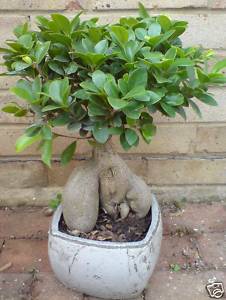
Cool or What?